

You’re standing at the store, staring at a wall of boots that all claim to be “winter-rated.” Three of them have the same price tag. One says “arctic grip.” Another says “extreme cold.” Which one stops you from landing on your back when the sidewalk turns to glass?
Here is the problem: most winter boots sold in 2026 are designed for cold, not for ice. A boot rated to -40°C can still be a death trap on a frozen puddle. This article breaks down exactly what to look for — traction standards, sole compounds, and insulation tradeoffs — so you buy the right boot the first time.
What Makes a Boot Safe on Ice? The Science of Traction
Ice is slippery because a thin layer of water sits between your boot and the frozen surface. This water layer reduces friction to near zero. The only way to fix this is to either physically dig into the ice (like a stud) or use a rubber compound that stays soft below freezing.
Most budget winter boots use standard rubber soles that harden at -10°C. Hard rubber = less grip. This is the single biggest reason people fall in winter boots that otherwise feel warm.
Arctic Grip vs. Standard Rubber
In 2016, Vibram released Arctic Grip, a sole compound with microscopic glass fibers that create friction on wet ice. In 2026, this technology is still the benchmark. Boots like the Sorel Caribou ($165) and The North Face Chilkat 400 ($150) use Vibram Arctic Grip or similar proprietary compounds.
Without a dedicated ice-grip sole, you are relying on tread depth alone. Deep lugs help in snow, but on glare ice, they do almost nothing.
The Temperature Trap
A boot rated to -40°C often has thick insulation and a stiff sole. That stiffness reduces ground feel and flexibility, which actually makes walking on ice harder. You cannot feel the surface beneath you, so you don’t adjust your stride. Baffin boots, for example, are incredibly warm but have notoriously slippery soles on ice.
Verdict: For icy conditions, prioritize a boot with a known ice-grip sole over maximum cold rating. A -20°C boot with Arctic Grip is safer than a -40°C boot with standard rubber.
Three Boot Technologies That Work on Ice (and One That Doesn’t)
Not all traction is created equal. Here is a quick comparison of the main systems you will see in 2026.
| Technology | How It Works | Ice Performance | Example Boot | Price Range |
|---|---|---|---|---|
| Vibram Arctic Grip | Microscopic fibers in rubber | Excellent on wet ice | Sorel Caribou, Merrell Moab Polar | $150–$200 |
| Contagrip (Salomon) | Winter-specific rubber compound | Good on packed snow, moderate on ice | Salomon X Ultra Winter CSWP | $180–$230 |
| Omni-Grip (Columbia) | Adaptive tread with soft rubber | Good on dry ice, poor on wet ice | Columbia Bugaboot Plus IV | $120–$160 |
| Standard rubber + deep lugs | Simple tread pattern | Poor on any ice | Most budget boots under $100 | $50–$100 |
The clear winner for pure ice is Vibram Arctic Grip or a direct equivalent. If a boot does not specify its sole technology, assume it uses standard rubber. That is a risk on ice.
When a Winter Boot Is the Wrong Choice
This is the part most guides skip. Sometimes you should not buy a winter boot at all. If you live in a city where sidewalks are cleared within hours of snowfall, a winter boot is overkill. You are better off with a waterproof leather boot and a separate traction device.
ICEtrekkers Diamond Grip ($35) and Yaktrax Walk ($20) are strap-on cleats that turn any shoe into an ice boot. They cost a fraction of a dedicated winter boot, and you can remove them when you get inside. For commuters who spend most of their day indoors, this is the smarter buy.
The failure mode: you buy a heavily insulated winter boot, wear it to the office, and your feet sweat all day. Then you walk outside and the sweat freezes. Now your feet are cold and wet. A lighter boot with a removable traction device avoids this entirely.
If you hike on icy trails, you need actual crampons, not a winter boot. Kahtoola MICROspikes ($70) are the standard for trail ice. No boot sole, regardless of technology, replaces 12 steel spikes.
Insulation vs. Activity Level: The Overheating Mistake

Boot makers love to sell you 400-gram insulation. But if you walk at a normal pace for 20 minutes, your feet generate heat. 400 grams of Thinsulate is designed for standing still at -30°C. If you are active, you will sweat.
Wet insulation is dead insulation. Once sweat soaks into the lining, your feet cool down faster than if you wore a thinner boot with no insulation at all.
For most people in 2026, a boot with 200-gram insulation is the sweet spot. Examples: Merrell Moab Polar ($160, 200g Thinsulate), The North Face Chilkat 400 ($150, 200g Heatseeker). These are warm enough for -10°C to -20°C with normal activity, but breathable enough to keep sweat from accumulating.
If you stand still for long periods — ice fishing, outdoor work, watching a parade — then 400g makes sense. For everyone else, 200g is enough and safer.
How to Test a Boot for Ice Before You Buy
You cannot test a boot on actual ice in a store. But you can test three things that predict ice performance.
- Bend the sole. If it barely flexes, the rubber is too stiff for ice. A good ice-grip sole should bend easily with one hand at room temperature. If it’s stiff at 20°C, it will be rock hard at -10°C.
- Check the outsole label. Look for “Vibram Arctic Grip” or “Ice+” or “Winter Grip.” If the tag only says “rubber outsole,” assume standard rubber.
- Press the tread. Soft rubber feels slightly tacky to the touch. Hard rubber feels smooth and cold. The tackier the rubber feels at room temperature, the better it will grip on ice.
These three checks take 30 seconds and eliminate 80% of the boots that will fail on ice.
One more thing: ignore the temperature rating. There is no standardized test for boot warmth. A boot labeled “-40°C” from one brand might be equivalent to “-20°C” from another. Focus on insulation type and weight, not the number on the box.
What to Expect from Winter Boots in 2026
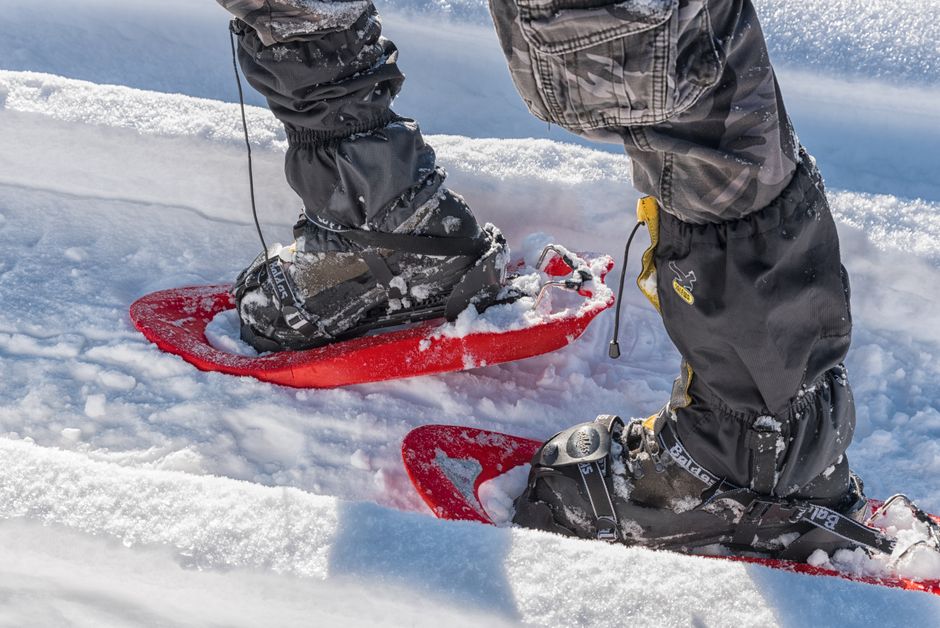
The trend in 2026 is away from massive insulated boots and toward lighter, more technical designs. Brands like Merrell and Salomon are putting winter-specific outsoles on mid-height hiking boots instead of traditional snow boots. This is a good thing. You get better traction, less weight, and more versatility.
The downside: these boots cost more. A technical winter hiking boot like the Salomon X Ultra Winter CSWP runs $200-$230. A traditional snow boot like the Columbia Bugaboot costs $130. The tradeoff is clear — you pay more for safety, or you save money and add strap-on cleats.
Expect more brands to adopt Vibram Arctic Grip or develop their own ice-specific compounds. The days of selling a standard rubber sole as a “winter boot” are ending. Buyers are smarter, and falls are expensive.
The best boot for ice in 2026 is not the warmest one. It is the one that keeps you upright.

Related Posts


