You got the promotion. Now what do you wear on Monday?
This question sounds small. It isn’t. The clothes that made you look like a reliable contributor don’t automatically signal leadership. And the gap between “good team member” and “someone who runs the room” often shows up before you’ve said a single word.
Here’s exactly how to close that gap — without wasting money on a wardrobe you’ll need to redo in six months.
Why Your Old Wardrobe Sends the Wrong Signal
Most people get promoted because they’re excellent at their actual job. Nobody tells them their wardrobe also needs a promotion.
The shift isn’t about formality. It’s about something more specific: looking like someone who makes decisions, not just executes them. That comes through in fit, fabric, and the deliberateness of an outfit — not in how many buttons your shirt has.
The “Blending In” Trap
As an individual contributor, blending in with the team is fine — even smart. As a manager, it creates confusion. Your direct reports need to understand the hierarchy fast, especially in your first 90 days. A sharp blazer over a clean tee communicates authority without requiring a suit. The visual cue matters more than most people admit.
The goal isn’t to dress five levels above your team. It’s to dress one level above. A manager who shows up in a three-piece suit at a startup where everyone wears hoodies has badly misread the room.
What “Intentional” Actually Looks Like
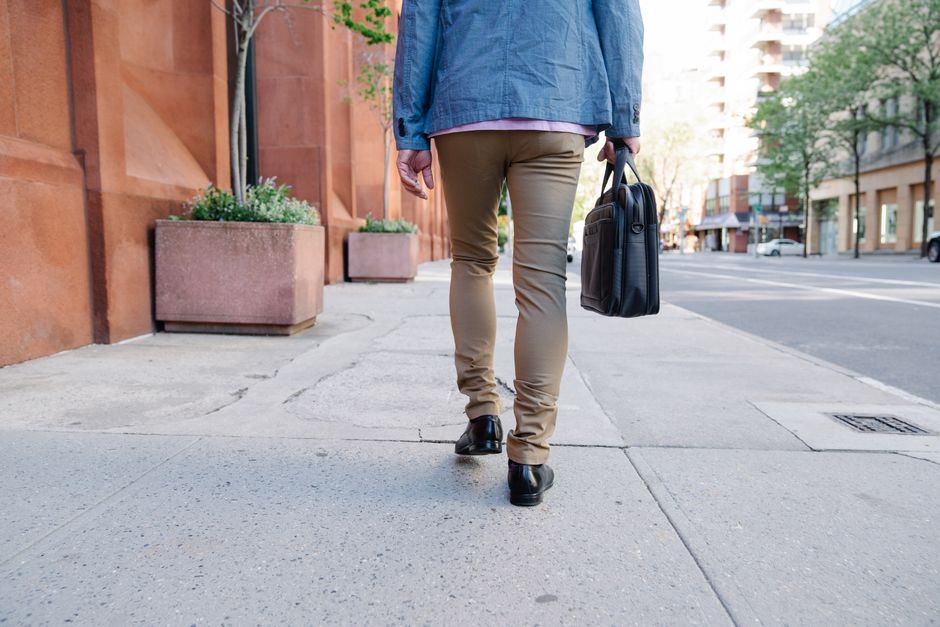
Intentional dressing means your outfit looks chosen, not assembled. Wrinkle-free trousers, a shirt that fits at the shoulders, shoes that match the formality of the rest of the outfit. Uniqlo’s slim-fit chinos at $40 look intentional. A pair of wrinkled chinos from any fast-fashion brand at the same price doesn’t. The cost is nearly identical. The signal is completely different.
Credibility is what’s actually on the line here — not fashion points.
The 8 Pieces to Buy First, In Order

Build the wardrobe in this sequence. Each piece makes everything before it more versatile.
- A fitted blazer in navy or charcoal. Banana Republic’s Slim-Fit Blazer runs around $175 on sale and works over jeans, chinos, or trousers without looking forced.
- Two pairs of tailored trousers. One grey, one black. Suitsupply separates start at $149 and hold their shape well. J.Crew’s Ludlow Slim-Fit Trouser is a solid $100–$120 alternative.
- Four crisp button-down shirts. Two white, one light blue, one subtle stripe or check. Uniqlo’s slim-fit poplin shirts are $30 each and outlast many $80 alternatives through repeated washing.
- A structured dress or midi skirt (for women). M.M. LaFleur’s The Sydney Dress ($195) is cut for professional movement — no mid-meeting adjustments required.
- One merino wool crewneck or turtleneck. Everlane’s Merino Crew is $100, wears flat under a blazer without adding bulk, and holds its shape through regular wear.
- A clean leather belt. Match it to your shoes. This small detail makes or breaks the bottom half of an outfit, and almost everyone skips it in the first wardrobe build.
- Two pairs of polished shoes. Loafers do more work per dollar than almost any other shoe category. Thursday Boot Company’s Cavalier loafer in cognac ($199) reads as twice the price.
- A structured bag or portfolio. Not a backpack with dangling keychains. Everlane’s Day Market Tote ($98) or a slim leather portfolio shifts the whole silhouette in the right direction.
Everything on this list mixes with everything else. Nothing ends up sitting unused.
The Fit Rule
Buying the right pieces won’t help if they don’t fit. Budget $50–$100 for a tailor after buying your blazer and trousers. A $40 alteration on a $175 blazer makes it look like a $400 blazer. Skip this step and every other investment in the list gets cut in half.
Budget Breakdown by Workplace Type

What you need depends heavily on your environment. A finance firm and a creative agency have almost nothing in common when it comes to dress expectations. Here’s a practical split:
| Environment | Formality Level | Starting Budget | Prioritize These First |
|---|---|---|---|
| Corporate / Finance / Law | High | $600–$900 | Tailored suit, dress shirts, leather Oxford shoes |
| Tech / Creative Agency | Smart casual | $300–$500 | Blazer, clean chinos, structured loafers |
| Healthcare / Education | Practical formal | $250–$450 | Wrinkle-resistant trousers, structured knits, comfortable flats |
| Retail / Hospitality Management | Polished casual | $200–$400 | Dark non-distressed jeans, button-down shirt, clean boots |
| Remote / Hybrid | Variable | $150–$300 | Two camera-ready blazers, clean neutral tops, strong overhead lighting |
Remote managers consistently underspend here — then one high-stakes in-person meeting arrives and they show up in whatever was clean. Keep at least two polished outfits ready even if you’re mostly working from home. The meeting will happen eventually.
Three Mistakes That Cost New Managers Credibility
Copying the CEO’s Style Instead of Reading the Room
A common first move is to look at whoever runs the company and dress like them. The problem: they’ve earned their quirks. A veteran executive who wears the same crewneck every day signals confidence through repetition — built over years. A new manager doing the same thing signals that they haven’t figured out what image they’re projecting yet. Read your environment, not the corner office.
Buying Everything in One Weekend
The urge to overhaul everything at once almost always backfills a closet with pieces that don’t work together. You’re making 20 purchasing decisions under time pressure — bad odds for coherent results. Buy the blazer first. Wear it for two weeks. See what it’s missing. Then buy the trousers. One decision at a time produces a wardrobe with logic behind it.
Prioritizing Price Over Fit and Fabric
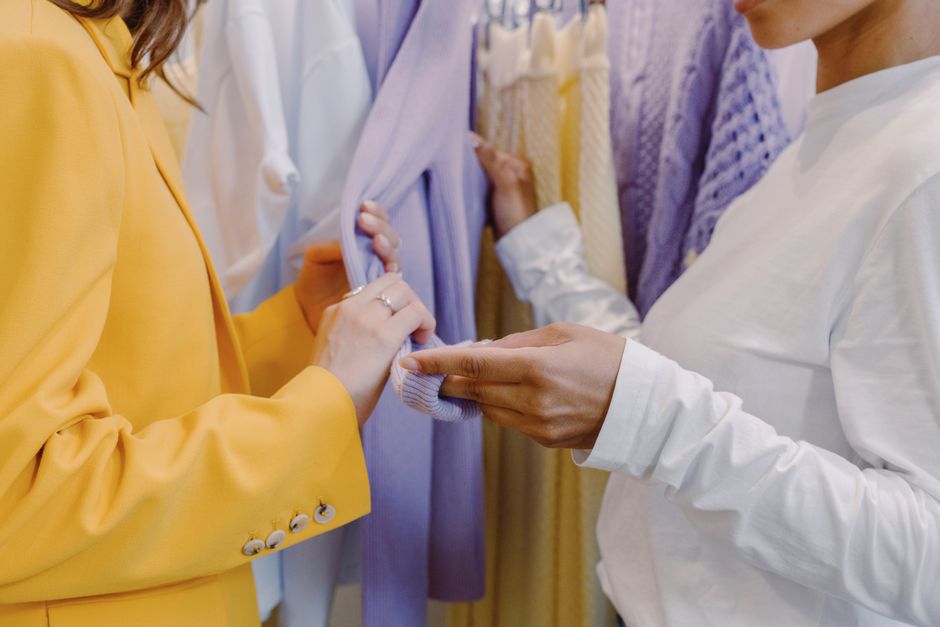
Fit matters more than brand, every single time. A $90 well-fitted blazer from H&M’s premium range beats a $300 poorly-fitted one from any department store. Touch the fabric before you commit. If it feels thin or synthetic between your fingers, it’ll look thin and synthetic under fluorescent office lighting. That test takes 10 seconds and saves you from a purchase you’ll regret by week three.
Signals That Your Management Wardrobe Has Landed
The clearest sign it’s working: nobody mentions your clothes.
That sounds counterintuitive. But the actual goal isn’t compliments on your outfit — it’s walking into a room and having people register you as the decision-maker before you’ve opened your mouth. When someone says “you look great today,” that’s nice. When they just follow your lead without a second thought, that’s the real benchmark.
Smaller signals that confirm you’ve got it right:
- You move from a team standup to an executive presentation without changing a single thing
- Your direct reports don’t dress noticeably sharper than you on a regular basis
- You stop adjusting your clothes mid-meeting
- You’re not thinking about what you’re wearing while you’re wearing it
- Clients and new contacts address you first in a group, even before introductions
The best management wardrobe disappears — leaving behind only the version of you that runs the room.

Related Posts