September arrives and the closet suddenly looks useless. Summer dresses, thin cotton shirts, sandals — none of it feels like fall. But the closet isn’t the problem. The combinations are. These seven outfits are built around pieces most people already own, with exact formulas instead of vague direction.
Run a 10-Minute Wardrobe Scan Before You Start
Most people own more usable fall pieces than they think. The gap between feeling like you have nothing and pulling seven strong outfits is almost always inventory awareness, not an empty closet.
| Piece You Likely Own | Fall Use | What It Pairs With |
|---|---|---|
| Linen or cotton button-down | Base layer under flannel or open knit | Straight-leg jeans, ankle boots |
| Summer midi or slip dress | Wear over a fitted turtleneck | Knee-high or ankle boots |
| White or black t-shirt | Under blazer or open flannel | Tailored trousers, clean sneakers |
| Light cardigan | Layer over a fitted long-sleeve tee | Jeans, loafers, Chelsea boots |
| Denim or leather jacket | Over dresses, knits, button-downs | Works across all outfits below |
| Summer shorts or cutoffs | Not viable below 65°F | Swap for jeans until spring |
Three pieces unlock the most combinations: a denim jacket or structured blazer, one pair of straight-leg jeans, and a fitted turtleneck or mock-neck top. If you have those, you can build every outfit here.
Outfit 1: The Flannel-as-Jacket Formula
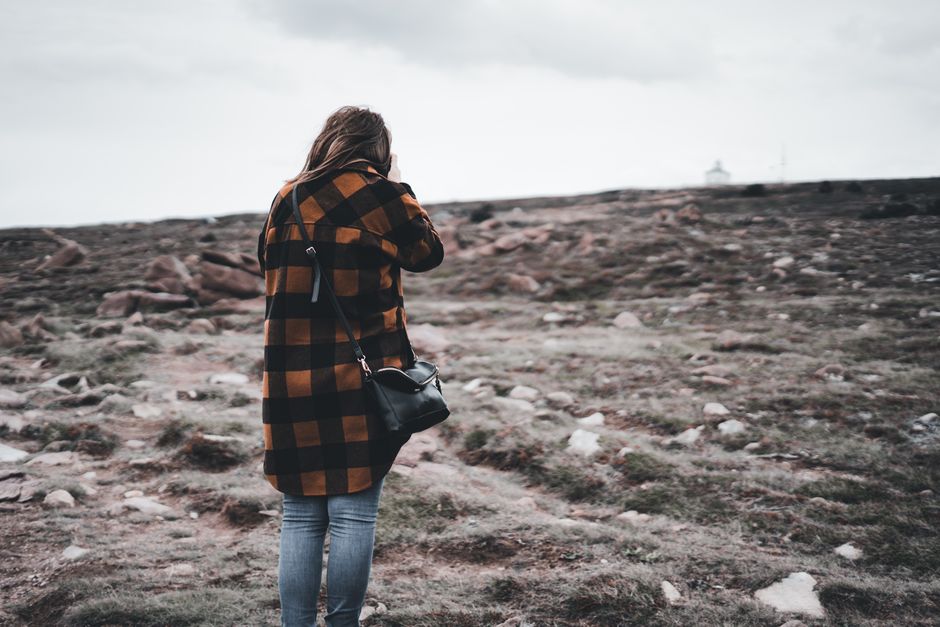
This requires nothing new for most people. It’s also the outfit that gets the most visible fall mileage from the least effort.
How to Build It
Start with a fitted white or black t-shirt — slim cut, not cropped. Layer an open flannel shirt on top and leave it completely unbuttoned. That distinction matters: you’re not wearing a flannel shirt, you’re using a flannel as an unstructured jacket. L.L. Bean’s Classic Flannel Shirt ($49.95) sets the benchmark for fabric weight — heavy enough to hold its shape when open, relaxed enough not to look stiff. Any flannel you already own with a similar weight works.
Add straight-leg jeans. Finish with white leather sneakers (New Balance 574 at $89.99 is a clean, low-profile option) or Chelsea boots if you have them. The sneaker version reads casual weekend. The boot version signals fall immediately.
Why Proportion Is the Whole Point
The 2026 version leans hard into contrast between fitted and relaxed. The tee underneath should be slim. The flannel should be at least one size up from your normal — wide in the shoulder, slightly long. When both layers share the same fit profile, the look flattens and reads as sloppy rather than layered. The visual tension between tight underneath and relaxed on top is what makes it register as intentional.
If your flannel is your exact size, try your partner’s or a thrifted oversized version. The fit gap does more work than any accessory.
Temperature Range
This handles 55–70°F comfortably. Below 55°F, add a lightweight puffer vest between the tee and the flannel. The vest adds roughly 15–20 degrees of warmth and stays completely invisible under the open flannel. More layers than it sounds, less bulk than you’d expect.
Outfit 2: Denim on Denim — The Version That Actually Works
The Canadian tuxedo fails almost exclusively because of one mistake, not because the concept is flawed. Fix the mistake and it becomes one of the cleanest looks in a fall wardrobe.
The Rule You Cannot Skip
Top and bottom denim must be different washes. Dark jacket, medium-wash jeans. Light jacket, dark jeans. A Levi’s Trucker Jacket in rigid dark indigo paired with Levi’s 501s in a medium vintage wash is the combination that works in real life and photographs well. Matching washes — the version most people default to — is what actually looks off. The contrast between shades is the visual anchor that makes the whole outfit legible.
Wear a white or cream base layer underneath. It creates separation between jacket and jeans so the different washes read clearly as a choice, not an accident. One tan or cognac leather belt. That’s the complete outfit — resist adding more. Over-accessorizing denim on denim pushes it into costume territory fast.
This combination works particularly well for October temperatures in the 50–65°F range, with no additional layering needed until it drops colder.
Outfit 3: Your Summer Dress Over a Turtleneck
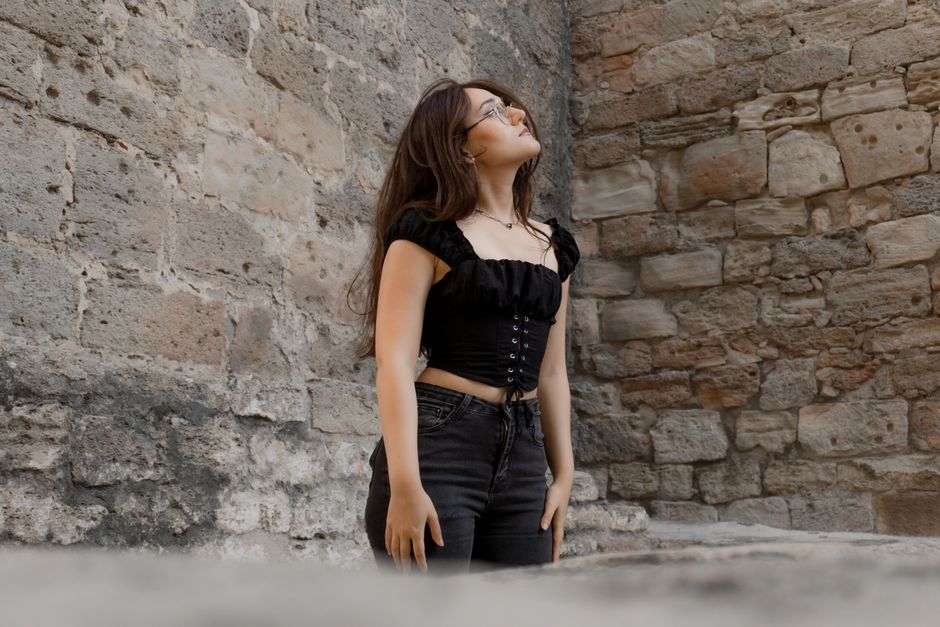
This technique extends summer dresses by six weeks. It has exactly one condition: the turtleneck must be fitted, not bulky. A Uniqlo Ribbed Turtleneck ($29.90) or their mock-neck version ($19.90) slides cleanly under most summer dresses without adding volume. A chunky cable-knit does not — it bunches under the fabric and ruins the silhouette.
- Works best with: slip dresses, shirt dresses left half-buttoned, midi dresses with slight flare
- Avoid with: bodycon dresses (too much bulk underneath), strapless designs (neckline conflict)
- Best turtleneck colors: black, camel, cream, deep burgundy — all read intentional above a dress neckline
- Best shoe pairing: knee-high boots — the collar visible above the dress plus the boot creates the most cohesive fall silhouette
- Temperature range: 45–62°F with a coat added over the top
The most common mistake: choosing a jersey turtleneck that’s too lightweight. It folds and slips at the collar when it peeks above the dress neckline, and looks like an escape attempt rather than an intentional layer. You need enough ribbing or structure to hold the collar shape visibly. Uniqlo’s ribbed versions do this. Most cheap jersey alternatives don’t.
Outfits 4 and 5: What Boots Do That No Other Piece Can
Does swapping only the shoes actually change an outfit?
More than almost any other single change. Take a base outfit: straight-leg jeans, oversized cream knit, slightly tucked in front. Add white sneakers and it reads casual, low-effort, weekend. Swap for tan suede ankle boots — the Clarks Desert Boot at around $139.99 is the benchmark in this category — and the same jeans, same sweater, same proportions now read as a deliberate fall look. The boot is doing all the seasonal signaling. That’s outfit 4. Change nothing else.
Which boot style covers the most outfits?
Ankle boots with a block heel between 1.5 and 2 inches are the most versatile single purchase in fall footwear. Chelsea boots in tan or black cover the second-widest range. Dr. Martens 1460 boots ($179.95) work especially well with jeans-and-knitwear combinations — their heavier sole adds visual weight at the bottom that balances looser silhouettes on top. Over-the-knee boots are strong for specific outfits but narrow your options fast. Don’t build a fall wardrobe around them.
Outfit 5: The Blazer-Sneaker Contradiction
Structured blazer over a plain tee, with wide-leg or straight trousers, finished with clean low-profile sneakers. Zara’s double-breasted blazers ($89.99) hold their shape well for this combination. New Balance 550 ($109.99) in white or cream is the sneaker version that reads right. The formal top half against the casual shoe is the entire point — but the sneaker must be understated. Chunky platform sneakers compete with the blazer’s structure and collapse the look. Low-profile, clean, and simple only.
Outfits 6 and 7: Grouping Fall Colors From What You Have
Fall 2026’s dominant palette runs through rust, forest green, camel, chocolate brown, and deep burgundy. Most people own at least one piece in these tones — a rust sweater from two seasons ago, an olive utility jacket, a camel coat that gets pulled out every October.
Outfit 6 uses tonal layering: pick two pieces in the same color family and let the slight variation between them do the visual work. Camel trousers with a rust knit. Chocolate brown jeans with a burnt orange flannel. Add one neutral as a third piece — white, black, or cream. Your camel coat over the top extends the palette rather than interrupting it. This approach almost never requires new purchases. It requires sorting what you own by color family and trying combinations you’ve dismissed before.
Outfit 7 inverts the approach entirely: one statement color piece worn with strictly neutral everything else. A forest green midi skirt. A deep burgundy corduroy blazer. Black turtleneck, black boots, black bag — everything else steps back. The single bold piece reads louder when surrounded by neutrals than it ever would next to competing colors. This solves the problem of pieces that have been sitting unworn because they felt too loud to pair. Loud plus neutral is always cleaner than loud plus more loud.
Lay everything you own in fall tones on a bed and look for which pieces share a color family. The combinations that work will be obvious once the pieces are physically together.
The One Layering Mistake That Breaks These Looks
Stacking too many competing textures at once. A chunky cable-knit, a structured blazer, and a quilted vest on the same torso is three outfits worn simultaneously. Pick one statement texture per outfit — everything else should recede behind it. The flannel is the statement. The blazer is the statement. The turtleneck collar above the dress neckline is the statement. Not all three at once.
Fall fashion keeps moving toward cleaner silhouettes with one deliberate layering moment — not maximum coverage stacked collar to hem. That direction isn’t reversing in 2026.

Related Posts