Beyond the neon-lit streets of Shibuya and the serene temples of Kyoto lies a quieter, more meticulous revolution in the world of textiles. While the trench coat is undeniably a British invention, born from the muddy trenches of the First World War, it has found its spiritual and technical home in Japan. In the Aichi Prefecture, there are looms from the 1960s that run slower than a human walking pace specifically to weave trench coat fabric. This isn’t a sign of inefficiency; it is the secret to why Japanese trench coats often outperform their European counterparts in terms of density and water resistance. While the world looks to London for heritage, the most obsessive garment construction is currently happening in the workshops of Tokyo and the mills of Bishu. A high-quality Japanese trench coat is designed to be a multi-decade investment, moving beyond the fast-fashion cycle that dominates the global retail landscape.
The Alchemy of Japanese Gabardine
The soul of any trench coat is its gabardine. This tightly woven, warp-faced fabric was originally designed to repel rain while remaining breathable. In Japan, the approach to gabardine involves an almost religious devotion to high-count cotton yarns. Most high-end Japanese manufacturers utilize Giza cotton—specifically Giza 70 or 45—which is an extra-long-staple Egyptian cotton grown in the fertile Nile Delta but processed with Japanese precision. These fibers are incredibly thin yet remarkably strong, allowing for a weave so tight that water molecules struggle to penetrate the surface even without chemical coatings.
The technical superiority comes from the finishing process. Japanese mills often use a technique called “mercerization” on the yarn before it is even woven. This increases the fiber’s affinity for dye and creates a structural stability that prevents the coat from losing its shape. Furthermore, many Japanese coats utilize a “hard twist” yarn. By twisting the cotton fibers more tightly than standard industry practices, the resulting fabric gains a natural springiness and wrinkle resistance. If you compare a standard retail trench to a Japanese-made version, you will notice the “hand”—the way the fabric feels. The Japanese version feels cool, heavy, and surprisingly slick. It is a physical manifestation of the “Monozukuri” philosophy, which emphasizes the spirit of making things with precision and pride. This level of detail is why collectors often seek out Japanese labels over traditional European heritage brands that have moved their production to lower-cost regions.
The Bishu Region Influence
Bishu is the historic heart of Japan’s textile industry. Located around Ichinomiya in Aichi Prefecture, this region benefits from the soft water of the Kiso River, which is ideal for dyeing and finishing fabrics. Many of the best trench coats in Japan source their raw materials here. The water’s mineral content allows for deep, rich khaki and navy hues that resist fading over decades of use. When you are looking for a coat, check the interior labels for mentions of Bishu-sourced fabric; it is a hallmark of extreme quality that usually commands a premium price in international retail markets. The mills here often use vintage Schönherr looms, which exert less stress on the yarn compared to modern high-speed air-jet looms, resulting in a fabric that has more “character” and a more substantial weight.
The Sanyo Shokai Legacy and the 100-Year Coat

For decades, Sanyo Shokai was the licensed manufacturer for Burberry in Japan, producing the “Burberry Blue Label” and “Black Label” lines specifically for the Japanese market. When that partnership ended in 2015, the company didn’t disappear. Instead, they took their half-century of technical expertise and launched the “100-Year Coat” (Hyakunen Coat). This is arguably the gold standard for anyone searching for the best trench coat in Japan. The concept is literal: the coat is designed to be worn, maintained, and passed down through three generations. It is a direct challenge to the disposable nature of modern fashion.
The construction of a 100-Year Coat involves a specialized sewing technique called “Jinbi.” This involves sewing the collar by hand to ensure it curves perfectly around the neck, a feat that machines still struggle to replicate. The price reflects this labor. A standard 100-Year Coat will retail for approximately ¥120,000 to ¥160,000. While expensive, it includes a unique registration system. Owners can send their coats back to the Sanyo Shokai factory for professional cleaning, re-waterproofing, and structural repairs at any time during the coat’s lifespan. This level of aftercare is virtually unheard of in the retail industry and is supported by a network of specialized craftsmen who treat each garment as a piece of history.
Key Model: Sanyo Shokai Double-Breasted Classic
- Price: Approx. ¥132,000 (roughly $900 – $1,000 USD)
- Specifications: 100% Giza cotton gabardine, water-repellent finish, buffalo horn buttons, removable wool liner.
- Pros: Lifetime repair program, incredible durability, impeccable A-line silhouette that flatters most body types.
- Cons: Traditional fit can feel heavy; styling is very conservative and may not appeal to younger, trend-focused buyers.
Modern Minimalist Icons: HYKE and Auralee
If Sanyo Shokai represents the traditionalist wing of Japanese outerwear, brands like HYKE and Auralee represent the modern evolution. HYKE, founded by Hideaki Yoshihara and Yukiko Oda, has gained a cult following for its military-inspired precision. Their trench coats are often seen as the modern successor to the vintage Mackintosh and Burberry silhouettes. HYKE focuses on the “Green Label” aesthetic—clean lines, oversized proportions, and a focus on the technical specs of the fabric. Their trench coats often feature a removable wool liner, making them versatile enough for both the humid Tokyo autumn and the biting winds of January. HYKE’s popularity has led to collaborations with major retail platforms and global brands, cementing their status as a leader in functional fashion.
Auralee, led by Ryota Iwai, takes a different approach. Iwai is a fabric obsessive who travels the world to find raw fibers. Auralee’s trench coats are known for their unique colors—think dusty olives, pale beiges, and deep charcoals—and their incredibly soft drape. They often use a “Finx” cotton, which is a premium Egyptian cotton that is even more refined than standard Giza varieties. If you are someone who travels frequently, an Auralee trench is a practical choice because the high-twist yarns make it naturally wrinkle-resistant. These coats typically retail between ¥90,000 and ¥115,000 and are available through high-end retail platforms like Farfetch or through flagship stores in Aoyama.
Comparison of High-End Japanese Trench Coats
| Brand | Model | Material | Average Price | Best For |
|---|---|---|---|---|
| Sanyo Shokai | 100-Year Coat | Giza Cotton Gabardine | ¥132,000 | Heritage and longevity |
| HYKE | Double-Breasted Type 2 | Polyester/Cotton Blend | ¥95,000 | Modern silhouette |
| Auralee | Finx Hard Twist | 100% Finx Cotton | ¥105,000 | Softness and color depth |
| Beautiful People | Ultimate Pima Trench | Pima Cotton | ¥110,000 | Slim, tailored fit |
| Comoli | Tielocken Coat | Cotton/Polyester Blend | ¥120,000 | Relaxed, oversized drape |
Best Value-for-Money Options in Japanese Retail

You do not need to spend over ¥100,000 to experience Japanese coat design. Brands like United Arrows and Beams offer “private label” trench coats that punch well above their weight class. United Arrows, specifically their “Green Label Relaxing” line, provides a trench coat that usually retails for around ¥30,000 to ¥45,000. These coats often use a blend of cotton and high-grade polyester. While purists might scoff at synthetic fibers, the addition of polyester in Japanese textiles is often a deliberate choice to enhance water repellency and reduce the weight of the garment, making it more comfortable for daily commutes on the Tokyo subway.
Another strong contender in the mid-range category is Beams Plus. Known for their “Americana” influence, their trench coats often lean into the vintage military aesthetic with rugged fabrics and functional details. These typically retail for ¥40,000 to ¥60,000. For those on a stricter budget, the Uniqlo U collection, designed by Christophe Lemaire, is a revelation. While Uniqlo is a global behemoth, the U line is heavily influenced by the Tokyo design team’s sensibilities. Their trench coats often feature a “Blocktech” lining or a water-resistant coating that is surprisingly effective for the price point (usually under ¥15,000). The trade-off is the longevity; these coats will not last 100 years, as the seams are usually machine-stitched in a way that makes them difficult to repair, but for a young professional, it is a highly functional entry point.
Pro Tip: When shopping at major retailers, look for the “Made in Japan” tag specifically. Large chains often outsource their entry-level lines to other parts of Asia to keep costs down, but their premium “Made in Japan” versions use the superior Bishu fabrics and domestic construction mentioned earlier.
Technical Features to Look for in an Authentic Trench
When you are evaluating a trench coat, the devil is in the details. A true Japanese-made trench will feature a “storm flap” (the extra layer of fabric on the chest) that is actually functional, meant to keep water from seeping through the buttonholes. Look at the “epaulets” on the shoulders. In cheaper coats, these are purely decorative. In a high-end Japanese coat, they are reinforced to hold the strap of a heavy leather bag, staying true to the garment’s military origins. The “throat latch” is another key feature; this is the small strap under the collar that allows you to button the coat all the way up to the chin during heavy rain.
Another crucial element is the “inverted pleat” on the back. This is the long slit that allows you to walk or sit comfortably. High-end Japanese brands like Beautiful People or Comoli often include a button within the pleat. This allows you to keep the coat’s silhouette slim when standing but provides the necessary volume when you are on the move. Furthermore, check the “D-rings” on the belt. Originally intended for carrying equipment, on a modern Japanese trench, they are usually made of solid brass or high-grade steel. If the D-rings feel like flimsy plastic or light aluminum, the rest of the coat likely follows suit in terms of compromised quality.
Understanding Japanese Sizing and Silhouette Nuances
- The Sleeve Length: Japanese coats are often cut with slightly shorter sleeves compared to Western brands like London Fog or Aquascutum. This is to accommodate the average Japanese frame. If you are over 6 feet tall, you may need to look for “Long” sizes or size up significantly.
- The Armhole Height: High-end Japanese tailoring favors a “high armhole.” This provides a better range of motion and a cleaner look under the arms, but it can feel restrictive if you are wearing a heavy suit jacket underneath. Always try the coat on with the thickest layer you plan to wear.
- The A-Line Flare: Many Japanese trench coats, particularly from HYKE and Auralee, have a dramatic A-line flare. This means the coat is narrow at the shoulders and widens significantly toward the hem. It is a specific stylistic choice that provides a more avant-garde, “swinging” look when you walk.
- Raglan vs. Set-in Sleeves: Most traditional Japanese trenches use raglan sleeves (where the sleeve extends in one piece to the collar). This is more forgiving for different shoulder widths and allows for easier layering.
Maintenance and Care for High-End Outerwear
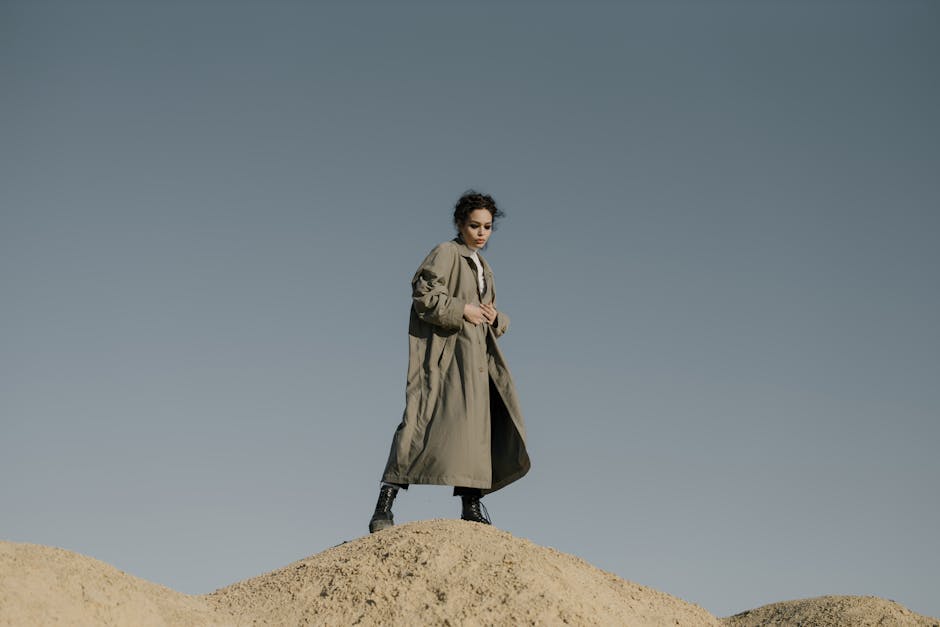
Owning the best trench coat in Japan requires a commitment to maintenance. Cotton gabardine is a “living” fabric; it breathes and reacts to the environment. You should never dry clean a high-quality trench coat more than once a year. The harsh chemicals used in dry cleaning strip the natural oils from the cotton fibers and degrade the water-repellent coating. Instead, opt for a “sponge and brush” approach. Use a soft horsehair brush to remove dust and dried mud after every few wears, as dust can act like an abrasive and wear down the fibers over time.
If the coat loses its water-beading ability, you can often reactivate the coating with a cool iron. The heat helps the fibers tighten back up and resets the water-repellent finish. For major stains, look for a specialist cleaner—such as those found in the Ginza or Aoyama districts—who specialize in luxury outerwear. They use a “wet cleaning” process that is much gentler on the Giza cotton. When storing your coat, always use a wide, contoured wooden hanger to maintain the shape of the shoulders. Avoid plastic covers; instead, use a breathable cotton garment bag to prevent moisture buildup and mildew.
The Sustainable Frontier: Second-Hand and Vintage
For those who appreciate the patina of a well-worn garment, Japan’s second-hand market is a goldmine. In neighborhoods like Shimokitazawa and Koenji, you can find vintage Sanyo Shokai-made Burberry coats that are 30 or 40 years old and still in pristine condition. Because Japanese consumers tend to take extraordinary care of their belongings, the “used” market offers incredible value. Buying a vintage Japanese trench is not just a stylistic choice; it is a sustainable one. You are giving a second life to a garment that was built to last a century, often at a fraction of the original retail price.
When shopping for vintage, pay close attention to the “neckline” and “cuffs,” as these are the first areas to show wear. However, because of the high density of Japanese gabardine, even vintage pieces often look remarkably sharp. Many international shoppers use proxy services to access Japanese auction sites, where these heritage pieces are frequently listed. Investing in a Japanese trench coat, whether new or vintage, is about opting into a philosophy of slow fashion and technical excellence that is increasingly rare in the global market. Whether you purchase through a high-end retail partner or find a hidden gem in a Tokyo backstreet, you are securing a piece of sartorial engineering that will stand the test of time.

Related Posts