I’ve owned maybe forty pairs of jeans in the last decade. Some cost $50, some cost $800. And I can tell you exactly which ones I still reach for — and which ones I threw out after three wears.
The problem with most “luxury” jeans is that the label does the heavy lifting while the denim does nothing. You pay $400 for a brand name stitched across the waistband, and six months later the knees are baggy, the hem is frayed, and the color looks like it was washed with a handful of gravel.
This isn’t a guide to the most expensive jeans. It’s a guide to the ones that justify their price tag. I’ve worn every brand on this list for at least six months. Some for years. Here’s what I learned.
What Actually Makes a Jean “Luxury”
Most people think luxury denim is about the name. It’s not. It’s about three things: the fabric, the construction, and the fit — in that order.
Fabric: The Difference Between $100 and $400 Denim
The raw material is everything. Japanese denim from the Okayama region uses premium Zimbabwe cotton, rope-dyed indigo, and shuttle looms that produce a tighter, denser weave. The result is a fabric that softens with wear instead of collapsing. Italian denim from Candiani or Berto uses longer cotton fibers that resist pilling and fading unevenly.
Cheap jeans use short-staple cotton, open-end spinning, and sulfur dyes. They look fine for the first month. Then they look tired.
Construction: Where Most Brands Cut Corners
Look at the inside of your jeans. If the seams are chain-stitched with a clean, tight stitch count (10-12 stitches per inch), that’s a signal. If the belt loops are sewn into the waistband rather than just tacked on, that’s another. If the rivets are solid copper or brass rather than painted zinc, that’s a third.
I’ve seen $300 jeans with fused hems — meaning the hem is glued, not stitched. Those pairs will never develop a proper roping effect. They’ll just fray unevenly and die.
Fit: The Hidden Variable
This is where brands differentiate themselves. A $400 pair of jeans that fits you poorly is worse than a $60 pair that fits perfectly. The best luxury brands use multiple fit models — different body shapes, different heights — to ensure their cuts work on real people, not just runway mannequins.
The brands below all do this well. But even within a brand, fits vary dramatically. I’ll tell you which cuts to look for.
Ksubi: The Anti-Premium Premium Jean
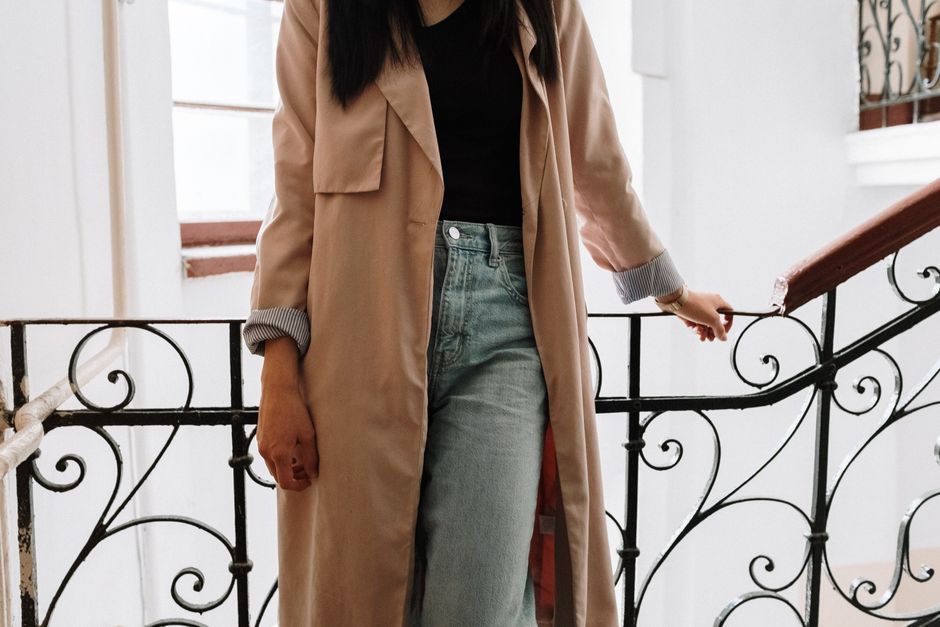
Ksubi jeans look like they’ve been through a war. That’s intentional. But the distressing is done by hand — each pair is individually treated, which means no two pairs are identical. The denim itself is sourced from Japanese mills, and the construction is solid.
The Van Winkle fit is their most versatile: a straight-leg cut with a mid-rise that works with sneakers or boots. The fabric is 12oz, which means it has enough weight to hold its shape but isn’t too heavy for year-round wear.
The downside: Ksubi’s sizing is inconsistent. I own two pairs of the same model, same size, and one fits perfectly while the other is noticeably tighter. This seems to be a QC issue they haven’t fully solved. If you buy online, order from a retailer with free returns.
Price: $250-$350. Worth it if you want a distressed look that doesn’t look mass-produced. Not worth it if you want a clean, classic jean.
Mother Denim: The Only Brand That Gets Stretch Right
Stretch denim is usually a compromise. You get comfort, but you lose shape retention. Mother Denim solved this by using a proprietary blend of cotton, modal, and elastane that bounces back after every wear.
The Looker is their signature fit: a high-rise skinny jean that doesn’t sag at the knees. I’ve worn mine for two years, and they still fit the same as the day I bought them. The fabric has a subtle sheen that dresses up surprisingly well — I’ve worn them to dinner with a blazer and nobody looked twice.
The Insider is a straight-leg crop that works for shorter frames. It hits just above the ankle, which makes it ideal for showing off shoes.
Price: $200-$280. For stretch denim, this is the gold standard. The only reason not to buy them is if you prefer rigid, non-stretch denim.
Frame Denim: The Consistent Workhorse
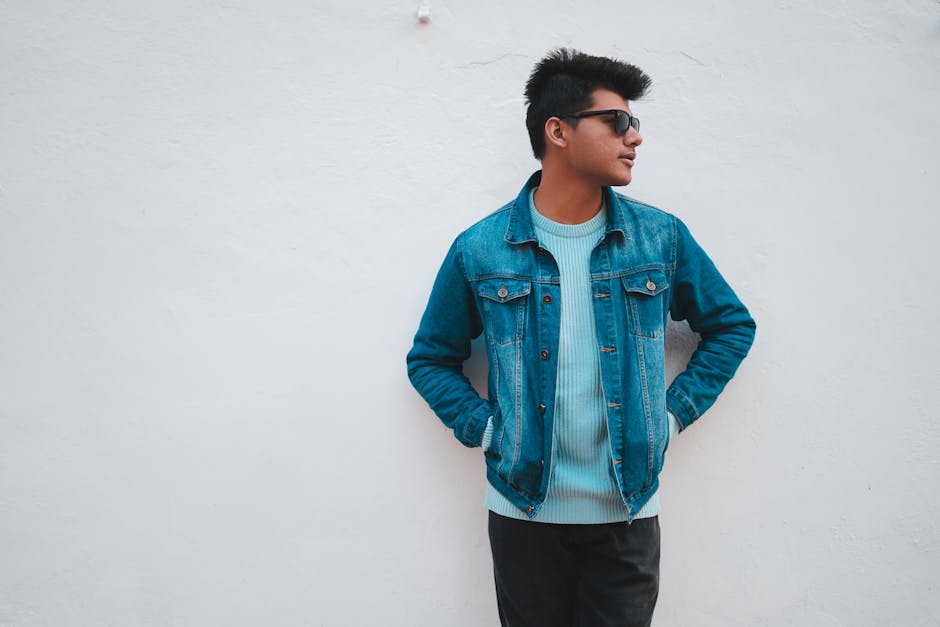
Frame Denim doesn’t make the most exciting jeans. They make the most reliable jeans. Every pair I’ve owned has the same construction quality, the same fabric weight, and the same sizing consistency.
The Le High Flare is their iconic cut: a high-rise with a subtle flare from the knee down. It’s a 70s silhouette that works because the flare is mild enough to wear with sneakers. The fabric is 10oz Italian denim with 2% elastane — enough stretch for comfort, not enough to lose shape.
I’ve washed my Le High Flare pair maybe twenty times. The color has faded evenly, the hem hasn’t frayed, and the waistband hasn’t stretched out. That’s not common at this price point.
Price: $200-$300. Buy these if you want a pair that will look the same after two years as it did after two weeks. Skip them if you want something edgy or distressed.
Rag & Bone: When You Want to Pay for Fit, Not Fabric
Rag & Bone’s denim isn’t the best on this list. The fabric is good — mostly Italian and Japanese mills — but not exceptional. What Rag & Bone does better than anyone is fit.
The Fit 1 is a slim straight-leg that works on almost every body type. The Fit 2 is a skinny that doesn’t crush your thighs. The Fit 3 is a relaxed straight that’s actually relaxed, not baggy. Each fit is designed around a specific body shape, and they nail it every time.
The construction is solid: chain-stitched hems, copper rivets, lined pockets. But the fabric weight varies by season. Their summer-weight denim (9oz) feels thin compared to competitors. Stick to their 11oz or 12oz options for longevity.
Price: $200-$350. Buy these if you struggle to find jeans that fit well. Skip them if you prioritize fabric quality over everything else.
Acne Studios: The Scandinavian Minimalist That Actually Works
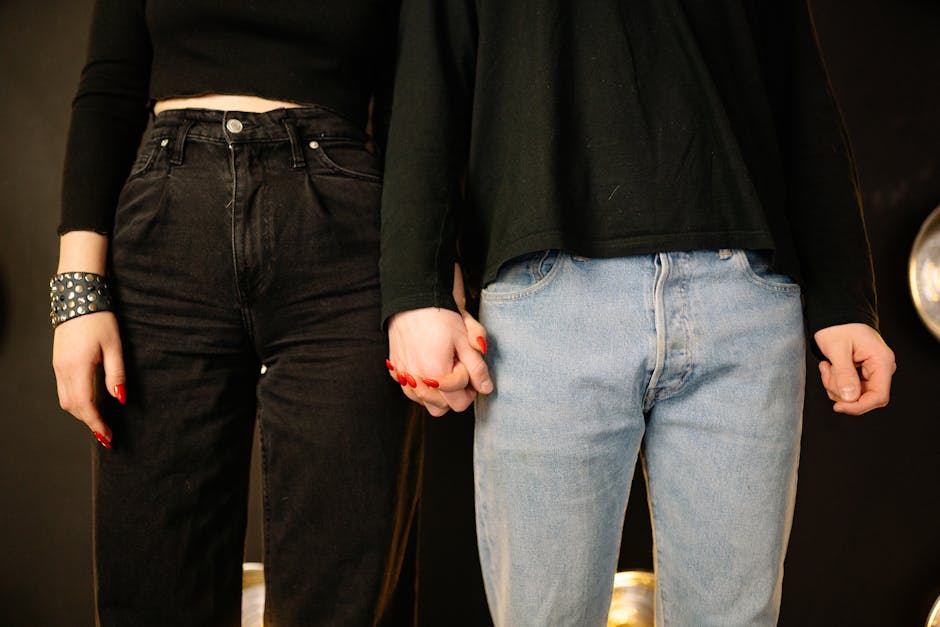
Acne Studios jeans are overpriced. I’ll say it. $400 for a pair of straight-leg jeans with no distinctive features is a lot. But the quality is undeniable.
The fabric is 13oz Japanese denim from Kaihara Mills. It’s rigid, it’s dense, and it takes years to break in properly. The payoff is a pair of jeans that molds to your body over time — not in a saggy way, but in a “these feel like they were made for me” way.
The 1991 Stay Cash is their flagship cut: a straight-leg with a mid-rise and a slightly tapered ankle. It’s a classic silhouette that works with everything. The construction is impeccable — hidden rivets, reinforced crotch seam, selvedge ID on the coin pocket.
Price: $350-$500. Worth it if you appreciate raw denim and want a pair that will last 5+ years. Not worth it if you want stretch or convenience.
Amiri: The Expensive One That’s Actually Worth It (Sometimes)
Amiri jeans cost $800-$1,200. That’s not a typo. And honestly, most of them are overpriced fashion pieces — the ripped, painted, and studded designs are more art than clothing.
But their core denim — the MX-1 and the Bone — uses 14oz Japanese denim with real leather patches and hand-applied distressing. The construction is outstanding: double-stitched seams, reinforced belt loops, and a crotch gusset that prevents blowouts.
I bought a pair of MX-1s three years ago. The knees started fraying after a year, but that’s by design — the distressing is meant to evolve. The fabric itself hasn’t thinned, the color hasn’t washed out, and the fit hasn’t changed.
Price: $800-$1,200. Buy these if you want a statement piece that also functions as a quality garment. Don’t buy them if you just want a good pair of jeans — you can get 80% of the quality for 30% of the price from other brands on this list.
Saint Laurent: The One You Buy for the Silhouette
Saint Laurent jeans are the most fashion-forward on this list. The cuts are aggressive — super-skinny, ultra-high-rise, cropped to the bone. If you don’t have the body for them, they will look ridiculous.
But if you do, they’re transformative. The D02 is the classic: a black skinny jean with a 29-inch inseam and a 7-inch rise. It’s designed to be worn with boots or heels, and it creates a silhouette that no other brand replicates.
The fabric is 10oz Italian denim with a heavy black dye that resists fading. The construction is good — not as good as Acne or Amiri, but good enough. The real cost is the name.
Price: $500-$800. Buy these if you want a specific Saint Laurent look and nothing else will do. Skip them if you just want a quality black jean — Frame’s Le High in black is 90% as good for half the price.
Comparison Table: Luxury Denim at a Glance
| Brand | Price Range | Best Fit | Fabric Source | Best For | Skip If |
|---|---|---|---|---|---|
| Ksubi | $250-$350 | Van Winkle (straight) | Japanese | Distressed, unique looks | You want consistent sizing |
| Mother Denim | $200-$280 | Looker (skinny high-rise) | Italian | Stretch denim that holds shape | You prefer rigid denim |
| Frame Denim | $200-$300 | Le High Flare | Italian | Reliable, consistent quality | You want edgy or distressed |
| Rag & Bone | $200-$350 | Fit 1 (slim straight) | Italian/Japanese | Perfect fit across body types | You prioritize fabric over fit |
| Acne Studios | $350-$500 | 1991 Stay Cash (straight) | Japanese (Kaihara) | Raw denim, long-term wear | You want stretch or low cost |
| Amiri | $800-$1,200 | MX-1 (straight) | Japanese | Statement piece with quality | You just want a good pair of jeans |
| Saint Laurent | $500-$800 | D02 (skinny) | Italian | Specific fashion-forward silhouette | You want value for money |
The Jeans I Actually Wear — And Why
If I had to pick one pair to wear for the rest of my life, it would be the Frame Le High Flare. Not because it’s the most exciting, but because it’s the most versatile. I’ve worn them to work, to dinner, to a wedding, and to the grocery store. They look right everywhere.
If I wanted a second pair, it would be the Acne 1991 Stay Cash. The break-in period is brutal — two months of stiff, uncomfortable denim — but once they mold to your body, nothing else compares.
Everything else on this list is situational. Ksubi for nights out. Mother for comfort. Amiri for when you want people to notice your jeans. Saint Laurent for when you want people to notice your silhouette.
But the most important thing I’ve learned is this: buy the jeans that fit you, not the jeans that fit the brand’s image. A $200 pair that fits perfectly will always beat a $1,000 pair that doesn’t.

Related Posts