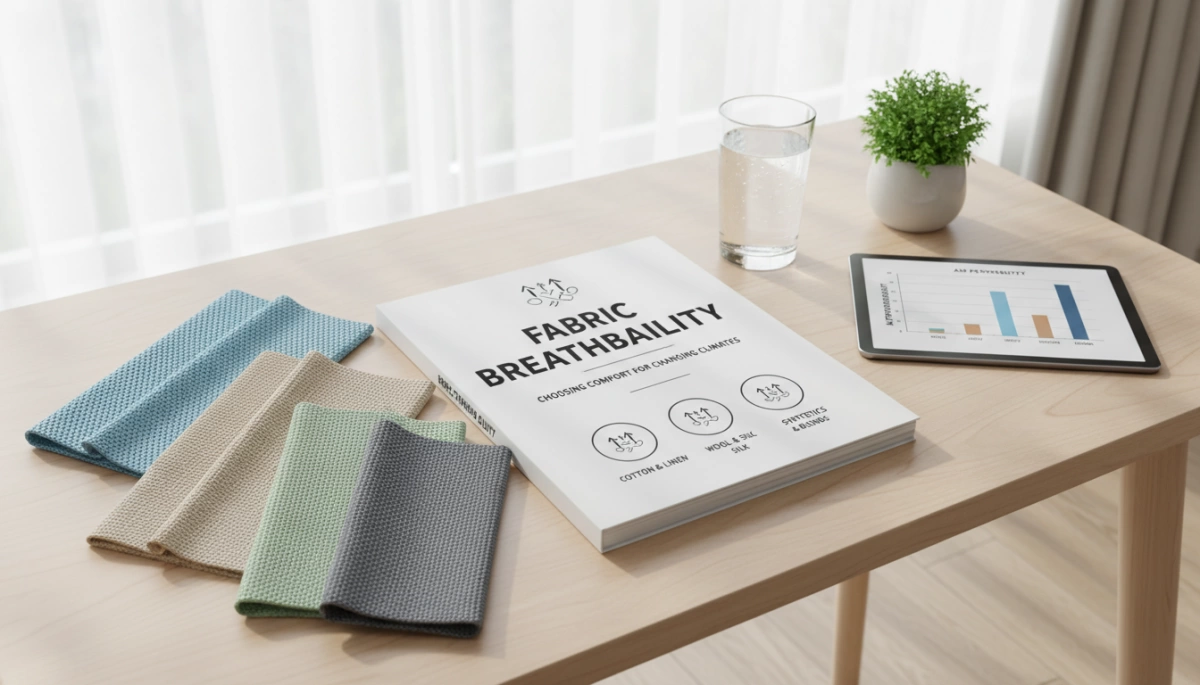
Struggling to stay comfortable when the weather can’t decide? You’re not alone. Whether it’s the classic sweat-then-freeze cycle during spring walks or packing for a trip with unpredictable climates, most wardrobes just don’t cut it. The secret isn’t just about staying warm—it’s mastering fabric breathability and moisture-wicking technology to keep your body temperature in check. In this guide, you’ll learn how to choose the right fabrics, understand critical terms like Air Permeability and Moisture Vapor Transmission Rate (MVTR), and build a layering system that adapts to every climate swing. Let’s cut through the confusion and get you comfortable, no matter the weather.
The Science of Comfort: Breathability vs. Wicking
When choosing fabrics for changing climates, breathability and moisture-wicking technology are key to staying comfortable. But what do these terms really mean?
What is Breathability?
Breathability refers to a fabric’s ability to allow air and moisture vapor to pass through it. This is measured in two main ways:
Air permeability: How well air flows through the fabric, helping with ventilation and cooling.
Moisture Vapor Transmission Rate (MVTR): How quickly moisture vapor (like sweat in gas form) escapes, preventing clamminess.
A fabric with high breathability means you can stay drier and cooler because it lets your body heat and moisture escape efficiently. This is vital for body temperature management in varying conditions.
What is Wicking?
Wicking is the fabric’s ability to pull liquid sweat away from the skin and spread it across a larger surface area to evaporate faster. Unlike breathability, wicking manages liquid moisture directly, keeping your skin dry and reducing discomfort.
Wicking fabrics are often hydrophilic, meaning they attract and draw in water from your skin, which then evaporates. This plays an essential role during intense activity or when the temperature rises.
The Golden Rule: Why You Need Both
In changing climates, relying on just one is not enough. You need both breathability and wicking for optimal comfort:
Breathability ensures moisture vapor leaves your clothing.
Wicking moves liquid sweat off your skin.
Together, they create a transitional wardrobe essential that helps regulate your micro-climate, keeping you dry, comfortable, and well-balanced through temperature swings and varied activities. Without this balance, you risk feeling cold and clammy or overheated and sticky.
Understanding this science helps you make smarter fabric choices, whether you’re layering for a chilly morning or cooling off on a humid afternoon.
The Material Breakdown: Natural vs. Synthetic vs. Blends
When choosing fabrics for changing climates, understanding how natural, synthetic, and blended materials handle breathability and moisture management is key.
Natural Fibers: Cotton’s Sponge Effect and Seasonal Suitability
Cotton is incredibly soft and breathable, thanks to its high air permeability. However, it acts like a sponge, absorbing sweat but drying slowly. This makes cotton great for dry, mild weather but less ideal in humid or active situations where staying dry matters. Its comfort is undeniable, but for moisture management, it falls short.
Merino Wool: Thermoregulation, Odor Resistance, and Warmth When Wet
Merino wool is a standout natural fiber known for excellent thermoregulation—keeping you warm when it’s cold and cool when it’s hot. It also resists odor and stays warm even when damp, thanks to its moisture-wicking properties and high Moisture Vapor Transmission Rate (MVTR).
Linen/Hemp: High Air Permeability and Poor Insulation
Linen and hemp fibers offer superior air flow and are extremely breathable, making them great for hot, dry climates. However, their poor insulation and quick moisture loss mean they’re less suited for colder weather or high-activity scenarios where retaining heat and managing sweat are priorities.
Synthetics: Polyester & Nylon as Wicking Champions and Modern Weaves
Polyester and nylon excel in moisture-wicking technology, efficiently pulling sweat away from the skin to keep you dry. Their hydrophobic nature helps fabrics dry quickly. Modern synthetic weaves further boost breathability and durability, making these fabrics the go-to for activewear and layering systems designed for body temperature management.
The Role of Spandex/Elastane on Breathability
A small percentage of spandex or elastane is often blended with other fibers to add stretch and comfort. While it can slightly reduce air permeability, the impact is usually minimal. The benefit of enhanced flexibility and fit typically outweighs the slight dip in breathability.
Power of Blends: Wool/Poly Blends and Tencel/Lyocell Benefits
Blending fibers combines the best of both worlds. Wool/polyester blends enhance durability and moisture management without losing natural warmth. Meanwhile, Tencel and Lyocell—both sustainable, breathable fibers—offer excellent moisture vapor transmission and softness, making them popular for versatile layers in mixed climates.
Choosing the right fabric means balancing breathability, moisture control, and comfort to stay at your best, no matter the climate shift.
Fabric Construction: It’s Not Just the Material
When choosing fabrics for comfort in changing climates, the way a fabric is made matters just as much as what it’s made from. Breathability depends heavily on fabric construction, including weave density, fabric weight, and mechanical venting.
Weave Density: Balancing Wind Resistance and Air Permeability
A tight weave blocks wind better but can reduce air permeability, making the fabric less breathable. Looser weaves, on the other hand, allow more air to pass through, enhancing comfort by improving moisture vapor transmission rate (MVTR). Finding the right weave is key to balancing protection and breathability, especially in transitional wardrobe essentials.
Fabric Weight (GSM): Light, Midweight, and Heavyweight
The grams per square meter (GSM) of a fabric impacts both warmth and breathability:
Lightweight fabrics (under 150 GSM) excel at moisture-wicking and air permeability but offer less insulation.
Midweight fabrics (150–300 GSM) hit the sweet spot—providing enough warmth while maintaining good breathability.
Heavyweight fabrics (above 300 GSM) trap heat well but can feel stuffy if moisture vapor cannot escape easily.
Mechanical Venting: Adjustable Comfort for Variable Climates
Ventilation features like mesh panels or zippered vents give you control over airflow, adapting your clothing to changes in activity level or weather. These mechanical venting options boost breathability when you need it most, improving overall body temperature management during outdoor activities.
Strategic Layering for “Micro-Climate” Control
When managing changing climates, strategic layering is key to maintaining comfort and temperature control. Think of it as creating a personal micro-climate that adapts to your activity and environment.
Base Layer: This is your first line of defense. Choose skin-tight, high moisture-wicking fabrics that pull sweat away from your skin to keep you dry and comfortable. Popular options include synthetic blends or Merino wool base layers, which offer excellent thermoregulation clothing benefits without trapping moisture.
Mid-Layer: Your mid-layer focuses on insulation but with breathability still in mind. Lofted materials like fleece or wool trap warm air while allowing moisture vapor to escape, providing lofted breathability crucial for staying warm without overheating.
Outer Shell: The outer layer often acts as the breathability bottleneck. Softshells, made with breathable waterproof membranes, offer a good balance between wind resistance and air permeability. Hardshells prioritize protection against rain and wind but may reduce breathability, so look for fabrics designed to maintain a high Moisture Vapor Transmission Rate (MVTR) to avoid discomfort during intense activity.
For a well-rounded transitional wardrobe, mastering this layering system helps maintain body temperature management across climates and activities.
Scenario-Based Recommendations
Choosing the right breathable fabric depends a lot on what you’re doing and where you’re headed. Here’s a quick guide to picking the best options for different activities and climates:
The Commute: For busy days blending walking, cycling, or public transport, odor-resistant Merino wool blends are a smart pick. Their natural thermoregulation clothing properties keep you comfortable and minimize smells even with mixed activity levels throughout the day.
Travel: When hopping on a cold plane then arriving in a humid destination, look for Tencel or loose-knit synthetic fabrics. Both offer excellent moisture-wicking technology and air permeability to adjust easily to changing temperatures and humidity, keeping you fresh and dry no matter the shift.
Outdoor Exercise: For high sweat output and fluctuating temperatures, grid fleece stands out. It traps warmth while allowing moisture vapor transmission rate (MVTR) to keep sweat moving away, so you avoid damp discomfort during intense workouts or hiking.
Care and Maintenance
Taking care of your breathable fabrics is key to keeping comfort high and performance sharp, especially when dealing with changing climates and technical layers.
Skip fabric softeners: These products might make clothes feel softer, but they clog the tiny pores responsible for air permeability and moisture-wicking technology. This reduces the fabric’s ability to manage body moisture and seriously lowers breathability. Stick to gentle detergents designed for technical wear.
Restore DWR finishes: Durable Water Repellent (DWR) coatings on rain gear and outer shells lose effectiveness over time. When this happens, moisture builds up and breathability drops. Refresh DWR by using spray-on or wash-in treatments following manufacturer guidelines. Proper care of breathable waterproof membranes ensures your gear stays both waterproof and breathable through variable weather.
Maintaining these fabrics well means you get the best thermoregulation clothing performance, preserving their ability to handle moisture vapor transmission rate (MVTR) effectively.