
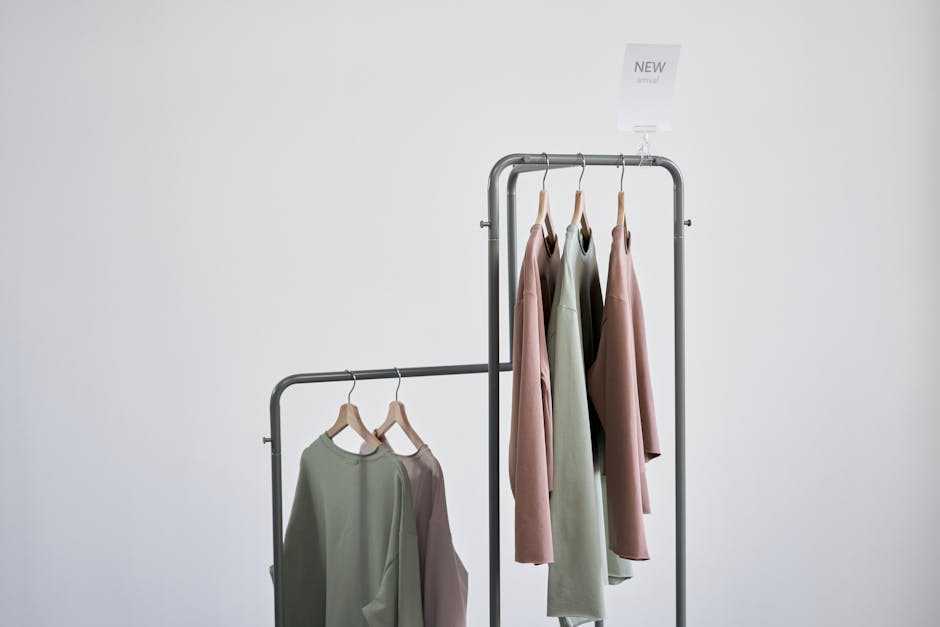
Everlane vs. Uniqlo Basic Tees: Which One Belongs in Your Capsule?
Most capsule wardrobe shoppers walk into this comparison with the same assumption: Everlane costs more, so Everlane must be better. That’s backwards for a specific type of buyer — and getting it right saves you real money without sacrificing anything in daily wear.
Here’s the actual breakdown: what each tee is made of, what those specs mean across two years of real use, and a concrete decision framework so you can stop overthinking and start buying.
Why Price Per Tee Is the Wrong Starting Point
A capsule wardrobe lives or dies on cost-per-wear, not sticker price. A $35 tee you wear 150 times costs $0.23 per wear. A $15 tee you wear 40 times costs $0.38 per wear. The cheaper tee is actually more expensive in that math.
But here’s where the “just buy quality” advice collapses for basics: fabric quality does not scale linearly with price in the $15–$45 range. At this tier, both brands source real cotton. Neither is selling a garbage product. The differences between them are specific — not universal — and knowing which differences matter for your use case is the whole game.
The other variable people skip: do you actually need premium-grade basics? If your tees spend most of their time tucked under a button-down or a blazer, a $15 tee does the exact same job as a $35 one. If you’re wearing tees as the main event — solo, tucked in, as a style anchor — then fabric weight and drape start to matter.
Capsule building is fundamentally about resource allocation. Spending wisely on everyday basics leaves real budget for the pieces that actually command attention. A fourth Everlane tee does not move the needle. A better outerwear layer does.
Side-by-Side: What the Specs Actually Show
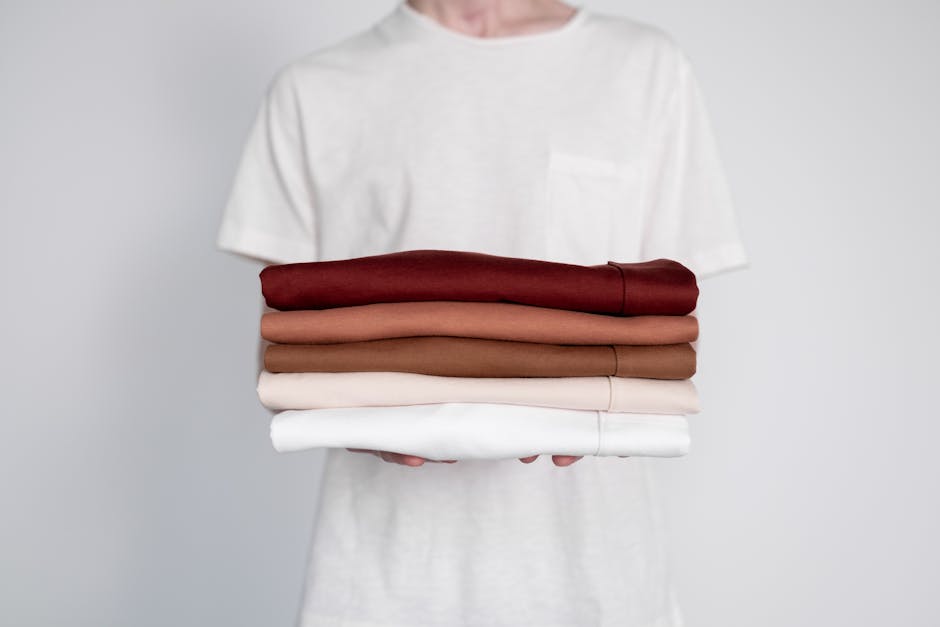
Both brands keep technical specs vague on their product pages. The GSM estimates below come from community fabric testing and brand materials — treat them as directionally accurate, not certified measurements:
| Feature | Everlane Organic Cotton Crew ($35) | Everlane Heavyweight Tee ($42) | Uniqlo Supima Cotton Crew ($15) | Uniqlo U Crew Neck Tee ($15) |
|---|---|---|---|---|
| Fiber | 100% Organic Cotton | 100% Organic Cotton | 100% Supima Cotton | 100% Cotton |
| Est. Weight | ~150 GSM | ~220 GSM | ~175 GSM | ~180 GSM |
| Fit | Relaxed / Boxy | Relaxed | Regular | Slightly Oversized |
| Color Options | ~12–15 | ~8 | 20+ | 15+ |
| Size Range | XXS–3XL | XS–3XL | XS–3XL | XS–3XL |
| First-Wash Shrinkage | Moderate (3–5%) | Low | Low | Low |
The weight gap between the Everlane Organic Cotton Crew (~150 GSM) and the Everlane Heavyweight (~220 GSM) is enormous. That is not a subtle variation — the Heavyweight sits closer to sweatshirt-weight territory than a standard summer tee. Uniqlo’s two options are much tighter together.
Color range: Uniqlo wins with no close second. If your capsule needs a specific warm cream, a dusty blue, or an exact sage, Uniqlo almost certainly stocks it. Everlane’s palette is curated and intentional, but you’re choosing from a smaller menu. And Uniqlo restocks reliably — a shade you find in your capsule today will likely be available to reorder in six months. Everlane’s colors rotate seasonally.
The Verdict
Buy Uniqlo Supima Cotton Crew Neck T-Shirts for your white, navy, and gray tees. Add one Everlane Heavyweight Tee if you need a structured, heavier piece that holds its shape under outerwear from September through March. That’s the complete strategy for most capsule wardrobes.
What Fabric Specs Actually Mean for Long-Term Wear
Two numbers determine how a cotton tee performs over two or three years of real use: GSM weight and staple length. Neither appears on most product pages. Both matter more than the brand name on the tag.
GSM: The Number That Determines Drape, Opacity, and Silhouette
GSM stands for grams per square meter — a direct measurement of how much fabric is packed into the knit structure. Higher GSM means heavier, denser, and more structured. Lower GSM means lighter, drapier, and often more transparent.
For a standalone tee worn as the main visible layer, the practical sweet spot is roughly 160–200 GSM. Dense enough to be opaque in white. Light enough for year-round wear in most climates. Substantial enough to hold a clean silhouette after 60 washes without going limp or boxy.
Everlane’s Organic Cotton Crew at ~150 GSM sits below this range. It works as a layering piece. As a standalone white tee in direct sunlight, multiple long-term wearers report it’s borderline transparent. The Heavyweight fixes this at ~220 GSM — but that weight is too much for April through September in most of the country. Uniqlo’s Supima at ~175 GSM hits the practical middle without either trade-off.
Staple Length: The Real Reason Your Tee Pills
Cotton fiber comes in different “staple lengths” — the length of each individual strand. Short-staple cotton has more fiber ends exposed in the spun yarn. Those ends catch on washing machine drums, bag straps, and other fabrics. They form pills — those rough gray balls on your collar and underarms that make a tee look worn-out before it’s actually worn out.
Supima cotton — the trademarked fiber Uniqlo uses in their Supima line — is an extra-long-staple, American-grown variety. Fewer exposed fiber ends per yard of yarn. Meaningfully less pilling. Better durability under weekly washing and daily friction.
Everlane uses organic cotton, which has real environmental benefits in cultivation. But it’s typically shorter-staple. It performs well out of the box. At the 18–24 month mark, side-by-side wear tests consistently show Supima fiber holding shape better at collar edges and underarm seam points — precisely where friction is highest.
The Shrinkage Math Worth Running Before You Order
Everlane’s Organic Cotton Crew shrinks roughly 3–5% in the first wash. On a standard medium, that’s approximately half an inch in both length and body width. Everlane accounts for this in their sizing guidance — but if you’re between sizes, size up and always run the first wash in cold water.
Uniqlo Supima holds its measurements more consistently through repeated washing. The denser long-staple fiber shrinks less. You still wash in cold (always — for both brands), but you’re far more likely to get predictable sizing across the life of the garment.
One tip that applies to every cotton tee regardless of brand: air dry instead of tumble drying. The mechanical action and heat of a dryer degrade cotton fibers faster than wearing the tee does. Consistent air-drying extends the usable life of any quality tee by 12–18 months on average.
Matching the Right Tee to Your Capsule Goals
Work through this list before clicking Add to Cart:
- Count your existing tees first. Empty your drawer. How many do you own? How many do you actually wear? Most people have too many, not too few. If you own 12 tees and rotate 4, buying a better 13th solves the wrong problem.
- Define your climate window. Warm weather from April through October? You want lighter-weight tees — the Everlane Organic Cotton Crew or Uniqlo’s AIRism Cotton Crew ($20) for hot months. Real winters? The Everlane Heavyweight earns its cost per wear from October through March.
- Lock in white and navy before anything else. These two colors handle roughly 80% of capsule tee scenarios. Get them right before adding any tertiary shade.
- Order one of each to test — before buying multiples. One Uniqlo Supima ($15) and one Everlane Organic Cotton Crew ($35). Wear each for a week under identical conditions. That $50 test run tells you more than any review written by someone whose body and climate aren’t yours.
- Track actual wear counts before restocking. Using a wardrobe tracking app to log what you reach for over 90 days tells you which tee is actually working — not which one looked better on spec sheets.
Fit note: Everlane’s relaxed, boxy cut works well on narrower frames. On broader shoulders, it can look shapeless. Uniqlo’s regular fit in the Supima line is more universally flattering across builds. If Everlane tees have felt like wearing a sack on you before, try the Supima Crew before writing off basic tees entirely.
One more practical consideration: Everlane’s fit runs boxy on purpose. If you prefer a closer fit — the kind that stays neatly tucked and doesn’t billow — Uniqlo’s Supima in a standard size will serve you significantly better.
Specific Questions, Direct Answers
Does the Everlane Heavyweight Tee justify the $42 price?
For one use case, yes. If you want a tee that holds its silhouette under a blazer, looks intentional when worn untucked with tailored trousers, and transitions from September through April — the Heavyweight earns its price. At ~220 GSM, it behaves more like structured outerwear fabric than a standard tee. For warm-weather daily wear or as a primary summer rotation piece, no. It’s too heavy and you’re overpaying for weight you don’t want.
Is the Uniqlo U Crew Neck Tee better than the Supima for a capsule?
Different, not better. The U Crew (also $15, designed by Christophe Lemaire’s Paris studio) runs intentionally oversized — about a full size larger in the body. If your capsule aesthetic skews toward relaxed, minimal, slightly fashion-forward, the U Crew delivers that cleanly. For a traditional capsule with fitted, structured lines, the standard Supima Crew is the safer foundation piece. Both cost the same. It’s a silhouette preference, not a quality difference.
Can you mix both brands in one capsule?
Yes — and this is the optimal approach. Uniqlo Supima for your whites and light colors where opacity and wash durability are priorities. Everlane for darker shades or specific neutrals where their more curated palette offers something Uniqlo doesn’t carry. The brands solve slightly different problems and complement each other cleanly.
Which brand handles extended sizing better?
Uniqlo has the edge for tall and larger frames. Their online catalog carries tall options in the Supima line that don’t exist in stores. Everlane’s 3XL fits up to approximately a 48-inch chest. For anyone building out a wardrobe across multiple categories beyond tees — including extended-size outerwear — Uniqlo’s online extended range is consistently deeper than Everlane’s.
Your Tee Stack: The Exact Shopping List
You came into this comparison thinking you had to pick a side. You don’t. Here’s the exact sequence:
Buy first: Two Uniqlo Supima Cotton Crew Neck T-Shirts in white ($15 each, $30 total). These become your everyday rotation. Wash cold, hang dry. Replace when the collar stretches past recovery — typically 2–3 years with proper care.
Buy second: One Uniqlo Supima in navy ($15). Navy pairs with chinos, jeans, linen trousers, and shorts without thought. Uniqlo’s navy holds its dye tone reliably — it doesn’t drift purple after a dozen washes the way cheaper dyes do.
Buy third (cooler-climate only): One Everlane Heavyweight Tee ($42) in black or warm stone. This is your structured piece — the tee you wear under a blazer, when you want it to look deliberate rather than casual. Think of it the way you’d think about any quality layering anchor for cold-weather capsule building: one great piece that earns its keep every time the temperature drops.
Total spend: $45 for the two-color everyday foundation. $87 if you add the navy. $129 if you include the Everlane Heavyweight.
The assumption at the top of this article — that the pricier brand automatically wins — doesn’t survive contact with actual specs. Uniqlo Supima solves the everyday tee problem better per dollar on fabric quality, color range, opacity, and wash durability. The Everlane Heavyweight fills one specific structural role that Uniqlo doesn’t cover at this price point. Buy the right tool for each slot in your capsule, and your tee situation is resolved in a single purchase session — no more agonizing over which brand deserves your loyalty.

Related Posts


