Why Fabric Care Labels Matter: Save Money, the Planet & Your Clothes
Ever wonder why those tiny, itchy fabric care labels are even there? You’re not alone. Most of us just want to toss clothes in the wash and go. But ignoring these laundry symbols chart can cost you more than just a scratchy neck.
The Hidden Cost of Ignorance
Financial Impact: Washing a favorite shirt wrong? It might shrink, fade, or look worn out fast. Replacing clothes adds up – that’s money down the drain.
Environmental Impact: Running improper cycles wastes water, energy, and chemicals. Laundry gone wrong means more environmental strain overall.
The Universal Language of Laundry
These labels aren’t random. Thanks to international textile care labeling (think ASTM care labels), there’s a universal set of icons everyone understands — from Tokyo to Toronto. You don’t need a language degree, just a quick glance at the washing machine icons meaning and you’re set.
Anatomy of a Care Label
Labels are designed for ease:
Usually stitched inside seams or collars
Symbols appear in a specific order: washing, bleaching, drying, ironing, then professional cleaning
This setup helps you scan quickly and sort your laundry like a pro
Next time you start laundry, don’t see those labels as annoying tags. They’re your fabric’s personal guide to looking great longer — helping you nail the right clothing care instructions every time.
The Washtub: Decoding Washing Instructions
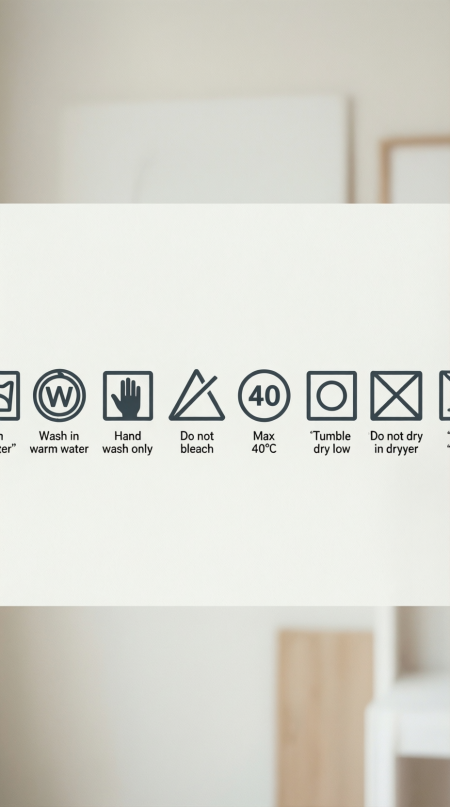
The washtub symbol is your first clue in understanding clothing care instructions and washing machine icons meaning. It tells you how to wash your garment safely without ruining it.
Temperature Tactics (The Dots)
Inside the washtub, you’ll often see one to three dots. These indicate the ideal water temperature for washing:
One dot: Cold water (usually around 30°C or 86°F)
Two dots: Warm water (around 40°C or 104°F)
Three dots: Hot water (50°C to 60°C or 122°F to 140°F)
Choosing the wrong temperature can cause fabric shrinkage or faded colours, so following these dots helps protect your clothes and keeps them looking fresh longer.
Cycle Intensity (The Underlines)
Underlining the washtub tells you what washing cycle to use:
No underline: Normal cycle – a regular wash for sturdy fabrics.
One underline: Permanent press cycle – gentler, reduces wrinkles.
Two underlines: Gentle cycle – even softer for delicate fabrics.
Using the appropriate cycle reduces wear and tear, preserving fabric quality.
Hand Wash & Do Not Wash Signs
Sometimes instead of dots or lines, you’ll see:
A hand dipping into the washtub – meaning hand wash only. This signals fragile fabric that needs gentle, manual washing.
A washtub crossed out – do not wash. This usually means the garment should be dry cleaned or treated differently to avoid damage.
Understanding these basic washing symbols saves you money and helps the environment by avoiding unnecessary replacements. For more laundry sorting tips and clothing care instructions, checking out reliable guides can make your routine easier and more effective.
Also, if you want to explore smart ways to maintain your clothes, the lifestyle tips on Autumn Fashion provide insightful advice on fabric care and garment maintenance guides.
The Triangle: To Bleach or Not to Bleach?
When you spot a triangle on a fabric care label, it’s all about bleach usage — a key part of clothing care instructions that can make or break your garment’s life. Here’s the breakdown:
Empty Triangle: This symbol means all bleaching agents are safe to use, including both chlorine and non-chlorine bleach. It’s like a green light for brightening whites and removing tough stains.
Triangle with Diagonal Lines: This one restricts you to use only non-chlorine bleach. It’s gentler on colored fabrics and helps avoid fading, so keep this bleach warning symbol in mind for color protection.
Crossed-Out Triangle: Absolutely no bleach allowed. Using any bleach here risks damaging the fabric or altering its color, so treat this as a strict no-go sign.
Knowing these triangle symbols saves you from costly mistakes and helps with fabric shrinkage prevention by keeping you on the right bleaching path.
The Square: Drying Rules for Fabric Longevity
When it comes to fabric care labels, the square symbol is your go-to for drying instructions. Understanding these signs helps keep your clothes in shape longer and avoids costly mistakes like shrinkage or damage.
Tumble Drying (Circle inside Square)
A circle inside the square means you can tumble dry your garment. Inside the circle, dots indicate the heat settings:
One dot: Low heat — safe for delicate fabrics.
Two dots: Medium heat — good for durable fabrics like cotton.
Three dots: High heat — for tough materials, but use cautiously to avoid shrinking or damage.
Sometimes you’ll see a line under the circle, signaling a specific drying cycle, like permanent press or gentle dry. These cycles help maintain fabric quality by controlling drying time and heat intensity.
Natural Drying (Lines inside Square)
If there’s no circle but lines inside the square, it’s all about air drying:
Vertical line: Line dry — hang the garment to dry naturally.
Three vertical lines: Drip dry — hang the garment as is without wringing it out.
Horizontal line: Dry flat — lay the fabric on a flat surface to avoid stretching, great for knitwear and delicate items.
Knowing these fabric care instructions helps you pick the right drying method, preserving fabric texture and preventing shrinkage.
The Iron: Pressing for Perfection
When it comes to ironing, fabric care labels use a simple dot system to guide you on the right temperature:
One dot: Low heat – perfect for delicate fabrics like silk or nylon.
Two dots: Medium heat – ideal for wool or polyester blends.
Three dots: High heat – use cautiously on cotton and linen.
Keep an eye out for the steam warnings too. If the label shows an iron with steam or crossed-out steam lines, it usually means dry iron only. This is crucial to prevent water spots or damage, especially on sensitive materials.
Using the right ironing temperature and following steam instructions not only keeps your clothes looking sharp but also extends their life—no more accidental burns or shiny patches. For more on caring for your wardrobe, check out how to prolong the life of your garments with smart maintenance practices.
The Circle: When to Call the Professionals
When it comes to fabric care labels, the circle symbol is your cue to consider professional cleaning options. Understanding these icons can save your clothes from damage and keep them looking sharp longer.
Empty Circle: This means dry clean only. The fabric is sensitive to water or regular washing, so take it to a professional cleaner to avoid shrinkage or color loss.
Circle with a Cross: This symbol warns you not to dry clean the garment. Avoid professional solvent treatments to prevent ruining the fabric.
Letters Inside the Circle: These are specific instructions for dry cleaners, indicating the type of solvent or process recommended (such as “P” for perchloroethylene or “F” for petroleum-based solvents). Knowing these helps your cleaner choose the right treatment, preserving your garment’s quality.
If you’re ever confused by these symbols, a quick guide to laundry symbols chart or a fabric care guide can be a lifesaver. Properly interpreting clothing care instructions, especially dry clean only symbols, helps protect your wardrobe and extends its life significantly.
For more on maintaining your style without ruining your clothes, check out tips on how to look polished and professional with proper garment maintenance.
Practical Cheat Sheet: Grouping Your Laundry for Success
Sorting your laundry correctly is the first step to keeping your clothes looking sharp and lasting longer. Using those little laundry symbols chart on your fabric care labels can make this task much easier. Here’s a simple strategy to keep your laundry routine smooth:
Separate by washing temperature: Group items labeled with similar washing machine icons meaning cold, warm, or hot wash settings.
Sort by fabric type and cycle intensity: Keep delicate wash settings apart from regular or permanent press cycle definition clothes to avoid damage.
Match bleach and drying instructions: Don’t mix fabrics that require no bleach with those that are okay for chlorine or non-chlorine bleach.
Check tumble dry signs and ironing temperature guide: Group according to whether they can be tumble dried, line dried, or need low, medium, or high heat ironing.
When Labels Are Missing: Fabric Identification Tips
Sometimes you’ll find clothes without any care instructions. No worries—here are quick tips to identify fabric types and decide how to care for them:
Cotton: Soft, breathable, and wrinkles easily. Usually safe for warm washes but avoid high heat drying to prevent shrinkage.
Synthetic fabrics (polyester, nylon): Smooth textures, quick-drying, often OK on cold washes and low heat drying.
Wool and silk: Usually delicate wash or hand wash needed; avoid tumble drying and high ironing heat.
Denim: Heavy and durable, needs cold or warm cycles and tumble drying on low.
If you’re ever unsure about the best way to care for your clothes, trusting the fabric’s feel and weight combined with laundry symbols will save you from costly mistakes.