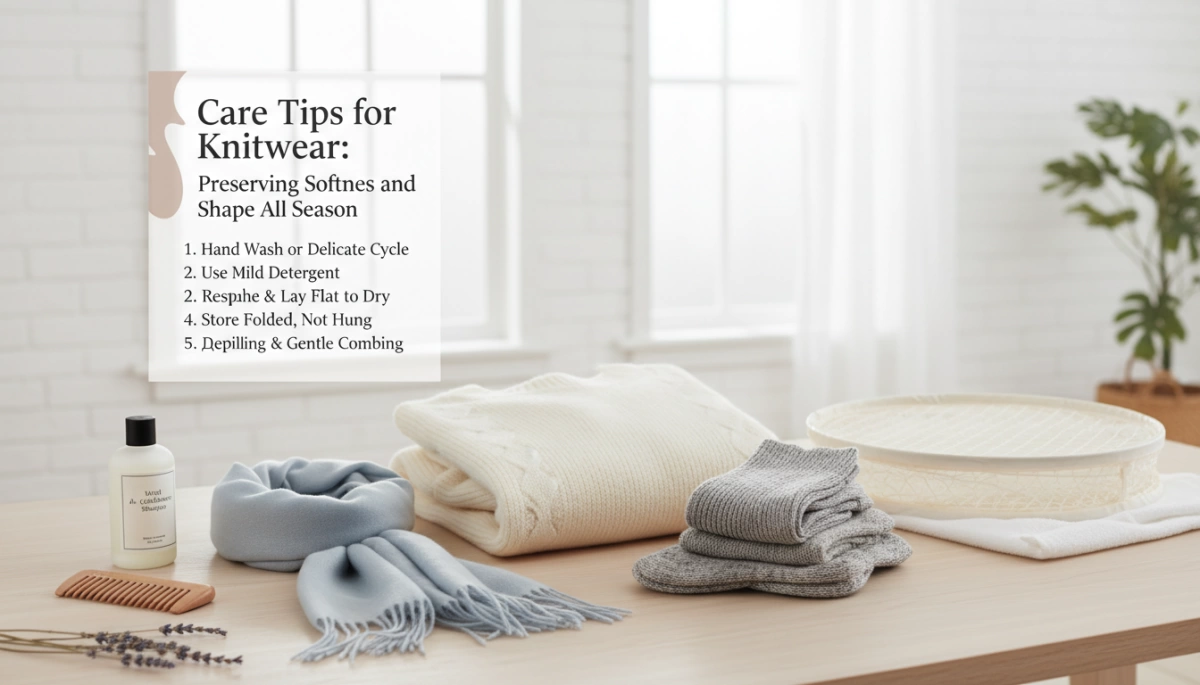
Before diving into washing, always check the care label—it’s your knitwear’s instruction manual. This quick guide decodes common symbols:
Symbol
Meaning
🧼 Hand Wash
Wash gently by hand only
❌ Dry Clean Only
No water, professional cleaning required
Next, identify the fiber type to tailor your care:
Fiber Identification
Animal Fibers: Wool, Cashmere, Alpaca
These need their natural oils preserved to stay soft and strong.
Use gentle, pH-neutral detergents designed for natural fiber care.
Plant/Synthetics: Cotton, Acrylic
More durable and heat tolerant.
Can handle a little more agitation and warmer water but still prefer gentle cycles.
The Sniff Test: Do You Really Need to Wash?
Knitwear doesn’t need a wash after every wear. Instead,
Air out your garment between uses to keep it fresh.
Use spot cleaning for small stains.
This extends fiber life and maintains garment shape.
By starting with this pre-wash assessment, you protect your knitwear’s softness and shape all season long.
The Washing Process: Minimizing Agitation
When it comes to caring for knitwear, keeping agitation to a minimum during washing is key to preserving softness and shape.
Hand Washing (The Gold Standard)
Hand washing is the safest and gentlest method for all natural fiber knitwear, especially wool and cashmere.
Water Temperature: Use tepid or cool water; never hot, as heat can shrink or damage fibers.
Detergent Choice: Opt for a pH-neutral, enzyme-free detergent designed specifically for wool or cashmere wool detergent. These protect natural oils and keep fibers soft.
Washing Technique: Gently submerge your knitwear and let it soak for about 10-15 minutes. Avoid wringing, scrubbing, or twisting, which can stretch or felt the material. Instead, gently press the water through the fabric.
Machine Washing (If You Must)
Sometimes machine washing is unavoidable, but take careful steps to protect your knitwear:
Mesh Laundry Bag: Always place your garment inside a mesh laundry bag to prevent snagging or stretching.
Cycle Settings: Choose the delicate or wool cycle, with a low spin speed to reduce agitation and fabric distortion.
Skip Fabric Softener: Fabric softeners can coat fibers, reducing breathability and causing buildup that dulls the texture over time. Instead, rely on the right detergent and gentle wash settings to maintain softness.
Drying and Reshaping: The Blocking Phase
Proper drying is crucial for preserving your knitwear’s softness and shape. Follow these steps to avoid damage and keep your sweaters looking their best.
The Towel Roll Method: Removing Excess Water
Lay your wet knitwear flat on a clean, dry, white towel.
Roll the towel and sweater together gently like a sushi roll.
Press lightly on the rolled towel to absorb water—never wring or twist your knitwear, as this will stretch and damage fibers.
Repeat with a second dry towel if needed, until the sweater feels damp but not soaking wet.
Gravity is the Enemy: Avoid Hanging Wet Sweaters
Hanging a wet knit sweater causes it to stretch out of shape because gravity pulls on the damp fibers. Always reject the hang—it leads to stretched shoulders and misshapen hems that are hard to fix later.
Reshaping and Blocking: Restore Original Form
Lay the sweater flat on a drying rack or a clean towel in a well-ventilated area.
Gently reshape the sleeves, hem, and neckline to their original dimensions while the garment is still damp.
Avoid direct sunlight or heat sources like radiators, which can dry fibers too fast and make them brittle, causing shrinkage or pilling.
This “blocking” step is vital for natural fibers like wool, cashmere, and alpaca to look smooth and retain their fit season after season.
Following this dry flat method combined with proper reshaping helps maintain your knitwear’s durability and softness through every season. For more on gentle care techniques and dressing tips, check out how to dress with confidence and style year-round.
Maintenance: Fighting Pills and Snags
Pilling is a common issue with knitwear, but it’s important to know it’s caused by friction — rubbing fibers that loosen and form tiny balls — not necessarily poor quality. Regular wear and movement create these pills, especially at stress points like underarms and sides.
Removal Tools for Pilling
Sweater Stone: A gentle, natural option that shaves off pills without damaging fibers.
Battery-Operated Fabric Shaver: Quick and effective for larger areas, but use with care to avoid cutting yarn.
Sweater Comb: Best for delicate or cashmere wool; it lifts pills while preserving softness.
De-pilling Technique
Always work slowly and lightly, easing the pills off without cutting or pulling yarn.
Pick an inconspicuous spot first to test your method.
Regular, gentle de-pilling extends the life of your knitwear and keeps it looking fresh.
Fixing Snags
Never cut a snag! Instead, use a crochet hook or snag repair tool to carefully pull the loose thread to the inside of the garment. This keeps the knit smooth and prevents unraveling.
Storage Solutions: Seasonal and Daily
The Golden Rule of Storage: Fold, Don’t Hang
When it comes to knitwear, folding is the way to go. Hanging your sweaters can stretch out the shoulders and ruin their shape over time. So, always fold your knits to keep them looking fresh and well-fitted.
Folding Techniques: Minimize Creasing
To keep creases at bay, fold your sweater with the arms gently tucked back and then fold in half. This simple method prevents sharp folds and keeps your knitwear smooth without unnecessary stress on the fabric.
Long-Term and Seasonal Storage Tips
Before storing your knitwear for the season, make sure they’re freshly cleaned. Body oils and perfumes attract moths, which can cause holes and damage. Store your sweaters in breathable cotton bags rather than plastic bins to prevent moisture buildup and keep fibers fresh. For natural pest control, cedar blocks or lavender sachets are excellent options—they repel moths without the harsh chemicals found in traditional mothballs, protecting your investment safely.
FAQ: Quick Solutions for Knitwear Care
Can I un-shrink a wool sweater?
Yes, you can often reshape a shrunken wool sweater using a conditioner soak method. Start by soaking the sweater in lukewarm water mixed with a gentle conditioner or specialized wool detergent. This helps relax the wool fibers. After soaking for about 30 minutes, gently stretch the sweater back to its original shape while it’s still damp, then dry flat using the dry flat method to lock in the shape.
How often should I wash my cashmere?
Cashmere doesn’t need frequent washing. Typically, washing it after every 3-5 wears is enough unless there are stains or odors. Between washes, airing out your cashmere helps preserve its natural softness and reduces fiber wear. When you do wash it, use a pH-neutral cashmere wool detergent and hand washing techniques to maintain its delicate texture.
Why is my sweater itchy?
An itchy sweater usually comes down to the type of fiber or how it was processed. Some wool, especially coarse types, naturally have rougher fibers that irritate sensitive skin. Sometimes, new sweaters itch because they haven’t been washed or softened yet. Using a gentle detergent during hand washing and blocking knitwear carefully can reduce itchiness. If itchiness persists, consider layering a soft cotton shirt underneath.
For more on gentle knitwear care and seasonal storage tips, check out the smart wool coat care guide, which shares useful advice on maintaining natural fibers through all seasons.