The “Pre-Game”: Universal Prep Steps for All Shoes
Before diving into shoe care routine, start with these essential prep steps. Remove the laces and insoles first — this lets you clean every nook and cranny thoroughly and prevents damage to these delicate parts. Next, knock off loose dirt by tapping the shoes gently together or using a soft brush. This clears away surface debris so it doesn’t mix into your cleaning solution.
Then, stuff the toebox to maintain shape during cleaning. Use crumpled paper or clean cloths to fill the front of the shoe; this prevents creasing and keeps your footwear looking fresh after washing. These simple prep moves set the stage perfectly, no matter if you’re dealing with leather, suede, canvas, or sneakers.
Pro Tip: Always take these steps to make sure your cleaning process is effective and protects your shoes from unintended damage.
Leather and Faux Leather: Polishing and Preserving
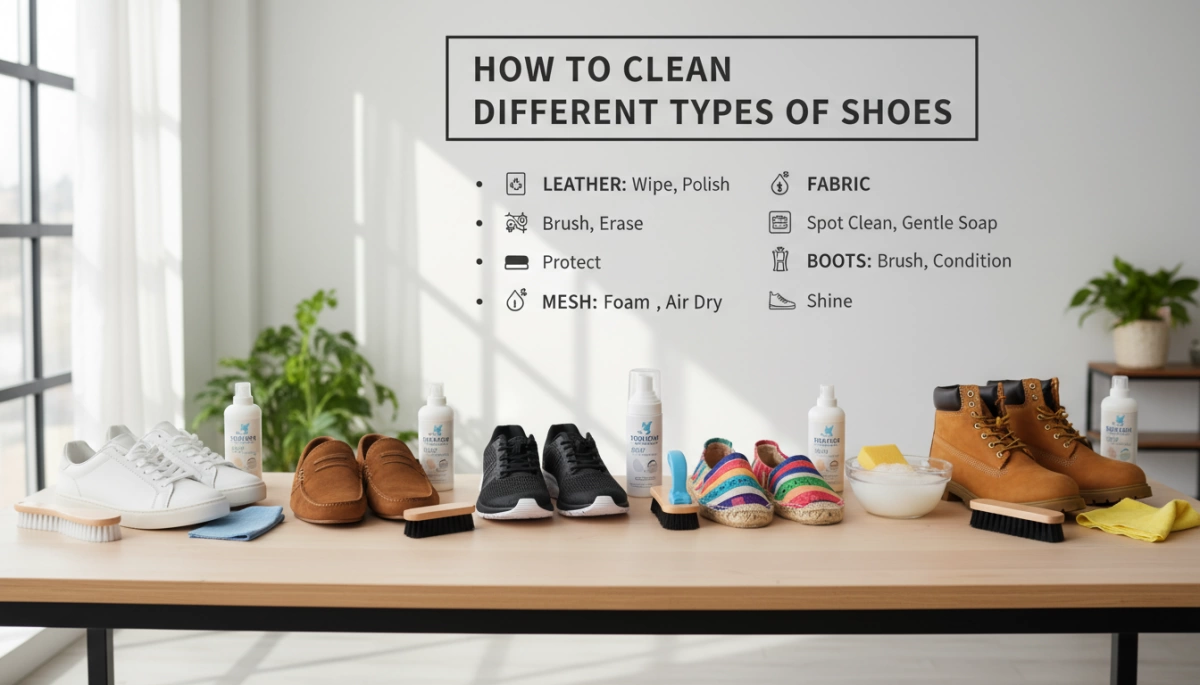
Leather and faux leather shoes need a bit of special care to keep them looking sharp and prevent damage like cracking. Start with a simple wipe down using a damp cloth to remove dirt and dust without soaking the material. For scuffs and marks, a melamine sponge (Magic Eraser) works wonders—gently rub the area to lift off stains without harming the surface. If you prefer a DIY method, a baking soda paste (mix baking soda with a little water) can also help remove scuff marks; just apply lightly and wipe clean.
Next, conditioning your leather shoes is crucial. Use a good leather conditioner to nourish the material and prevent it from drying out and cracking over time. Apply it evenly and let it soak in. Finally, buff the shoes with a soft cloth to restore shine and bring out that polished finish. This routine is essential in any reliable shoe care routine to keep your leather and faux leather footwear looking fresh and lasting longer.
For more tips on maintaining your footwear, check out our detailed footwear care guides.
Suede and Nubuck: The Dry-Clean Approach
When it comes to cleaning suede and nubuck, water can do more harm than good, so never use water unless absolutely necessary. Instead, follow these dry-clean techniques to keep your shoes looking sharp:
- Brushing Technique with Suede Brush: Use a soft suede brush to gently lift dirt and restore the texture. Always brush in one direction to maintain the nap.
- Eraser Method for Stubborn Stains: For tough spots, a suede eraser (or even a clean pencil eraser) works wonders. Rub gently on the stain to lift it without damaging the material.
- Using White Vinegar Sparingly: If a stain refuses to budge, dab a small amount of white vinegar on a cloth and lightly blot the area. This helps break down stains without soaking the fabric. Let it air dry and then brush to reset the texture.
- Resetting the Nap by Brushing: After cleaning, always finish with a thorough brushing to reset the suede’s nap and keep your shoes looking fresh.
Canvas Shoes (Converse, Vans): The Deep Clean
Canvas sneaker cleaning is straightforward but requires a good approach to get them looking fresh. Start by making a paste using baking soda and hydrogen peroxide—this combo tackles dirt and stains effectively without harsh chemicals. Apply the paste gently with a toothbrush, scrubbing in small circles to lift grime from the fabric. Be thorough but gentle to avoid damaging the canvas.
Once you’re done scrubbing, rinse your shoes with warm water to remove any leftover baking soda paste. Leaving residue behind can cause spots and stiffness once dry. For deeper cleaning, some canvas shoes can go in the washing machine—just follow these machine wash shoes guidelines:
- Remove laces and insoles before washing.
- Use a gentle laundry detergent.
- Wash on a cold, delicate cycle.
- Place shoes in a mesh laundry bag to protect them.
- Avoid the dryer; air dry instead.
Knit, Mesh, and Athletic Sneakers: Gentle Yet Effective Cleaning
Cleaning knit and mesh running shoes, as well as other athletic sneakers, requires a delicate touch to avoid damage, especially since these materials are often more fragile than leather or canvas.
- Gentle Brushing of Mesh: Start by using a soft brush or old toothbrush to gently remove loose dirt and dust from the mesh or knit upper. Avoid aggressive scrubbing, which can fray the fabric.
- Soapy Water Solution: Mix a small amount of gentle laundry detergent with warm water to create a mild cleaning solution. Dip the brush into this soapy water and carefully clean the fabric areas.
- Midsole Cleaning: For midsoles and harder parts of the shoe, switch to a stiffer brush. This helps lift stains and grime without harming your shoe’s structure.
- Proper Drying: After cleaning, air dry your sneakers in a cool, shaded area. Avoid direct sunlight or heat sources because excess heat can weaken the glue that holds your shoe together.
Restoring White Sneakers: How to Remove Yellowing
White sneakers often yellow over time, but you can bring back their crisp look with the right whitening agents. Here’s a quick comparison of popular methods:
| Whitening Agent | How to Use | Pros | Cons |
|---|---|---|---|
| Toothpaste (non-gel) | Apply directly, scrub gently with brush | Easy, affordable | May not tackle deep stains |
| Bleach (diluted) | Mix with water, apply carefully with cloth | Powerful, fast results | Can weaken fabric if overused |
| Baking Soda Paste | Mix baking soda + water, scrub with brush | Gentle, natural cleaner | Takes longer, mild results |
After treating your sneakers, using the UV sunlight method can boost whitening. Place your shoes in direct sunlight for a few hours—the UV rays help break down yellow stains naturally.
For drying, try the tissue paper hack:
- Stuff the sneakers with fresh tissue paper to absorb moisture
- Change paper periodically until fully dry
- This prevents soggy shoes and helps maintain shape
Restoring white sneakers doesn’t have to be hard—you just need the right products and a bit of patience. For daily shoe care tips, check out how to keep a polished look with the proper shoe care routine.
Don’t Forget the Inside: Eliminating Odors
Keeping your shoes fresh means paying attention to the inside, too. Start with insole care by removing them and letting them air dry completely after each use. This simple step prevents moisture buildup, which leads to odor and bacteria.
To deodorize, sprinkle baking soda inside the shoes overnight—it’s a natural deodorizer that absorbs moisture and smells. Alternatively, cedar shoe inserts work great to keep things fresh and add a subtle scent.
For disinfecting, lightly spray the interior with rubbing alcohol. It kills bacteria without soaking the material or causing damage. Just be sure to let your shoes dry in a well-ventilated area after spraying.
Taking these shoe deodorizer steps regularly boosts your shoe care routine and extends the life of both your insoles and footwear.
Drying and Storage: The Final Step
Proper drying and storage are crucial parts of your shoe care routine. After cleaning, never use direct heat like a heater or hairdryer to dry your shoes. Heat can warp materials, weaken glue, and cause leather or mesh to crack. Instead, go for air drying in a well-ventilated space away from direct sunlight.
To keep your shoes’ shape intact, stuff the toebox with paper or use shoe trees. This helps prevent creases, especially in leather or knit sneakers, ensuring they look fresh longer. Avoid plastic bags or airtight containers, which trap moisture and promote odor or mildew.
Frequently Asked Questions (FAQ)
Machine Washing Shoes: When and How
Machine washing shoes can be tempting for a quick clean, but it’s not always the best choice. Use a gentle cycle with cold water for canvas or knit shoes, and always remove laces and insoles beforehand. Placing shoes in a mesh laundry bag helps protect them and your machine. Avoid machine washing leather, suede, or shoes with glued soles, as the agitation and water can cause damage. Always air dry shoes after machine washing—never use heat.
Cleaning Frequency Recommendations
How often you clean your shoes depends on how often you wear them and the conditions. A good rule of thumb:
- Clean canvas and mesh sneakers every 2-3 weeks if worn regularly.
- Wipe down leather shoes after every few wears and condition monthly.
- Suede and nubuck need less frequent but delicate cleaning to avoid damage.
- Athletic shoes benefit from a light cleaning and odor control after heavy workouts.
Regular cleaning helps extend your shoes’ life and maintains appearance.
Best Homemade Shoe Cleaner Tips
For a safe and effective shoe care routine, try these homemade cleaners:
- Baking soda paste: Mix baking soda with water for tough stains on canvas and white sneakers.
- Vinegar solution: Use diluted white vinegar for odor removal and stubborn suede stains, but sparingly.
- Mild detergent mix: Combine gentle laundry detergent with warm water for scrubbing knit or mesh shoes.
- Toothpaste: A non-gel, white toothpaste works well for buffing away scuffs on white soles.
These DIY cleaners are affordable, accessible, and reduce exposure to harsh chemicals.

Related Posts