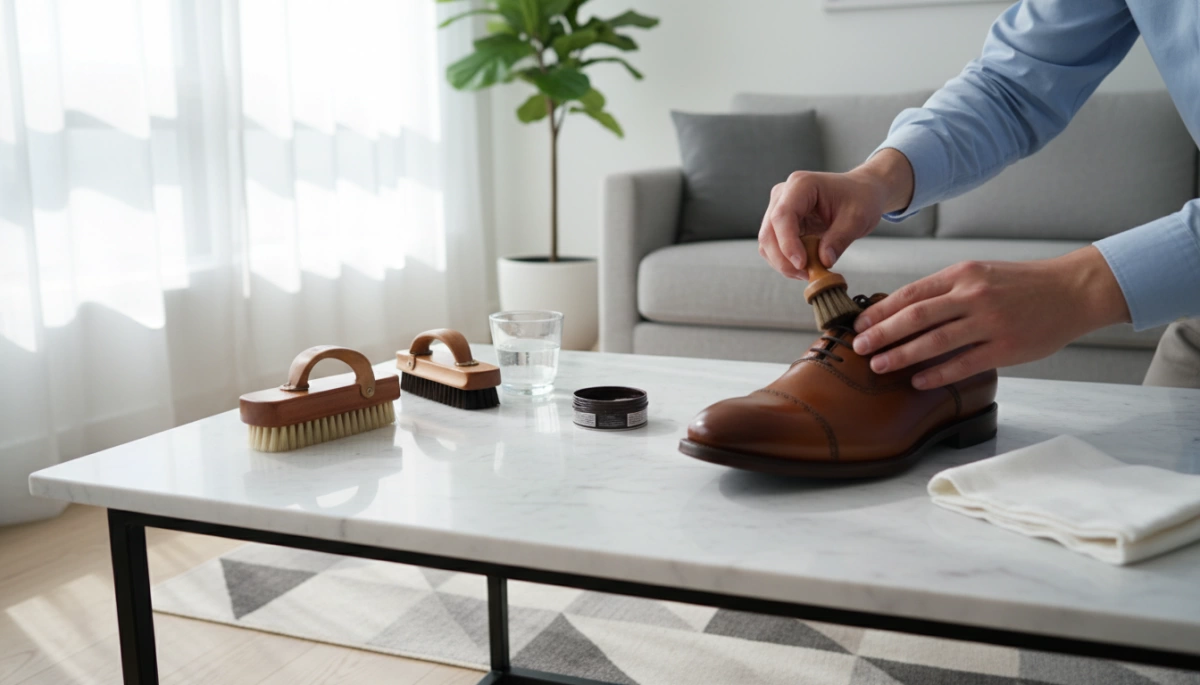
Mastering the art of shoe polishing starts with the right tools. Here’s what every serious shoe care enthusiast swears by:
Shoe Trees: Cedar Is Non-Negotiable
Cedar shoe trees aren’t just a luxury—they’re essential. They help retain your shoe’s shape, preventing creases and wrinkles, and absorb moisture after a long day, keeping the leather fresh and crack-free. Avoid plastic or metal; nothing beats the natural benefits of cedar wood for full-grain leather care.
Brushes: Horsehair vs. Dauber
Know your brushes:
Horsehair brush – Perfect for buffing. Its soft, natural bristles generate heat and friction for that sleek mirror shine technique.
Dauber brush – Smaller and finer, ideal for applying polishes close to welts and stitching without overdoing it.
The Cleaners: Saddle Soap vs. Leather Renomat
Cleaning is about prepping your leather:
Saddle soap gently removes dirt while preserving the leather’s oils. Use for regular cleaning.
Leather Renomat is your go-to for stripping old polish and wax buildup, resetting the leather’s canvas when layers become thick and caked.
The Nourishment: Leather Conditioners and Renovators
Leather needs to breathe and stay hydrated to avoid cracking. A leather conditioner penetrates deeply, restoring oils that keep leather supple. Renovators revive faded shoes and extend life, forming the true foundation before any polish.
The Polish: Cream and Wax Essentials
Shoe Cream adds pigmentation and hydration, restoring color and nourishing the leather. Think of it as your base for a rich, even patina.
Shoe Wax (Pate de Luxe) seals and protects. This hard wax, often containing Carnauba wax polish, creates that glossy, durable finish on toe boxes and heel counters.
The Cloth: Cotton or Chamois Over Synthetics
When buffing and applying polish, reach for an old cotton t-shirt or a soft chamois polishing cloth. These natural fabrics distribute polish evenly and generate shine without scratching. Synthetic rags just don’t cut it for that professional gleam.
With this artisan’s toolkit ready, you’ve set the stage for shoe care excellence—where every step matters to maintaining your Goodyear welt maintenance and prized shoes.
Phase 1: Preparation and Cleaning
The first step in the art of shoe polishing is thorough preparation. Start by removing the laces; this gives you full access to the tongue and prevents wax buildup around the eyelets, which often gets overlooked but can cause damage over time.
Next, insert quality shoe trees—cedar is best—for shaping and moisture absorption. A firm surface makes applying polish easier and protects the shoe’s structure during cleaning. This step is essential for maintaining the Goodyear welt and full-grain leather care.
Before polishing, gently dust off the shoe using a soft cloth or a horsehair brush. Removing dust and grit is crucial; any particles left can scratch the leather when you buff or apply wax.
If your shoes have old, hardened wax layers, it’s time to reset the canvas. Use a reliable solvent like Leather Renomat or saddle soap to strip away old polish carefully. This deep clean helps prevent buildup that dulls the leather’s natural shine and blocks the leather pores from breathing properly.
Phase 2: Deep Conditioning (The Life of the Leather)
Leather porosity is key to understanding why dry shoes crack over time. Full-grain leather naturally breathes and absorbs moisture, but without regular conditioning, it becomes brittle and prone to damage. This is where leather conditioners and renovators come into play—they replenish lost oils and keep the leather supple.
When applying conditioner, focus on the flex points like the vamp where the leather bends most. Use gentle, circular motions to massage the product in deeply, ensuring it penetrates rather than just sits on the surface. This step is crucial for Goodyear welt maintenance and overall shoe longevity.
After application, give the leather time to rest—about 20 to 30 minutes—so it can fully absorb the nourishment. Skipping this resting period means the conditioner won’t work its magic, and the leather remains vulnerable.
Phase 3: Pigment and Base Shine (Cream Polish)
Choosing the right color polish is crucial—match the hue carefully to your shoe’s leather, or opt for a neutral cream to maintain the natural shoe patina without altering its tone. This step enhances pigment while giving the leather needed hydration, a key for full-grain leather care that helps prevent cracking over time.
Use a dauber brush to apply the cream polish, focusing on the welts and stitching where polish often collects. This ensures even coverage without missing the tricky spots. After application, watch for the “haze”—a slight, dusty layer that appears when the cream has dried and is ready for buffing.
For the first buff, grab your horsehair buffing brush and use vigorous, prolonged strokes. The friction generates heat that helps the polish absorb deeply while starting to bring out a gentle base shine. This method prepares the leather perfectly for the next, higher-gloss layers in your shoe care routine.
Phase 4: The High Shine (Wax Polish)
Hard wax polish, often called pate de luxe, is essential for sealing the leather’s pores and creating that signature reflective shine everyone aims for in the art of shoe polishing. Unlike softer cream polishes, hard wax forms a protective barrier that guards against moisture and scuffing while enhancing the leather’s natural depth and luster.
When applying wax polish, focus only on the toe box and heel counter—these are the parts of the shoe that don’t flex much during walking. Applying wax to the flex points can cause cracking or peeling, so it’s best to leave those areas to cream polish and conditioners that keep the leather supple.
For the best results, use thin layers of wax rather than thick globs. Thin coats build gradually and allow for better control when working toward a mirror shine, while thick layers tend to crack and take longer to dry. After applying each thin layer, let it dry slightly before gently buffing and repeating to get that perfect glossy finish.
Using a quality carnauba wax polish like Saphir Médaille d’Or can really elevate your shoe patina and maintain Goodyear welt maintenance standards for long-lasting shoes. Consistency and patience in this phase are key to mastering the high-shine effect without compromising the leather’s health.
Phase 5: Mastering the “Glaçage” (Mirror Shine)
Achieving the perfect mirror shine, or glaçage, is all about precision—especially when it comes to the water-to-wax ratio. Too much water thins the wax and makes the shine dull, while too little leaves it thick and uneven. The goal is a delicate balance where the water lightly softens the hard carnauba wax polish, allowing it to layer smoothly and reflect light like glass.
The technique matters just as much as the ratio. Wrap a soft, tight cotton cloth around your fingers and use small, circular motions to build the shine gradually. This circular buffing warms the wax and encourages a smooth, even surface without over-applying.
The classic spit shine method takes this a step further by using ice water or a small amount of alcohol instead of plain water. These liquids help temper the wax, speeding up drying times and boosting the gloss, which is why many rely on this for that unmistakable high-gloss finish associated with full-grain leather care.
If your mirror shine turns cloudy or tacky, don’t panic. Lightly wipe the shoe with a clean, damp cloth to remove excess wax, then start buffing again using the circular motion. Patience is key here—building up thin, successive layers prevents buildup and keeps the surface flawless.
Mastering this “glaçage” phase will ensure your shoes not only look stunning but are protected with a reflective, durable shield—key for maintaining top-notch Goodyear welt maintenance and preserving that rich shoe patina.
Maintenance and Daily Care
Keeping your full-grain leather shoes looking sharp doesn’t have to be complicated. The key is a simple “Brush and Go” routine: every day, quickly brush off dust and dirt with a good quality horsehair buffing brush. This prevents grit from scratching the leather and keeps the natural shoe patina vibrant.
Rotation is another essential habit. Let your shoes rest for at least 24 hours between wears to allow moisture to evaporate and the leather fibers to recover. This practice extends the life of the leather and keeps your shoes comfortable and fresh.
Even with daily care, it’s important to restart the full polishing process every 4–6 weeks. This means proper stripping of old polish, deep conditioning, and reapplying cream and wax. Regular resets avoid buildup and keep the leather nourished and protected, preserving both appearance and integrity over time.