I used to stand in front of a closet stuffed with 80+ pieces and still feel like I had nothing to wear. Every morning was the same loop: pull something out, hate it, toss it on the chair, try again. Forty-five minutes later I’d leave the house frustrated and late. That stopped when I cut my work wardrobe to exactly 20 items. Here’s what I learned, what I kept, and why you should do the same.
The Core Philosophy: Why 20 Items Works Better Than 80
The problem wasn’t that I lacked options. It was that I had too many. Research on decision fatigue shows that each additional choice drains mental energy. When you face 30 shirt options at 7:15 AM, your brain defaults to either panic or the same safe choice every day — which defeats the point of having variety.
Twenty items forces a constraint that actually creates freedom. Every piece in my wardrobe earns its spot. Nothing sits unworn for months. Nothing gets bought on a whim and never touched again. The rule is simple: if I haven’t worn it in two weeks, it goes out.
The real shift was psychological. I stopped treating clothes as a costume for a different person and started treating them as tools for my actual life. I don’t need a ‘going out blazer’ and a ‘meeting blazer’ and a ‘casual Friday blazer.’ I need one good blazer that works for all three.
What I Cut Immediately
Trend pieces that looked dated after one season. Anything with a dry-clean-only tag that I never actually took to the cleaner. The three almost-identical navy sweaters that somehow all felt ‘wrong’ on different days. Donating them felt like losing dead weight.
What Stayed
Everything that passed the ‘do I feel good in this within five seconds of putting it on?’ test. That’s a low bar, but you’d be surprised how many clothes fail it.
The Exact 20 Pieces — And Why Each One Earned Its Spot

I’m not recommending you copy my list exactly. Your job, body type, and climate are different. But the logic behind each category is universal. Here’s the breakdown.
| Category | Number of Items | Specific Picks | Why It Works |
|---|---|---|---|
| Blazers | 2 | Theory wool blazer ($395), Uniqlo cotton blazer ($80) | One structured for client meetings, one soft for everyday wear |
| Trousers | 3 | Everlane straight-leg ($98), COS wide-leg ($120), Old Navy black skinny ($35) | Covers slim, wide, and cropped silhouettes |
| Dresses | 2 | Eileen Fisher jersey dress ($198), Aritzia midi dress ($150) | One for summer, one for layering in winter |
| Skirts | 2 | Reformation silk slip ($228), Mango A-line ($60) | Dresses up or down, both machine washable |
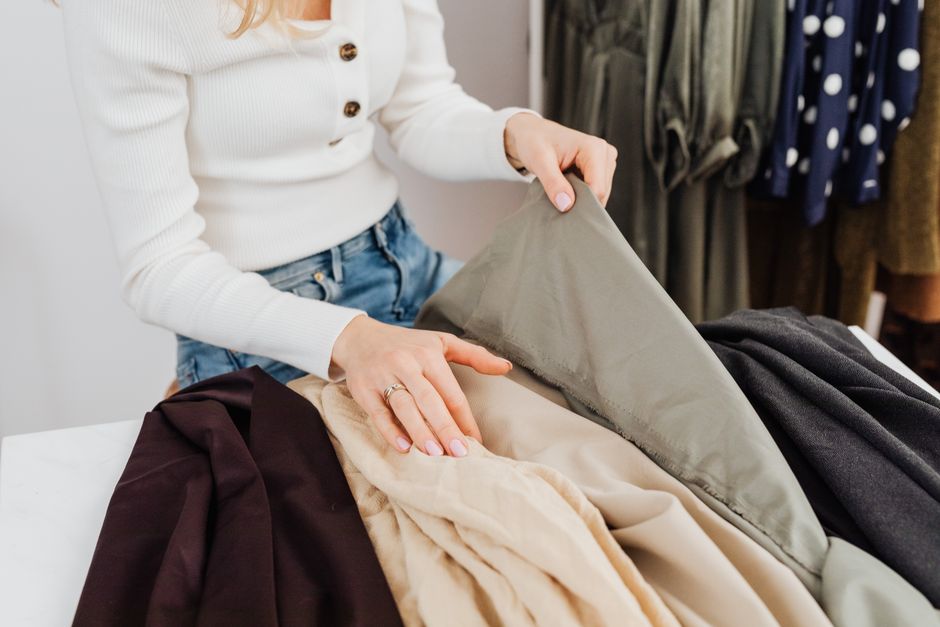
| Tops (long sleeve) | 4 | Uniqlo cashmere blend ($50), Everlane silk shell ($98), COS cotton poplin ($70), Gap fitted turtleneck ($40) | Neutral colors, mix of textures, all layer under blazers |
| Tops (short sleeve) | 2 | Madewell linen tee ($35), Everlane pima crew ($25) | Warm weather or casual Fridays |
| Outerwear | 1 | J.Crew wool coat ($250, bought secondhand) | Covers fall through early spring |
| Shoes | 3 | Rothy’s pointed flats ($145), Sam Edelman loafers ($100), Everlane leather ankle boots ($195) | Flats, loafers, boots — covers every occasion |
| Accessories | 1 | Madewell leather belt ($50) | Breaks up monotone outfits instantly |
Total cost: roughly $2,500. That sounds like a lot until you realize I spent that much every year on clothes I barely wore. This wardrobe has lasted me three years with minimal replacements. The Uniqlo blazer is on its second year and still looks new.
The Mistakes I Made (So You Don’t Have To)
I didn’t get this right on the first try. I went through two failed capsule attempts before this one stuck. Here are the three biggest errors.
Mistake 1: Buying all neutrals. My first capsule was 20 pieces of black, navy, gray, and white. I looked like I was in a uniform. Boring. I swapped two tops for a rust-colored silk shell and a forest green turtleneck. Those two pieces made the whole wardrobe feel intentional instead of sterile.
Mistake 2: Ignoring fabric quality. I bought cheap polyester trousers that pilled after three washes. They looked terrible and made me feel frumpy. Now I check the fabric tag before buying anything. Natural fibers — cotton, wool, silk, linen — last longer and look better. The Eileen Fisher jersey dress is 95% organic cotton and 5% spandex. It’s been through 50+ washes and still holds its shape.
Mistake 3: Forgetting the ‘fun’ piece. A capsule wardrobe that’s all work and no play is depressing. I added one statement piece — a Reformation silk slip skirt in a deep emerald. It pairs with every top I own and makes me look forward to getting dressed. Don’t cut joy out of your wardrobe just to hit a number.
When a 20-Item Wardrobe Is a Bad Idea

Let me be honest. This approach isn’t for everyone. If you work in a creative field where dressing differently every day is part of your personal brand, 20 items will feel suffocating. If your job involves frequent formal events, black-tie dinners, or client entertainment where you’re photographed repeatedly, you’ll need more than two blazers and three pairs of trousers.
And if you live somewhere with extreme seasonal swings — like Minnesota where it hits -20°F in winter and 95°F in summer — you physically need more than 20 items to cover both ends. In that case, aim for 30 pieces with seasonal rotation. Keep 20 active and 10 stored.
Also skip this if you’re still figuring out your personal style. A capsule wardrobe works best when you already know what you like. If you’re in an experimental phase, you’ll just get frustrated by the constraints. Give yourself permission to try things first.
How My Mornings Changed — The Real Results
Before: 45 minutes of indecision, frustration, and often a last-minute outfit change. After: 7 minutes. I pick a bottom, pick a top, add a blazer or not, shoes, belt, done.
That’s 38 minutes saved every morning. Over a 250-day work year, that’s 158 hours — almost a full week of waking hours. I use that time to make actual breakfast instead of grabbing a granola bar on the way out. I read. I walk to work instead of taking the subway. The wardrobe change didn’t just improve my mornings. It improved my whole day.
There’s also a financial benefit I didn’t expect. I stopped buying clothes entirely for 18 months after building this wardrobe. No browsing. No ‘treat yourself’ purchases. My credit card bill dropped by about $200 a month. That’s $3,600 saved. The wardrobe paid for itself and then some.
What I’d Do Differently If I Started Today
If I were building this wardrobe from scratch in 2026, I’d make three changes.
First, I’d buy the blazer secondhand. The Theory wool blazer is excellent, but it retails for $395. I’ve seen identical quality at The RealReal for under $100. The same goes for the Eileen Fisher dress. These are classic shapes that don’t change year to year. There’s no reason to pay full retail.
Second, I’d swap one pair of trousers for a midi skirt. Turns out I reach for skirts more often than trousers in warm weather. A single Mango A-line skirt ($60) would have saved me from buying a third pair of pants that I barely wear.
Third, I’d skip the cashmere blend top. It pills after one season. The Uniqlo cashmere blend is fine for the price, but it’s not durable. I’d replace it with a 100% merino wool sweater from Icebreaker ($110) that lasts years without pilling.
My final recommendation: start with 15 items, not 20. Leave room to add pieces as you discover what you actually need. Buy the Everlane straight-leg trousers ($98) and the Uniqlo cotton blazer ($80) first. Those two pieces will carry you through 90% of work situations. Everything else is fine-tuning.

Related Posts