The Human Touch: Why Craftsmanship Matters
When was the last time you held something handmade and truly felt its soul? That human touch transforms an ordinary object into a story — stitched with care, shaped by skilled hands, and steeped in tradition. In today’s fast-paced world of mass production, handmade accessories stand out as beacons of authenticity and individuality.
Imperfection as Perfection: The Beauty of Wabi-Sabi
Handmade goods embrace the philosophy of wabi-sabi, where imperfection isn’t a flaw but a testament to authenticity. Every slight irregularity — whether it’s a subtle brushstroke on hand-loomed fabric or a tiny bend in a silver wire wrap — marks a unique narrative. This imperfect beauty brings warmth and character, making each piece truly one-of-a-kind.
Mastery of Skills: Years of Artisan Training
Behind every artisanal accessory lies a deep mastery of traditional techniques. Be it the precise hammering of a silversmith, the delicate weaving of indigenous textiles, or the meticulous beadwork passed down through generations, artisans spend years honing their craft. Their refined skills breathe life into each creation, crafting heirloom-quality pieces that transcend fleeting trends.
Preserving Cultural Heritage Through Art
Supporting handmade accessories means supporting the preservation of living cultural heritage. Artisans practicing indigenous weaving, traditional metalwork, or hand-stitched leatherwork keep ancient stories and skills alive, connecting us to histories and traditions often overlooked in modern manufacturing. Each purchase is a conscious act toward sustaining this rich tapestry of global craftsmanship.
In choosing handmade, you’re not just buying an accessory — you’re embracing a legacy infused with passion, skill, and the timeless human spirit.
Quality and Longevity: The Economics of Handmade
When it comes to handmade accessories, quality starts with material selection. Artisans prefer higher-grade materials like full-grain leather, sterling silver, and natural gemstones because these not only look better but also last longer. Unlike mass-produced items that often rely on cheaper substitutes, handmade pieces boast heirloom quality created to endure years of use.
Durability is another important factor that sets handmade apart from fast fashion. For example, hand-stitched leather goods fare better than machine-glued alternatives, resisting wear and tear far longer. This careful artisan craftsmanship means these accessories don’t just look good—they actually stand up to daily life without falling apart.
While handmade accessories may come with a higher upfront cost, a cost-per-wear analysis reveals their real value. Paying more initially means avoiding frequent replacements, saving money in the long run. This reflects the slow fashion movement’s emphasis on investing in quality, sustainable pieces over disposable trends.
The Ethical and Sustainable Impact
Handmade accessories often shine when it comes to ethical and sustainable impact. Small batch production means fewer resources wasted, as artisans create limited quantities that match real demand rather than flooding the market. This approach aligns well with the slow fashion movement, helping reduce the environmental footprint compared to mass-produced goods.
Transparency in the supply chain is another key advantage. Artisan makers usually offer clear insight into where their materials come from and how their products are made. This traceability supports fair labor practices, ensuring no sweatshops or exploitative conditions are involved. When you purchase handmade accessories, you’re backing products that prioritize ethical standards and respect for workers.
Additionally, buying handcrafted pieces directly supports local communities and economies. Rather than funneling money to multinational corporations, your purchases empower artisans and small businesses, which helps preserve traditional craftsmanship and cultural heritage. Supporting such community-driven economies fosters sustainable livelihoods and keeps ancient artisan skills alive.
Spotlight on Popular Handmade Accessory Categories
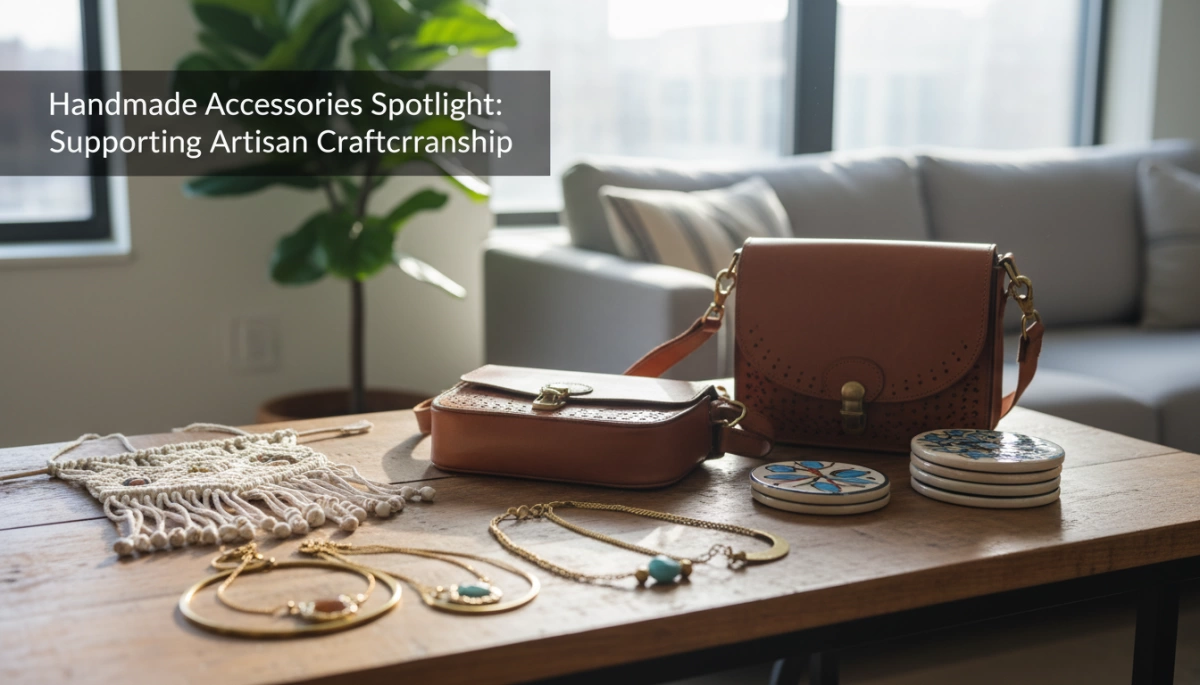
Handmade accessories come in a variety of stunning forms, each showcasing unique artisan techniques and sustainable materials. Here’s a quick look at some popular categories:
| Category | Features and Craftsmanship | Materials and Techniques |
|---|---|---|
| Artisan Jewelry | Metalsmithing, wire wrapping, hand-setting stones | Ethically sourced stones, sterling silver |
| Leather Goods | Hand-dyeing, hand-stitched belts, wallets, bags | Full-grain leather, hand-stitched detailing |
| Textile Accessories | Hand-looming, knitting, weaving | Natural fibers like wool, silk, and linen |
These pieces are often one-of-a-kind or bespoke accessories that support traditional craftsmanship and the slow fashion movement.This ensures you invest in heirloom quality, ethical jewelry, and conscious consumerism with every purchase.
How to Identify Authentic Artisan Work (Buyer’s Guide)
When shopping for handmade accessories, knowing how to spot authentic artisan work is key. Here’s what to look for:
-
The “Tell-Tale” Signs
Authentic pieces usually carry a maker’s mark—a signature or stamp from the artist. This small detail shows pride in craftsmanship and helps confirm the item’s origin. Check for a quality finish: clean edges, tight stitching, and even coloring are signs of true artisan techniques. Branding should feel personal, not generic or mass-produced.
-
Questions to Ask
Don’t hesitate to inquire about the materials used—are they natural or sustainable like full-grain leather or ethically sourced gemstones? Ask about the crafting process: was it hand-stitched, hand-woven, or hand-dyed? Knowing this helps you connect with the slow fashion movement and conscious consumerism values behind your purchase.
-
Avoiding “Handwashing”
Beware of dropshipped imitations pretending to be handmade. Watch for generic photos or inconsistent product images online. You can use a reverse image search to check if the same picture appears elsewhere under different sellers. Authentic artisan accessories are always unique, often one-of-a-kind pieces made with care—not mass-produced for quick resale.
By keeping these tips in mind, you’ll support genuine artisan craftsmanship and make informed choices that help preserve cultural heritage and ethical fashion standards. For more on dressing with confidence and expressing your unique style, check out tips on how to dress with confidence.

Related Posts