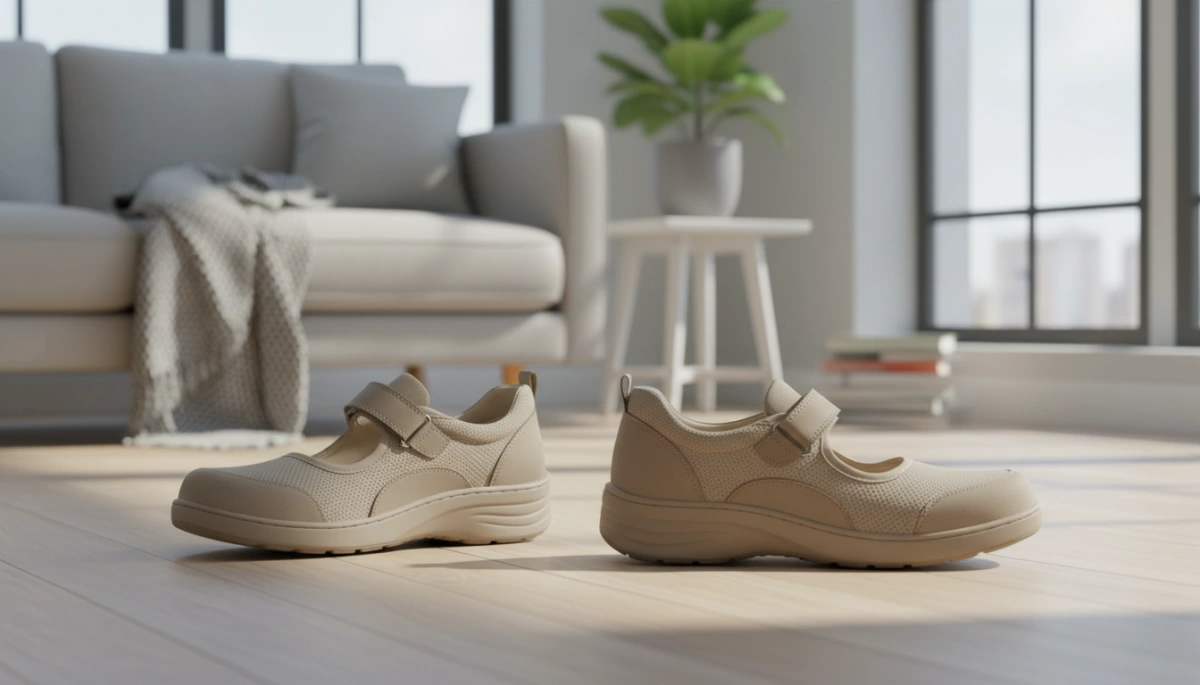
The Anatomy of a Therapeutic Shoe: What Sets Them Apart?
When it comes to shoes for special foot conditions, therapeutic footwear stands out for its thoughtful design tailored to comfort and foot health. Here’s what makes these shoes unique:
Extra Depth
Therapeutic shoes feature extra depth, providing more space inside. This is essential for:
- Accommodating swollen feet or foot deformities
- Allowing room for custom orthotics compatibility
- Preventing pressure points that cause pain or skin problems
The Toe Box
A wide toe box is a hallmark of therapeutic shoes. This design:
- Relieves pressure on bunions, hammertoes, and claw toes
- Helps reduce irritation and friction
- Gives toes freedom to move naturally for better balance and comfort
Structural Stability
Orthopedic footwear offers excellent structural stability through:
- Firm heel counters that support the ankle
- Rigid midsoles that control foot motion and reduce overpronation or supination
- Non-slip outsoles to improve traction and safety
Interior Materials
Inside these shoes, you’ll find seamless interior lining and soft, breathable fabrics that:
- Reduce irritation for sensitive or neuropathic skin
- Manage moisture to prevent fungal infections
- Provide gentle cushioning to absorb impact and protect inflamed areas
Understanding these core features helps us appreciate why therapeutic shoes are critical for managing foot health and pain relief. Whether you experience plantar fasciitis, arthritis, or diabetic neuropathy, shoes designed with these elements can make a significant difference.
Matching Footwear to Specific Structural Deformities
Choosing the right shoes for structural foot deformities is crucial to reduce pain and prevent further damage. Here’s how to match footwear with common issues:
Bunions (Hallux Valgus)
For bunions, look for bunion-friendly shoes with a wide toe box and extra depth. These provide room where the big toe meets the foot, reducing pressure and friction. Shoes with soft, seamless interior lining can ease irritation, while a stretchable upper helps accommodate the bunion without squeezing.
Hammertoes and Claw Toes
Shoes for hammertoes or claw toes need an ample toe box and extra depth to avoid crowding. Look for orthopedic footwear that features a straighter, wider toe area to relieve pressure. Avoid narrow or pointy styles, and consider shoes with adjustable straps or laces to customize fit and support.
Flat Feet (Pes Planus) vs. High Arches
Flat feet benefit from shoes with strong arch support insoles and firm midsoles for stability, addressing overpronation. Meanwhile, those with high arches need cushioned soles and shock absorption to reduce impact stress. Both types should allow space for custom orthotics compatibility to provide personalized support.
Footwear Solutions for Inflammatory and Pain Conditions
Inflammatory foot issues like plantar fasciitis, metatarsalgia, and arthritis need targeted footwear to ease pain and boost comfort.
- Plantar Fasciitis: Shoes with strong arch support insoles and excellent shock absorption reduce heel strain. Look for cushioned soles that protect the plantar fascia from impact, aiding in daily relief.
- Metatarsalgia (Ball of Foot Pain): Footwear with a wide toe box and extra padding around the ball of the foot minimizes pressure. Orthopedic footwear designed to evenly distribute weight can prevent aggravating metatarsal pain.
- Arthritis (Osteo and Rheumatoid): Soft, flexible shoes with seamless interior lining help reduce irritation on swollen joints. Supportive soles combined with slight cushioning offer stability and comfort during movement.
Custom orthotics compatibility is a bonus here, allowing you to add tailored insoles that address specific pain points. Choosing shoes specifically designed for these conditions is vital for improving mobility and reducing discomfort day after day.
For a deeper dive into selecting the right materials, explore our fabric breathability guide that complements therapeutic footwear nicely.
Critical Considerations for Systemic Conditions
When it comes to systemic conditions like diabetes, neuropathy, edema, and lymphedema, choosing the right therapeutic footwear is crucial. Diabetic and neuropathy-friendly shoes focus on preventing injuries and ulcers by offering extra protection and a seamless interior lining to reduce friction. These diabetic walking shoes often have non-slip outsoles and extra depth to accommodate custom orthotics compatibility and accommodate foot changes without causing pressure points.
For those dealing with edema and lymphedema, the key is volume management. Shoes designed for swelling typically feature adjustable closures and stretchy, breathable materials to adapt comfortably throughout the day. Proper shock absorption and wide toe boxes reduce pressure on sensitive areas, avoiding irritation and worsening swelling.
Selecting shoes that address these conditions can dramatically improve comfort and foot health, preventing complications that might otherwise arise from poorly fitting footwear. For anyone managing systemic foot issues, investing in quality orthopedic footwear with these features is a smart step toward long-term wellbeing. For tips on maintaining your footwear’s integrity alongside your condition, you might find helpful advice in how to dress for specific needs in daily wear.
The Role of Custom Orthotics and Insoles
Custom orthotics and insoles play a crucial role in managing special foot conditions, especially when paired with therapeutic footwear. One major benefit is removable footbeds, which many orthopedic footwear options feature. These allow you to easily swap out standard insoles for custom orthotics tailored to your foot’s unique shape and support needs. This compatibility enhances comfort and addresses issues like arch support, plantar fasciitis relief, or metatarsalgia more effectively.
Another important aspect is volume management within the shoe. Foot conditions often cause swelling or deformities that change foot volume throughout the day. Shoes designed for special foot conditions offer adjustable space, combined with orthotics, to accommodate these fluctuations without compromising fit or support. This adaptability is essential for conditions like edema and neuropathy, where swelling varies over time.
In , the right combination of custom orthotics compatibility and footbed removability within orthopedic footwear maximizes relief and promotes foot health for many special conditions—making these features a must-have when choosing therapeutic shoes. For more on maintaining shoe comfort and durability, you can check out tips on how to prolong the life of your footwear.
A Professional Fitting Guide: How to Buy Without Regret
Finding the right shoes for special foot conditions means nailing the fit from the start. Here’s what you need to know:
Timing Matters
Try your shoes later in the day when your feet are naturally swollen. This helps avoid buying shoes that feel fine in the morning but squeeze by afternoon, especially important for those managing edema and swelling.
The “Thumb Width” Rule
When fitting shoes, ensure there’s about a thumb’s width of space between your longest toe and the shoe’s end. This extra room prevents pressure on sensitive areas like bunions or hammertoes and allows for natural foot movement.
Width vs. Volume
Don’t just focus on width; volume (the overall space inside the shoe) is just as crucial. People with flat feet or inflammatory pain conditions need shoes that can comfortably accommodate foot shape variations without tight spots that worsen discomfort.
The Break-in Myth
Quality orthopedic footwear should feel good from the start. Don’t count on breaking in shoes to fix pinching or instability. Shoes designed for therapeutic use come ready with the right support and fit, including features like a wide toe box and shock absorption.
Remember, proper fit ensures better comfort and effectiveness for all your foot conditions. For style tips that complement your health-focused footwear, check out guidance on how to get your wardrobe ready for any occasion.
Balancing Aesthetics with Functionality
When it comes to shoes for special foot conditions, you don’t have to sacrifice style for comfort. Modern orthopedics has advanced to offer therapeutic footwear that looks just as good as it feels. Today’s designs blend the medical benefits of orthopedic footwear with trendy elements, ensuring you can match your shoes with any outfit effortlessly.
Style versatility is a key feature in many therapeutic shoes now. Whether you need bunion-friendly shoes, plantar fasciitis relief models, or diabetic walking shoes with extra depth and wide toe boxes, there are plenty of options that do not scream “medical shoe.” From sleek flats to sporty sneakers, you can find non-slip outsole options with seamless interior lining that cater both to appearance and function.
Ultimately, choosing the right therapeutic footwear means you get proven foot support, shock absorption, and custom orthotics compatibility — without giving up your personal style.

Related Posts