
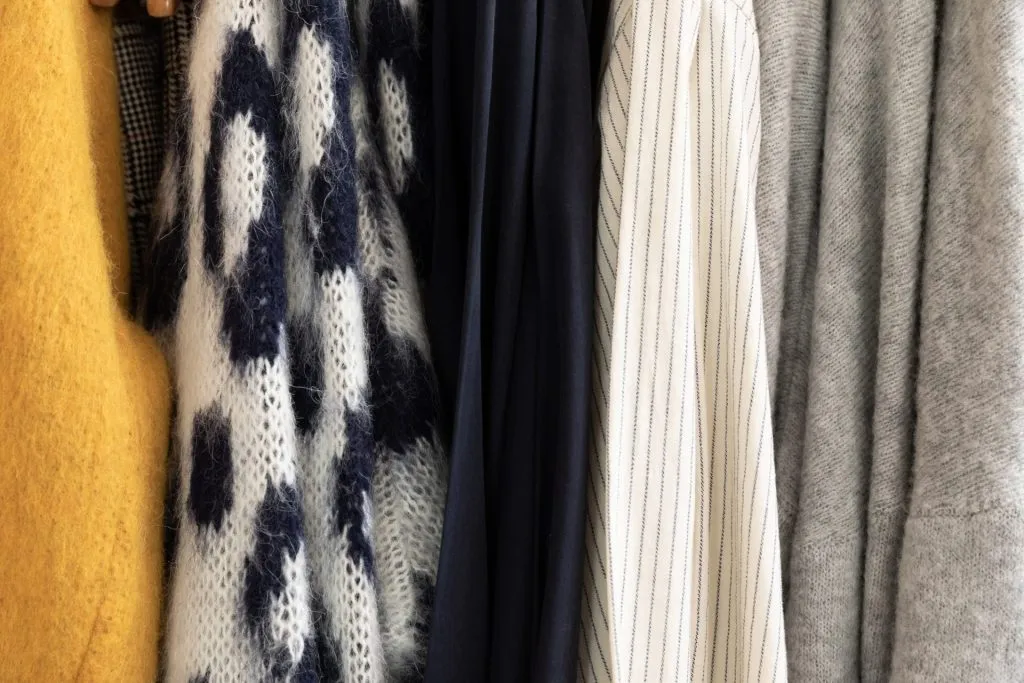
You have 80 pieces of clothing crammed into your closet. You stand in front of it every morning for ten minutes, pull out three tops, try two, and end up in the same black sweater you wore yesterday. You are not alone. And it is not your fault. The problem is not that you don’t have enough clothes. The problem is that you have no system.
The number one reason you have nothing to wear is that your wardrobe is a collection of random purchases, not a curated system of interchangeable pieces. You bought a sequin top on sale because it was $12. You bought a pair of neon green trousers because you saw them on Instagram. You bought a wool blazer because it felt “grown-up.” None of these items talk to each other. They are strangers living in the same closet.
This article is not about buying more. It is about fixing the system. Here is exactly how to do it.
Why Your Closet Feels Full but Empty
You have a closet full of orphans. An orphan is a piece of clothing that only works with one or two other items. That floral midi skirt? It only goes with that one white bodysuit. That olive utility jacket? It only works with black jeans. When you have 30 orphans, you don’t have 30 outfits. You have maybe five.
Think about it. A truly functional wardrobe works like Lego bricks. Every top should work with at least three bottoms. Every shoe should work with at least five outfits. If an item can’t pair with at least three other things in your closet, it is dead weight.
Here is the hard truth: most people buy clothes based on how they look on a hanger, not how they fit into their existing wardrobe. You see a beautiful silk blouse. You buy it. You get home. It doesn’t go with any of your pants. So you buy new pants. Then those pants don’t go with your shoes. So you buy new shoes. This is the retail death spiral. It is how you end up with a closet worth $4,000 that produces four wearable outfits.
The fix is brutal but simple. You have to audit every single piece and ask one question: “What three other items in my closet does this work with?” If the answer is zero or one, it goes.
The 5-Step Wardrobe Audit That Actually Works
This is not a Marie Kondo spark-joy exercise. This is a surgical removal of everything that is wasting your time and money. Set aside three hours. Take everything out of your closet. Every single thing. Pile it on your bed. Now follow these five steps.
Step 1: The Three-Outfit Test
Pick up each item. For every piece, mentally create three complete outfits that include it. Not aspirational outfits. Outfits you would actually wear this week. If you cannot make three, the item goes into the “maybe” pile. Be honest. That sequin mini skirt you bought for New Year’s Eve 2019? You wore it once. You are not going to wear it again. It goes.
Step 2: The Fit Filter
Now take the “maybe” pile and try on every single piece. If it is too tight, too loose, pilled, faded, or has a stain you haven’t fixed in six months, it goes. No exceptions. Keeping clothes that don’t fit is hoarding, not fashion. A pair of Levi’s 501s that are two sizes too small are not an investment. They are a guilt trip.
Step 3: The Color Palette Lock
Spread the survivors on your bed. Look at the colors. If you have a navy coat, a black coat, a brown coat, and a gray coat, pick one. Keep two max. A functional wardrobe works within a unified color palette. Pick three neutrals (black, navy, cream, gray, olive) and two accent colors (burgundy, mustard, rust, forest green). Everything must fit within that palette. If it doesn’t, it goes.
This is where brands like Everlane, Uniqlo, and Madewell shine. Their core basics are designed to work together across seasons. A Uniqlo cashmere crewneck in heather gray ($70) will pair with Everlane’s high-rise straight jeans ($98) and a Madewell leather belt ($45). That is a system. A random $12 neon top from a fast-fashion site is not.
Step 4: The Category Cap
Set a maximum number per category. Here is a realistic starting point:
| Category | Max Pieces | Example Brands |
|---|---|---|
| Jeans / trousers | 5 | Levi’s, Everlane, Madewell |
| Tops (tees, blouses, sweaters) | 12 | Uniqlo, Reformation, COS |
| Outerwear (jackets, coats, blazers) | 4 | Aritzia, The North Face, J.Crew |
| Dresses | 4 | Reformation, Sézane |
| Shoes (all types) | 8 | Veja, Dr. Martens, Sam Edelman |
| Accessories (belts, scarves, bags) | 6 | Madewell, Everlane |
If you have 15 pairs of jeans, you are keeping 10 that you never wear. Pick the best five. Donate the rest.
Step 5: The One-Week Test
Put the survivors back in your closet. Live with them for one week. If you find yourself reaching for something that is not there, write it down. If you find yourself avoiding something that is there, remove it. After one week, you will have a closet of maybe 30-40 pieces that actually work together. That is enough for 100+ outfits.
The Shopping Trap: Why You Keep Buying the Wrong Things
You already know the feeling. You walk into a store, see a beautiful dress, buy it, and get home to realize it doesn’t match anything. This happens because you are shopping with your eyes, not your wardrobe.
The fix is a shopping list. Before you buy anything, ask yourself: “What gap in my system does this fill?” If you have five black tops and zero cream tops, and your wardrobe palette includes cream, you need a cream top. That is a valid purchase. If you already have three black tops, buying a fourth is not shopping. It is collecting.
Another mistake: buying for a life you don’t live. You work from home three days a week. You do not need five blazers. You need good sweaters and comfortable jeans. Be honest about your actual life. If 80% of your time is casual, 80% of your wardrobe should be casual. Not the other way around.
Here is a concrete rule: for every new item you bring in, one old item must leave. This is the one-in-one-out rule. It forces you to be selective. If you buy a pair of Veja sneakers ($120), you have to donate or sell a pair of shoes you already own. This stops the accumulation before it starts.
The 80/20 Rule of Wardrobes (And Why You Hate 80% of Your Clothes)
You wear 20% of your clothes 80% of the time. This is not a theory. It is backed by data from every closet audit ever done. The other 80% of your clothes are taking up space, creating guilt, and making it harder to find the stuff you actually wear.
Why do you keep the 80%? Because you paid for it. Because you might lose weight. Because it was a gift. Because it’s vintage and “cool.” None of these are good reasons. Clothing is a tool, not a museum. If you are not using it, it is clutter.
Here is what happens when you keep the 80%: every morning, you have to dig through 60 pieces you don’t want to find the 15 you do. That takes mental energy. That creates decision fatigue. That makes you feel like you have nothing to wear. Get rid of the 80%.
A friend of mine did this. She had 120 pieces. She cut it to 35. She now gets dressed in three minutes flat. She wears everything she owns. She saves money because she stops buying duplicates of things she already has. She stopped feeling guilty about the unworn items. It changed her relationship with clothes completely.
Why Your Current Closet Layout Is Working Against You
Even after you edit, if your closet is organized badly, you will still feel like you have nothing. The typical closet is organized by category: all tops together, all pants together, all dresses together. This is the problem. It forces you to think in categories, not outfits.
Instead, organize your closet by outfit zone. Group items that you wear together. For example:
- Work zone: Blazers, silk blouses, tailored trousers, leather loafers
- Weekend zone: Cashmere sweaters, straight-leg jeans, white sneakers, denim jacket
- Evening zone: Slip dresses, heeled boots, leather jacket, statement earrings
This way, when you need a work outfit, you grab from the work zone. You don’t have to mentally assemble pieces from across the room. The decision is already made for you.
Also: visible storage matters. If your clothes are folded in deep drawers, you will forget they exist. Use open shelving or shallow drawers. Hang everything you can. If you can’t see it, you won’t wear it. This is why a well-organized closet with 30 pieces feels bigger than a stuffed closet with 80 pieces. You can actually see what you own.
The Failure Modes: What Will Derail Your Wardrobe Fix
Most people try to fix their wardrobe once, fail, and go back to buying more. Here are the three most common failure modes and how to avoid them.
Failure 1: Emotional attachment. You keep the dress you wore to your sister’s wedding because it holds memories. That is fine. Put it in a memory box. Do not keep it in your daily wardrobe. It is a souvenir, not a garment. Buy a storage bin for sentimental pieces. Your closet is for clothes you actually wear.
Failure 2: The “but I paid $200 for it” trap. Sunk cost fallacy. You already spent the money. Keeping the item does not get the money back. It just costs you time and mental energy every day. Donate it, sell it on The RealReal or Poshmark, and move on. The $200 is gone. Keeping the dress does not bring it back.
Failure 3: Buying the same mistakes again. You declutter 10 fast-fashion tops. Six months later, you buy 10 more. This happens because you haven’t fixed your shopping habits. The solution: implement a 30-day waiting period for any non-essential purchase. If you still want it after 30 days, and it fills a real gap in your system, buy it. 90% of impulse purchases will not survive the wait.
When NOT to Follow This Advice
This system works for 90% of people. But there are exceptions.
If you have a job that requires strict dress codes across multiple contexts (client meetings, factory visits, black-tie events), you may need more pieces. That is fine. The principle still applies: every piece must work with at least three others. You just have more zones.
If you are actively body-changing (pregnancy, significant weight loss or gain, medical treatment), do not do a full audit. Your sizes will change. Focus on buying a few versatile pieces in your current size and wait until your body stabilizes. The last thing you need is to declutter everything and then have nothing that fits.
If you genuinely enjoy fashion as a hobby — you love collecting vintage pieces, you style outfits for fun, you rotate seasonal wardrobes — then ignore everything I just said. This system is for people who are frustrated by their closet, not for people who love it. If you love your 80-piece collection, keep it. But if you are standing in front of a full closet every morning feeling stressed, this is for you.
The goal is not a minimalist wardrobe. The goal is a functional one. A wardrobe where every piece earns its place. A wardrobe where you can get dressed in under five minutes and feel good about what you are wearing. That is possible with 30 pieces. It is impossible with 80 orphans.
Start with the audit. Do not buy anything new until you finish it. Your next purchase should not be a piece of clothing. It should be a system.

Related Posts


