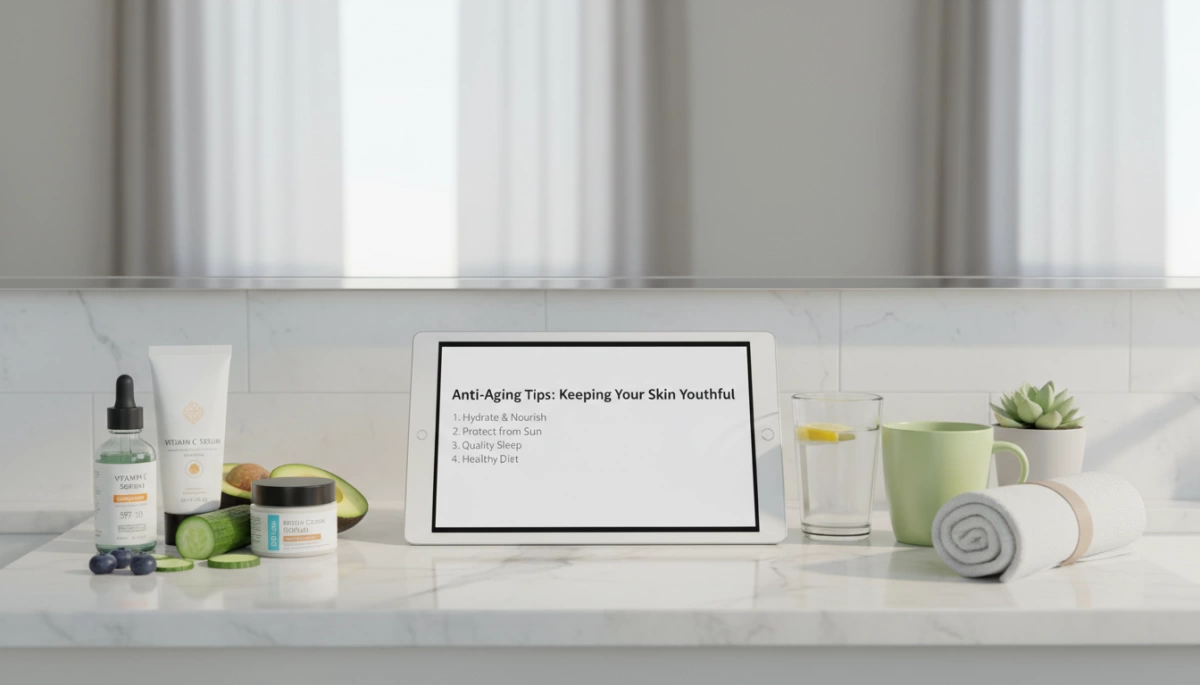
If you’re serious about keeping your skin youthful and fighting the visible signs of aging, then you’re in the right place. Aging is natural, but photoaging—the premature breakdown of collagen and elastin caused by sun exposure—doesn’t have to be. This guide strips away the noise, focusing on science-backed anti-aging tips that actually work: from the power of retinoids and vitamin C serum to protecting your skin barrier and locking in hydration the right way. Ready to boost your skin’s resilience and glow? Let’s get started.
Understanding Why Skin Ages: Collagen, Elastin, Skin Barrier, and Cell Turnover
Ever wonder why our skin starts to lose its youthful glow over time? The biggest culprits are changes in collagen production, elastin, the skin barrier, and cell turnover.
- Collagen and Elastin: These two proteins act like the skin’s scaffolding, keeping it firm and elastic. As we age, collagen production slows down, and elastin fibers become less flexible. This leads to wrinkles and sagging skin.
- The Role of the Skin Barrier: Our skin barrier protects against environmental damage and moisture loss. When it’s compromised, the skin becomes dry, dull, and more prone to irritation and oxidative stress—one of the main drivers of premature aging.
- Cell Turnover: This is how quickly your skin sheds old cells and replaces them with new ones. With age, the cell turnover rate slows down, causing dullness and uneven texture. Boosting this process helps maintain a fresh, youthful complexion.
Understanding these factors will help you choose the right anti-aging skincare strategies that really work—targeting the root causes instead of just masking signs of aging.
The Non-Negotiables of an Anti-Aging Skincare Routine
When it comes to keeping your skin youthful, a few essentials can’t be skipped.
Sun Protection: The #1 Anti-Aging Tool
Daily use of a broad-spectrum SPF is your best defense against photoaging. UV rays break down collagen production and cause free radical damage, leading to wrinkles and loss of skin elasticity. Make sunscreen a non-negotiable part of your routine, rain or shine.
Retinoids: The Gold Standard for Repair
Retinoids and retinol are dermatologist-recommended for boosting cell turnover. They help smooth fine lines, improve texture, and support collagen production, making them indispensable for skin repair.
Antioxidants: The Defense System
Antioxidants like vitamin C serum fight oxidative stress and neutralize free radicals. Using antioxidant-rich products protects your skin barrier and enhances overall skin health.
To build a reliable anti-aging skincare routine, focus on these three pillars—they form the foundation for maintaining youthful, resilient skin.
Hydration vs. Moisture: What Your Skin Really Needs
When it comes to keeping your skin youthful, understanding the difference between hydration and moisture is key. Hydration means the skin has enough water content, while moisture refers to the oils that lock that water in. Both are essential for maintaining skin elasticity and a healthy skin barrier.
Humectants: The Water Magnets
Humectants like hyaluronic acid attract water from the environment into your skin. These ingredients boost hydration by increasing your skin’s cell turnover rate and plumping up dry, aging skin. Using products with humectants helps combat dryness and keeps your complexion smooth and glowing.
Emollients and Occlusives: The Seal
Emollients soften the skin by filling in cracks, while occlusives form a protective barrier that locks moisture in. Ingredients such as shea butter, squalane, and petrolatum work to prevent water loss and support overall skin barrier repair. Combining these with humectants ensures your skin stays hydrated and well-moisturized, essential for fighting signs of aging.
Balancing hydration and moisture is a simple yet effective way to keep your skin youthful and resilient. For a deeper dive into consistent skincare habits that complement these steps, check out this helpful styling guide that touches on confidence and self-care routines.
Lifestyle Factors That Accelerate Aging
When it comes to keeping your skin youthful, some daily habits can speed up the aging process more than you might expect.
The Sugar Impact (Glycation): Eating a lot of sugar can cause glycation, where sugar molecules attach to collagen and elastin fibers, making them stiff and less effective. This leads to sagging skin and wrinkles. Cutting back on sugary foods helps protect your skin’s elasticity.
Circadian Rhythms and Beauty Sleep: Your skin follows natural circadian rhythms that repair and regenerate cells during sleep. Not getting enough quality sleep disrupts this cycle, slowing cell turnover and leading to dull, tired skin. Aim for 7-9 hours of rest to give your skin time to heal and stay vibrant.
Diet and Supplementation: A balanced diet rich in antioxidants, vitamins, and minerals boosts your skin’s defense system against oxidative stress and free radical damage. Nutrients like vitamin C, peptides, and hyaluronic acid support collagen production and skin barrier repair. Consider dermatologist-recommended supplements to fill in any nutritional gaps for optimal skin health.
For more on how diet influences long-term skin health and ways to extend your skin’s youthful glow, check out this detailed guide on how to prolong the life of your skin.
Advanced Techniques and Professional Treatments
When it comes to keeping your skin youthful, professional treatments can boost your routine with advanced technology and targeted results.
Chemical Exfoliation
This technique uses acids like AHAs and BHAs to speed up your cell turnover rate, improving skin texture and reducing signs of photoaging. It helps clear away dead skin cells and promotes collagen production, leaving your skin smoother and more radiant. Remember, chemical exfoliation should be done carefully to avoid over-exfoliating, which can damage the skin barrier.
Microneedling & LED Therapy
Microneedling creates tiny micro-injuries that stimulate the skin’s natural repair process, enhancing collagen and elastin production. This treatment is excellent for reducing fine lines and improving skin elasticity. Pairing microneedling with LED therapy, which uses specific light wavelengths to reduce oxidative stress and inflammation, can accelerate healing and boost antioxidant defense in your skin.
Both these treatments are dermatologist-recommended for those wanting deeper, lasting results beyond daily skincare. For best outcomes, consult a professional to tailor treatments to your skin’s needs and maintain your anti-aging goals safely.
Common Anti-Aging Mistakes to Avoid
When aiming to keep your skin youthful, avoiding common mistakes can make a big difference. Here are some key slip-ups to watch out for:
- Over-exfoliating: It might sound like more exfoliation equals better skin, but too much can damage your skin barrier and increase oxidative stress. Stick to a gentle exfoliation routine recommended by dermatologists to support healthy cell turnover without causing irritation.
- Neglecting the neck and hands: These areas show signs of aging just as much as your face. Don’t forget to apply your anti-aging products, including retinoids and broad-spectrum SPF, to your neck and hands to maintain skin elasticity and prevent photoaging.
- Inconsistency: Skincare works best when you’re consistent. Skipping days or switching products often disrupts collagen production and skin barrier repair. Make a routine with essentials like vitamin C serum and hyaluronic acid part of your daily habit.

Related Posts