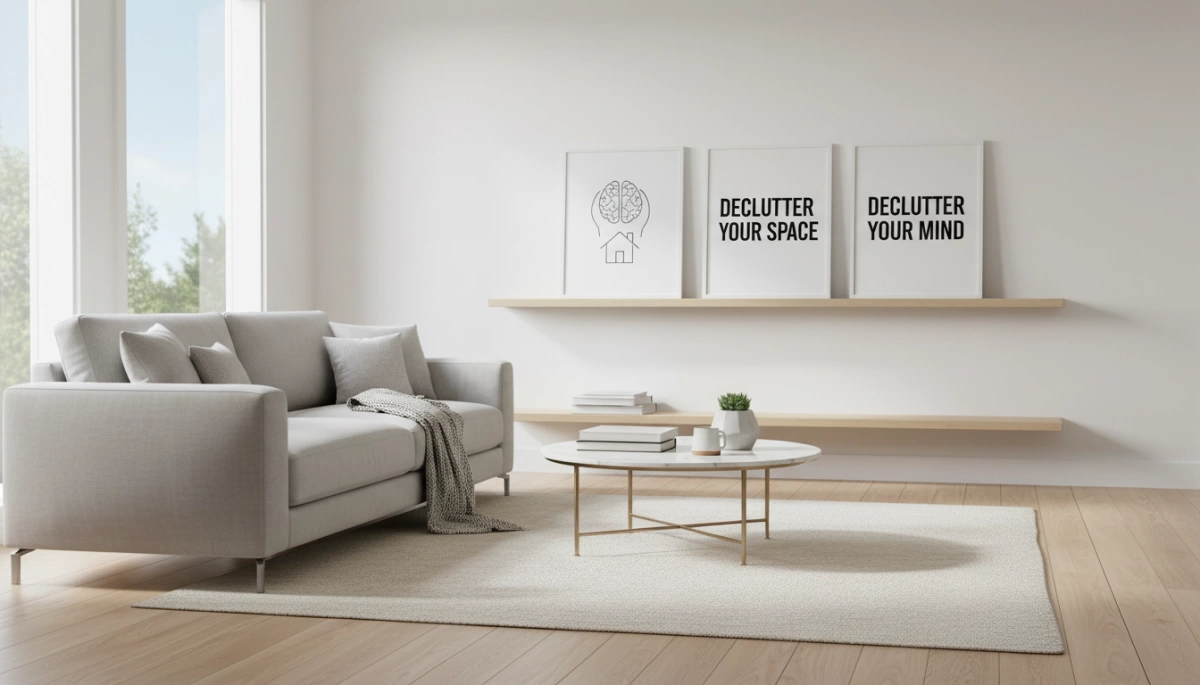
The Neuroscience of Mess: Why Clutter Triggers Anxiety
Ever wonder why a messy room leaves you feeling anxious or overwhelmed? The answer lies deep in the brain’s response to clutter and visual noise. When your visual cortex is bombarded with too many things, it struggles to process all the stimuli, leading to cognitive overload. This overload slows down your thinking and makes it harder to focus.
Messy spaces also cause a spike in cortisol levels—the hormone linked to stress. High cortisol levels keep your body in a constant state of alert, even if there’s no immediate danger, making relaxation feel out of reach. On top of that, clutter forces you to make endless micro-decisions: Should I keep this? Toss that? This constant mental effort contributes to decision fatigue, draining your willpower and increasing anxiety.
Understanding how mess affects the brain is the first step toward reclaiming calm. By reducing clutter, you’re not just tidying your space—you’re decluttering your mind to reduce stress and boost mental clarity.
The Psychology of “Keeping”: Why We Struggle to Let Go
Letting go of stuff isn’t just about space—it’s deeply tied to how our minds work. One big reason is the Endowment Effect: we tend to value things more just because they’re ours. That emotional attachment makes tossing even useless items surprisingly hard.
Then there’s the Sunk Cost Fallacy—we feel guilty about “wasting” money or effort spent on possessions. This guilt creates mental clutter as we hold on, hoping these things will prove their worth someday, which rarely happens.
Finally, Identity Clutter plays a role. Stuff often connects us to our past or who we wish to be, like outfits from a phase or items linked to old hobbies. Holding onto these reinforces fantasy selves or memories, which keeps us from moving forward and decluttering effectively.
Understanding these psychological traps helps us tackle emotional barriers so we can declutter mindfully and create a cleaner, calmer space.
Phase 1: Preparation and Mindset Shift
Before diving into decluttering, it’s crucial to define your “why”. Don’t just aim for a clean space—think about the peace and mental clarity you want to gain. When your purpose shifts from “getting rid of stuff” to “creating a calm, focused environment,” it becomes easier to stay motivated.
Next, apply the “Start Small” principle. Tackling everything at once leads to burnout and decision fatigue. Begin with one drawer, a single shelf, or even a desktop corner. Small wins build momentum without overwhelming your cognitive load.
Use the Three-Box Method to organize items quickly:
- Keep: Things you genuinely use or love.
- Donate/Sell: Items in good condition but no longer needed.
- Trash/Recycle: Broken, expired, or unusable stuff.
This simple system helps reduce visual noise and emotional attachment to objects, making the process manageable and effective.
Phase 2: Strategic Decluttering (The Action Plan)
When you move into decluttering, start by clearing flat surfaces like tables, countertops, and desks. These areas catch the eye and create the most visual noise, increasing your cognitive load and making your space feel chaotic. Clearing them first gives you a quick win and a sense of progress, boosting motivation for the next steps.
Next, use the 20/20 Rule for those “just in case” items: if you haven’t used it in the last 20 months or don’t think you’ll need it in the next 20 months, it’s time to part ways. This rule helps reduce decision fatigue by simplifying what feels like a tough choice, keeping your space minimal and manageable.
Sentimental items are the toughest part of decluttering. Try memory separation tactics: take photos of the items you want to remember but don’t necessarily need to keep. You can also create a small, dedicated box for truly special things. This way, you honor memories without letting identity clutter fill your home.
The Invisible Clutter: Digital and Mental Spaces
Clutter isn’t just physical—digital and mental clutter can cause just as much stress. Digital hoarding fills your inboxes, floods notifications, and overwhelms desktop icons, creating visual noise that spikes your cognitive load. When your digital environment is messy, it’s harder to focus and harder to feel in control.
To combat this, try the “Brain Dump” technique. This simple exercise involves writing down everything on your mind—tasks, worries, ideas—to clear mental clutter. It helps reduce decision fatigue by freeing up brain space and calms your cortisol levels linked to stress. Combining a digital clutter detox with a mental reset can lead to a cleaner, calmer mindset that complements physical decluttering efforts.
Phase 3: Maintenance and Habits (Stopping the Rebound)
Keeping a decluttered space takes ongoing effort. The key is developing habits that prevent clutter from sneaking back in and overwhelming your mind again.
The “One-Touch” Rule means handling items only once. When you pick something up, decide right away whether to keep, donate, or trash it. This simple rule stops clutter from piling up and reduces decision fatigue caused by too many micro-decisions.
Gatekeeping Your Space with “One In, One Out” helps maintain balance. For every new item you bring home, let go of an old one. This habit keeps your belongings in check, supports minimalist living, and limits visual noise that leads to mental clutter.
Finally, try a 10-Minute Nightly Reset—a quick routine where you tidy key areas before bed. This small habit clearing your environment daily improves spatial psychology and trains your brain to finish unfinished business, creating emotional lightness and mental clarity.
The Aftermath: What Mental Clarity Feels Like
Clearing your space often clears your mind, too. Once you’ve tackled the clutter, you’ll likely notice a big boost in focus and productivity. With less visual noise around, your brain isn’t overloaded with unnecessary input, which means fewer distractions and a sharper ability to concentrate on what really matters.
A clutter-free bedroom also promotes better sleep hygiene. When your sleeping area is tidy and peaceful, your mind relaxes more easily, setting the stage for deeper, more restorative rest. This kind of environment helps reduce cortisol levels and stress, contributing to overall well-being.
Beyond the physical benefits, there’s a distinct emotional lightness that comes after decluttering. Letting go of unfinished business—whether that’s old items tied to past commitments or emotional baggage—can lift a huge weight off your shoulders. It feels like a fresh start, allowing space for new energy and clearer mental pathways.

Related Posts