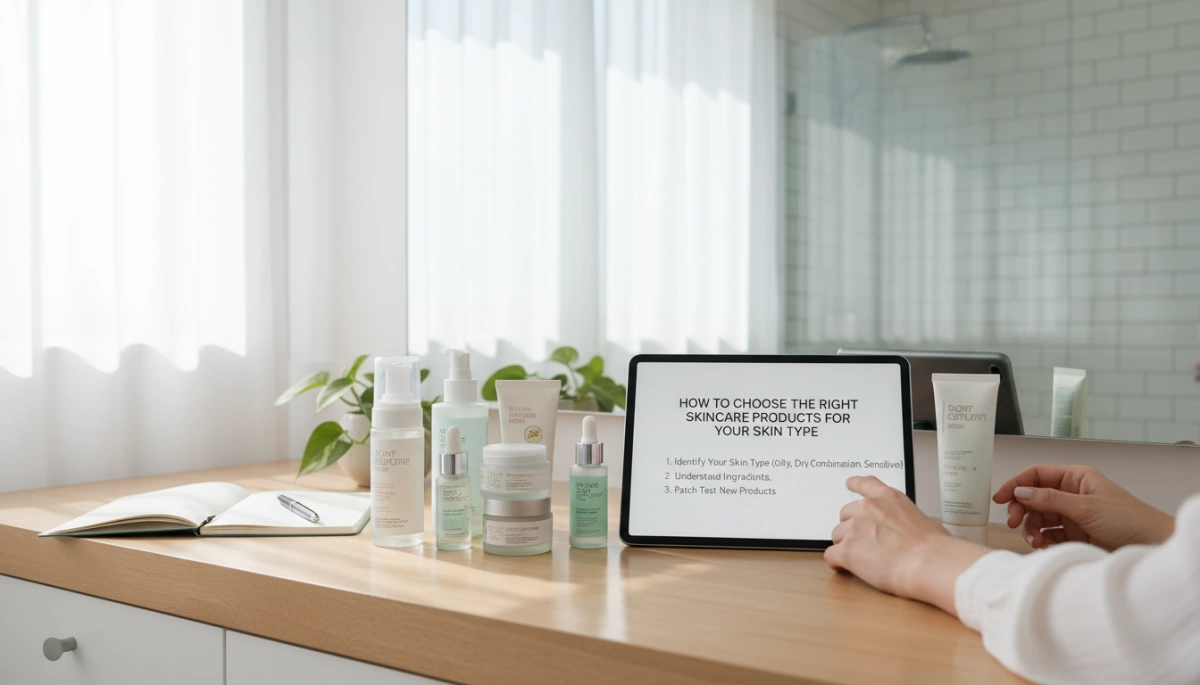
Step One: Accurately Identifying Your Skin Type
Knowing your true skin type is the foundation of choosing the right skincare products. One of the easiest ways to determine this is the “Wash and Wait” test. Here’s how to do it:
- Start with a gentle cleanser to remove dirt and oil.
- Pat your face dry with a clean towel.
- Wait 30 minutes without applying any products.
- Observe your skin’s natural state after the wait.
During this time, your skin’s sebum production will reveal its natural balance, helping you identify key features:
Characteristics Breakdown
- Oily Skin
- Noticeably shiny, especially in the T-zone oiliness (forehead, nose, chin).
- Prone to enlarged pores and frequent breakouts.
- Skin barrier may be overactive, producing excess sebum.
- Dry Skin
- Feels tight, flaky, or rough after washing.
- Dull appearance with little to no shine.
- Often lacks moisture, meaning the lipid barrier might be compromised.
- Combination Skin
- Oily in some areas (usually the T-zone), dry or normal elsewhere.
- Requires balancing ingredients to address varied needs, often managed by multi-masking.
- Sensitive Skin
- Easily irritated, redness or itching common after exposure to harsh ingredients.
- Look for sensitive skin triggers to avoid reactions.
- Often benefits from fragrance-free skincare and calming components.
- Normal Skin
- Balanced with minimal oiliness or dryness.
- Few imperfections and a healthy-looking texture.
Understanding your skin type moves you closer to selecting products that support your skin barrier function and overall skin health. Always be observant and gentle during the test to get accurate results.
Decoding Ingredients: What to Look For (and Avoid) by Skin Type
Choosing skincare products by your skin type means getting familiar with the ingredients that help or harm your skin. Here’s a quick guide to what to pick—and what to skip—based on common skin concerns.
For Oily & Acne-Prone Skin
- Look for:
- Salicylic acid: A go-to for unclogging pores and controlling sebum production.
- Niacinamide: Helps balance oil and reduce inflammation.
- Lightweight, gel or water-based textures: Prevents pore blockage and keeps skin feeling fresh.
- Non-comedogenic moisturizers: Moisturizers labeled non-comedogenic won’t clog pores or worsen acne.
- Avoid:
- Heavy oils and creams that can overwhelm oily skin.
- Alcohol-heavy products that strip skin but trigger more oil production.
- Fragrance and harsh exfoliants, which can irritate and cause breakouts.
For Dry & Dehydrated Skin
- Look for:
- Hyaluronic acid: Excellent for pulling moisture into the skin and boosting hydration.
- Ceramides and fatty acids: Key players in repairing the skin barrier and locking in moisture.
- Creamy, rich textures: Help calm tightness and flakiness.
- Avoid:
- Products with alcohol and sulfates that strip natural oils and worsen dryness.
- Harsh physical exfoliants that can damage an already sensitive lipid barrier.
For Sensitive Skin
- Look for:
- Soothing ingredients like aloe vera, chamomile, and oatmeal to calm irritation.
- Fragrance-free products: These contain no added scents, lowering the risk of triggers.
- Understanding “Fragrance-Free” vs. “Unscented”: Fragrance-free means no scent added; unscented might still have masking fragrances. Always opt for fragrance-free if sensitivity is a concern.
- Avoid:
- Alcohol, synthetic fragrances, and harsh preservatives.
- Strong acids or exfoliants without gradual introduction and patch testing.
For Combination Skin
- Look for:
- Balanced ingredients like niacinamide for regulating oil and fading redness.
- Lightweight moisturizers that don’t clog pores but hydrate dry patches.
- Multi-masking strategies: use products tailored to specific zones (e.g., mattifying masks on oily T-zone, hydrating masks on dry cheeks).
- Avoid:
- One-size-fits-all heavy creams that can cause oiliness in some areas and dryness in others.
Knowing the right ingredients to look for and avoid can dramatically improve your skin’s health—and save you from wasting money on products that don’t fit your skin’s unique needs.
The “Holy Trinity” of a Basic Routine
When choosing the right skincare products for your skin type, focus on the three essentials: cleanser, moisturizer, and sunscreen. These form the foundation of a good routine that supports your skin barrier function and keeps your skin healthy.
The Cleanser: Foam, Cream/Milk, and Oil Cleansers Explained
- Foam cleansers are great for oily or acne-prone skin. They help reduce excess sebum production and unclog pores without leaving residue.
- Cream or milk cleansers suit dry or sensitive skin. They are gentle, hydrating, and help maintain the lipid barrier.
- Oil cleansers work well for all skin types, especially combination skin, as they dissolve makeup and impurities without stripping moisture.
Choosing the right cleanser helps balance your skin’s natural moisture and prepares it for the next steps.
The Moisturizer: Difference Between Humectants and Occlusives
| Ingredient Type | Function | Ideal For |
|---|---|---|
| Humectants | Draw moisture into the skin | Dry, dehydrated skin |
| Occlusives | Lock moisture in, protect barrier | All skin types, especially dry or sensitive |
Look for non-comedogenic moisturizers if you have oily or acne-prone skin to avoid clogging pores. Ingredients like hyaluronic acid are popular humectants that attract hydration without heaviness.
Sunscreen (SPF): Mineral vs. Chemical Filters
- Mineral (physical) sunscreens contain zinc oxide or titanium dioxide. They sit on top of the skin and reflect UV rays. Best for sensitive or reactive skin as they’re less likely to cause irritation.
- Chemical sunscreens absorb UV rays. They tend to be thinner and more comfortable for daily wear but may irritate sensitive skin.
Always choose a broad-spectrum SPF to protect against UVA and UVB rays, crucial for preventing damage and maintaining skin health. If you have sensitive skin, mineral-based formulas are dermatologist recommended for better tolerance.
For more insights on choosing skincare products tailored to your needs, check out practical skin tips from trusted skincare sources.
Advanced Selection: Reading the Label Like a Pro
When picking skincare products, knowing how to read the INCI list is a game changer. Ingredients are listed in order of concentration, from highest to lowest. This means the first few ingredients make up most of the formula, so pay close attention here. Active ingredients like salicylic acid or hyaluronic acid are key players that target specific concerns—acne, dehydration, or boosting skin barrier function. Meanwhile, inactive ingredients support texture and stability but usually don’t affect your skin directly.
A smart shopper also separates actives from non-actives. Actives are what really impact sebum production, hydration, or sensitivity. For example, look for salicylic acid in products meant for oily and acne-prone skin or humectants like glycerin for dry skin. On the flip side, avoid irritants like certain fragrances or alcohols if you have sensitive skin.
Before fully committing, always patch test new products. Apply a small amount on your inner forearm and wait 24-48 hours. This simple step helps catch any immediate reactions, so you won’t risk a flare-up on your face.
Getting comfortable with these label tips ensures your skincare choices are effective, safe, and truly suited to your skin type.

Related Posts