
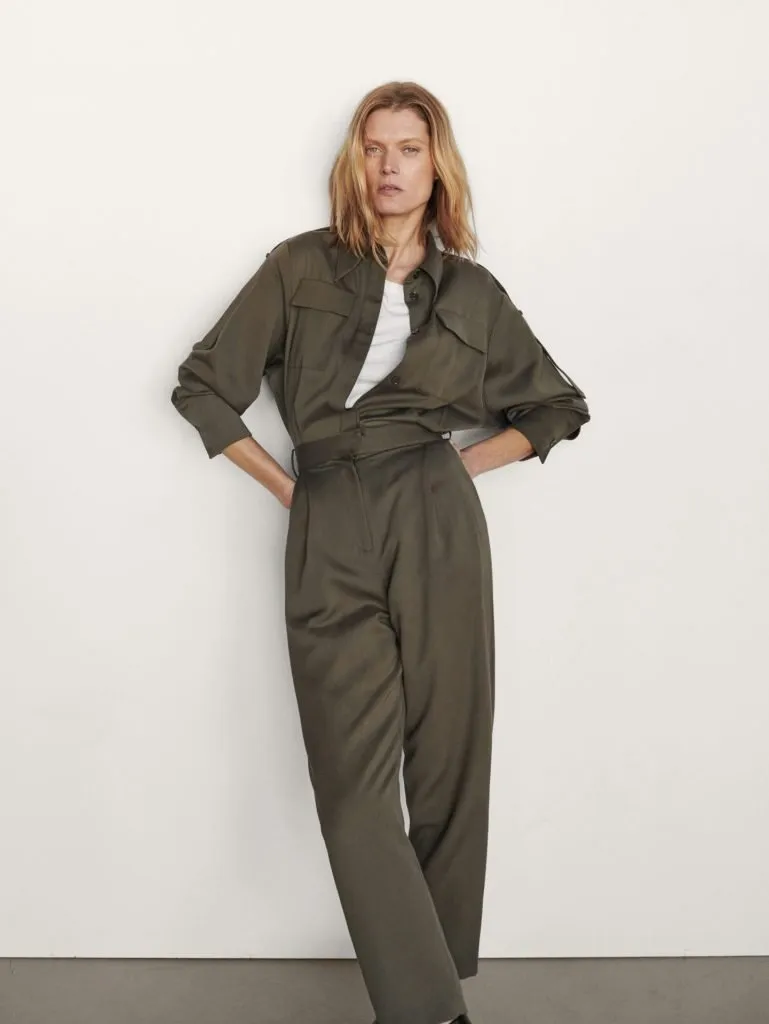
The average person wears each clothing item fewer than 7 times before it ends up in a donation bag. That is a terrible return on most wardrobe spending — and it is almost always the result of buying for right now instead of buying for a longer arc.
The February-to-April window is the worst time to panic-buy a wardrobe. Brands push “new season” drops designed to feel urgent. Most of it will look dated by May or be useless by June.
These five pieces are the exception. Each one works in cold weather with the right layers and looks completely natural in spring without any effort. They are also available at multiple price points without getting completely swindled.
Note: This is not styling advice from a certified personal stylist. These are independent observations based on cost-per-wear analysis and seasonal utility.
The Cost-Per-Wear Math That Should Change How You Buy Clothes
Cost per wear is the only metric that matters when buying transitional pieces. The formula is straightforward: divide the item’s price by the number of times you’ll realistically wear it in a year.
A $300 trench coat worn 60 times costs $5 per wear. A $60 “transitional” cardigan worn 8 times before you notice it pills and looks cheap costs $7.50 per wear. The expensive coat wins — and that surprises most shoppers because the sticker price logic runs the other direction.
Brands know this. “Affordable” transitional pieces are often polyester blends with a two-season lifespan at best. The low price is the product.
What actually makes a piece transitional?
Three things — and most clothing only hits one:
- Fabric weight: Too heavy and you overheat in March. Too light and you’re cold in February. Midweight wool, cotton twill, and fine merino sit in the useful middle.
- Silhouette neutrality: The piece shouldn’t signal a specific season. Clean lines, minimal embellishment, classic proportions. Nothing that reads as cozy-season or resort-season.
- Layering logic: It needs to work both over and under other pieces. A trench coat layers over a chunky knit in February and over a linen shirt in April. If it only works standalone, it’s a spring piece arriving early.
Most things sold as “transitional” in February hit none of these. They’re thin cotton in a spring color — which means they’re just a spring item with aggressive timing.
How to set your per-item budget before you shop
Before purchasing, honestly answer: how many times per week will I wear this from February through May? Multiply by 16 weeks — roughly the transition window in most temperate climates. If you’d wear a piece 3 times a week for 16 weeks, that’s 48 wears. For that to cost under $5 per wear, you need to stay under $240. That budget eliminates most impulse fast fashion and gives you room to spend more deliberately on something built to last.
Running this number before you buy also kills the “but it’s only $35” justification on pieces you’ll wear twice. A $35 item worn twice is $17.50 per wear. That’s not a deal.
The Trench Coat: What Each Price Tier Actually Buys You
The trench coat is the one outerwear piece that genuinely holds across late winter and spring. It works over a thick knit in February and over a blazer in April. But the gap between a $90 version and a $500 version is enormous — and not where most buyers expect it to be. The difference isn’t prestige. It’s construction details that determine whether the coat holds up for two seasons or ten.
| Option | Price | Fabric | Lining | Belt Quality | Expected Lifespan |
|---|---|---|---|---|---|
| Mango Loose-Fit Trench | $130 | 55% cotton, 45% polyester | Partial, polyester | Floppy, lightweight | 2–3 seasons |
| COS Oversized Trench | $215 | 100% cotton twill | Full, cotton | Structured, holds shape | 5–6 seasons |
| A.P.C. Garance Trench | $550 | 100% cotton gabardine | Full, viscose | Wide, stiff, adjustable | 8–10+ seasons |
Which one to actually buy
If you’re buying your first trench and aren’t sure you’ll love the silhouette: start with Mango. It’s not built to last a decade but it costs less than a dinner for four and will answer the “do I actually reach for trench coats?” question before you spend $500 finding out you don’t.
If you already know you wear this style regularly: the COS version is the buy. Full cotton lining, solid seam construction, and it doesn’t look cheap when the belt is knotted. It also goes on sale during end-of-season clearances, which can drop it below $160.
The A.P.C. Garance is genuinely excellent outerwear. It’s also $550. That math only works if you wear it for a decade — which is entirely possible with proper storage and occasional dry cleaning. But it’s not where most people should start.
What to check before buying any trench coat
Always check the belt loops in person or in detailed product photos. On cheaper versions, they’re stitched on as an afterthought and pull away from the coat body within a year. Also check the storm flap — the extra fabric layer across the shoulders: if it’s decorative rather than functional, the coat will leak in real rain. That matters in February and March more than any other time of year, which is exactly when you’ll be wearing it most.
Bottom Line: COS Oversized Trench at $215 is the best value for most people. The Mango works as a trial run. Skip anything above $400 unless you have a documented habit of wearing trench coats constantly.
The One Fabric Rule That Eliminates Most Bad Purchases
Buy merino wool or 100% cotton. Walk away from anything labeled “soft knit” that’s actually acrylic, or “lightweight” that’s actually polyester. Those fabrics don’t breathe as temperatures change, they hold odor after a few wears, and they look visibly cheap after three washes. The Uniqlo Extra Fine Merino Crew Neck ($40–$60) proves price isn’t the obstacle — it pills slightly after a year of heavy use but consistently outperforms sweaters at three times the price from mall brands. The Quince Mongolian Cashmere Crewneck (~$100) is real cashmere at a fraction of what department stores charge and wears comfortably into April mornings that still carry a chill.
Three More Pieces That Actually Hold Up Through April
Beyond outerwear, these three pieces carry the most weight in any winter-to-spring wardrobe. None of them are new ideas. All of them are consistently underused.
-
Wide-leg or straight-leg trousers in a neutral midweight fabric
Levi’s 501 Original jeans ($80–$100) work here and are the obvious entry point. Less obvious: the COS Wide-Leg Wool Trousers (~$180 on sale) which look considered in February with a turtleneck and relaxed in April with a white shirt untucked. The key is fabric weight. Anything too heavy reads as winter-only. Anything too thin reads as summer-ready. Midweight wool or a heavy cotton sits in a genuinely useful middle ground for exactly this window.
Tip: Neutral colors extend seasonal wear more than any styling trick. Camel, sand, navy, and off-white don’t trigger the seasonal association that burgundy does in October or neon does in July. If a piece comes in both a seasonal and a neutral color, the neutral almost always gets more total wear across a year. This applies to every item on this list.
-
A structured blazer in cotton or a linen-cotton blend
The Arket Relaxed Linen-Blend Blazer (~$200) is the specific recommendation. Linen-blend doesn’t mean it reads as summery — the Arket version is structured enough to layer over a thin turtleneck in February and light enough that it’s not a problem in May. It also travels without becoming a wrinkled disaster, which matters when you’re figuring out what to pack for late-winter trips where the weather is unpredictable.
Avoid blazers with heavy shoulder padding. They work in February but look seasonally stranded by April and you won’t want to wear them again until October.
Tip: Run the “layer test” before buying anything. Can the piece go over a thin long-sleeve without looking bulky? Can it go under a coat without bunching at the shoulders? Both answers need to be yes for it to qualify as genuinely transitional. If it only works standalone, you’re buying a spring piece and calling it something else.
-
A heavyweight white Oxford shirt
Not a standard weight Oxford — specifically a heavyweight version that doesn’t need an underlayer in February and doesn’t cook you in April. The Ralph Lauren Oxford Shirt ($90–$110 in Classic or Slim Fit) is still the benchmark for fabric weight and collar structure. Uniqlo’s Oxford Button-Down ($40) is roughly 80% as good at half the price and an excellent starting point for someone who hasn’t worn Oxford shirts regularly before. This is the one item on this list where going cheaper costs you almost nothing in real terms.
When “Transitional” Is Just a Marketing Word — and What to Buy Instead
The honest case against building a transitional wardrobe: it only pays off if you live somewhere with a genuine shoulder season.
If your winters run well below freezing through February and your spring arrives abruptly in late April, a trench coat isn’t a winter coat — it’s a cold coat you’ll resent wearing. A merino crew neck isn’t a winter layer in a Chicago January. The whole framework assumes a gradual temperature shift that many climates simply don’t have.
Three situations where you should skip the transitional buy entirely
- You live somewhere with sustained cold winters: Buy a rated cold-weather coat for winter, then buy spring pieces when spring actually arrives. A cotton twill trench coat is not rated outerwear for temperatures below 35°F.
- You already own four or more “versatile basics”: Adding more neutral pieces doesn’t increase how often you get dressed — it just dilutes your attention and inflates the wardrobe without improving it. More is not more here.
- The piece is currently trending: “Transitional” and “trending” are mutually exclusive. If every fashion account is pushing something right now, it won’t read as neutral in 18 months. It’ll read as dated 2026 fashion, which is exactly the opposite of versatile.
What to buy instead when transitional doesn’t apply to your climate
For genuine cold-weather coverage with layering flexibility, the Uniqlo Hybrid Down Jacket ($100–$150) is a proper insulating layer without the bulk of a full puffer. It fits under most trench coats, which gives you the clean outerwear silhouette without sacrificing warmth. That combination — a trench over the hybrid down — solves the gap that a trench coat alone can’t cover in real cold.
And if you’re buying spring-specific pieces early because you’re excited about them, just call them spring pieces. A linen shirt is not transitional. It’s a spring shirt you couldn’t wait to buy. That’s fine. Forcing the “versatile” label onto things that don’t earn it is how wardrobes get bloated with items that don’t work when you actually need them.
Bottom Line: The pieces worth buying now for immediate and spring use are the ones with real fabric quality, layering flexibility, and silhouettes that don’t signal a specific season. The table below shows the clearest value at each price point.
| Piece | Best Buy | Price | Est. Cost Per Wear | Useful Through |
|---|---|---|---|---|
| Trench Coat | COS Oversized Trench | $215 | $3–4 (over 5 seasons) | Late May |
| Fine Knit Sweater | Uniqlo Extra Fine Merino | $40–$60 | Under $2 | Mid-April |
| Trousers | COS Wide-Leg Wool (sale price) | ~$180 | $3–5 | Year-round |
| Blazer | Arket Linen-Blend Relaxed | ~$200 | $4–6 | Early June |
| Oxford Shirt | Uniqlo Oxford Button-Down | $40 | Under $1 | Year-round |

Related Posts


