
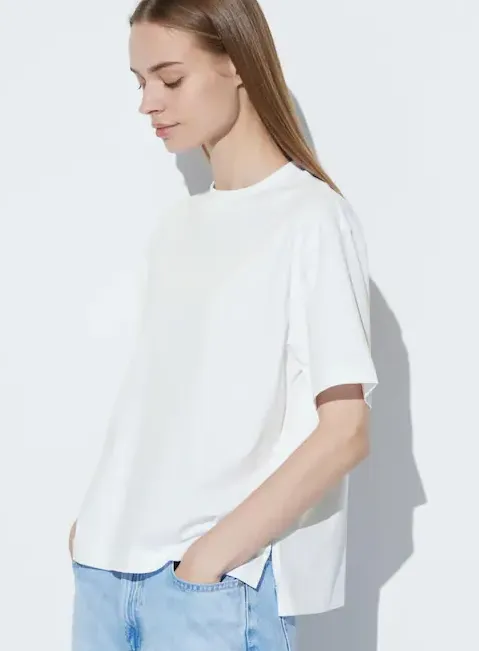
Most white t-shirts are junk. You know it. You’ve bought a three-pack from a big-box store, worn them twice, and watched the collar warp into a potato chip shape. Or the fabric went gray after three washes. Or the sleeves suddenly look like they belong on a different shirt.
Here’s the thing: a truly good basic white t-shirt is not complicated. It’s cotton. It’s a simple cut. But the market is flooded with options that look identical on the rack and fall apart in the drawer. This guide cuts through that noise. You’ll learn exactly what makes a white tee last, which brands actually deliver, and — just as important — which hyped shirts you should skip.
What Makes a White T-Shirt “Really Good”? (The Three Non-Negotiables)
Forget the marketing. Forget “premium” or “luxury” labels. A great white tee comes down to three things, and you can check all of them in under 30 seconds in a store.
1. Fabric Weight: 180-220 GSM Is the Sweet Spot
GSM stands for grams per square meter. It tells you how dense the fabric is. Most cheap tees run 130-150 GSM — thin enough to see your undershirt through. They feel soft out of the package, but they don’t last.
Look for 180-220 GSM. That weight gives you structure without being stiff. It drapes well, holds its shape, and won’t go translucent when stretched. Lady White Co. runs their classic tee at 200 GSM. Merz b. Schwanen uses a 220 GSM loopwheel fabric that feels substantial but breathes.
Below 170 GSM? It’s a weekend shirt at best. Above 250 GSM? That’s a sweatshirt pretending to be a tee.
2. Construction: Side Seams and a Reinforced Collar
Look at the side of the shirt. If you see one continuous tube of fabric with no seam — that’s a tubular knit. Cheap to make. Fits like a sack. Twists after washing.
You want side seams. They mean the shirt was cut and sewn from flat fabric, which gives a better fit and resists twisting. Every decent brand uses them.
Now check the collar. Pinch it and stretch gently. If it’s a single layer of ribbing that springs back weakly, expect it to wave and sag. A good collar uses a taped neck seam — a strip of fabric sewn over the shoulder seam — and a denser rib knit. The LA Apparel 6.5 oz tee has a collar that survives dozens of washes without losing its shape.
3. Fit: Shoulder Seam at the Acromion
Your shoulder bone has a bony point where the collarbone meets the shoulder blade. That’s the acromion. The shoulder seam of your t-shirt should sit right on that point. Not an inch down your arm. Not riding up your neck.
Everything else — length, chest width, sleeve length — is personal preference. But that shoulder seam position is universal. Get that wrong and the shirt will always look off, no matter how much it costs.
| Feature | Bad (Avoid) | Good (Buy) |
|---|---|---|
| Fabric weight | Below 170 GSM | 180-220 GSM |
| Construction | Tubular knit (no side seams) | Cut-and-sewn with side seams |
| Collar | Single-layer ribbing, no tape | Taped neck, dense rib knit |
| Shoulder seam | Drops down arm or sits on neck | Sits on the acromion bone |
The Five White Tees That Actually Deliver (and One to Skip)
I’ve tested roughly 30 white t-shirts over three years. These five consistently outperform the rest. One is a famous brand that does not belong on this list — I’ll tell you why.
Uniqlo Supima Cotton Crew Neck ($14.90)
The best value in this category. Uniqlo uses Supima cotton — a longer staple fiber that resists pilling better than standard cotton. The 190 GSM fabric is solid. Side seams are present. The collar holds up for about 20 washes before showing wear.
Is it perfect? No. The cut is slightly boxy, and the sleeves are a touch short for tall guys. But for $15, this tee outperforms shirts costing three times as much. Buy three. Rotate them. Replace them yearly.
Lady White Co. LWC Original Tee ($75)
This is the tee that made me stop buying cheap three-packs. Made in Los Angeles from 200 GSM Japanese cotton jersey. The collar is reinforced with a double-needle stitch and a tape. Side seams, of course. The fit is tailored — not tight, but not baggy. The sleeves sit exactly at the mid-bicep.
The fabric has a dry, crisp hand feel that softens after a few washes without losing structure. I’ve owned mine for 18 months. No collar wave. No fabric thinning. No gray tint. The price hurts, but the cost-per-wear is lower than any $15 shirt I’ve owned.
Merz b. Schwanen 1950s Crew Neck ($85)
German loopwheel construction. That means the fabric is knit on a slow, circular machine that produces a denser, more stable textile. The 220 GSM cotton is substantial. The fit is slightly boxier than Lady White Co. — more of a vintage workwear silhouette.
This is the shirt to buy if you want something that looks and feels like it was made in 1955. It’s not sleek. It’s not modern. It’s a brick. But it will outlast every other tee in your drawer. The loopwheel fabric also resists shrinking better than flat-knit cotton.
The LA Apparel 6.5 oz Crew Neck ($38)
Los Angeles Apparel (same founder as American Apparel) makes a 6.5 oz (roughly 190 GSM) tee that punches way above its price. The fabric is ring-spun cotton — softer than standard open-end cotton, with less pilling. The collar is thick and taped. Side seams. The fit is relaxed but not sloppy.
This is the best sub-$40 white tee on the market right now. It’s not as refined as Lady White Co., but it costs half as much. The color stays white longer than most competitors because the fabric is pre-shrunk and the dye is set properly.
Kirkland Signature Crew Neck ($22 for a 4-pack)
Yes, Costco’s house brand makes a genuinely good white tee. The 190 GSM fabric is surprisingly dense. Side seams. A taped neck. The fit is boxy — expect a generous cut through the chest and waist. The sleeves are a bit wide.
This is the shirt for people who want a workhorse. Wear it under flannel shirts. Wear it to the gym. Wear it painting. At $5.50 per shirt, you can treat them as disposable without guilt. Just know the collar will start to wave after 10-12 washes.
The One to Skip: Everlane The Premium Weight Crew ($30)
Everlane’s “Premium Weight” tee sounds good on paper. 200 GSM. Side seams. A reasonable price. But the execution falls short. The collar is too thin — it waves after three washes. The fabric pills noticeably around the center seam. The fit is inconsistent between colors.
I wanted to like this shirt. I bought two. Both developed issues within six weeks. At $30, you’re better off buying two Uniqlo Supima tees or a single LA Apparel tee.
Three Mistakes That Ruin Your White T-Shirt (and How to Avoid Them)
You can buy the best tee in the world and destroy it in a month. Here’s what goes wrong.
Washing in Hot Water
Hot water shrinks cotton. It also fades the optical brighteners that make white fabric look white. Wash every white tee in cold water — 30°C (86°F) or lower. Use a gentle cycle. Turn the shirt inside out to protect the outer surface from abrasion.
Using Bleach
Bleach weakens cotton fibers. It also reacts with the optical brighteners, turning white fabric a dull, yellowish gray over time. Instead, use an oxygen-based bleach like OxiClean or sodium percarbonate. Soak the shirt in cold water with a scoop for 30 minutes before washing.
Drying in High Heat
High heat in a dryer shrinks cotton and breaks down elastic fibers in the collar ribbing. Air-dry your white tees on a hanger or a flat rack. If you must use a dryer, run it on low heat and pull the shirts out while they’re still slightly damp. This single change doubles the life of a tee.
When You Should NOT Buy a White T-Shirt
A white tee is not a universal solution. Here are three situations where you should buy something else.
If You Sweat Heavily
White cotton shows sweat stains almost immediately. The yellowing under the arms is permanent — it’s a reaction between antiperspirant aluminum and sweat. If this is you, buy a gray heather or charcoal tee instead. Gray hides sweat better than any color, including black.
If You Need a Dress Shirt Alternative
A white tee under a blazer works for casual settings. But if you need something that looks intentional under a sport coat, buy a white button-down Oxford cloth shirt. The collar stands up properly. The fabric has more structure. The white tee under a blazer look only works if the tee is crisp and new — and it won’t stay that way long.
If You’re Buying for Layering Under Sheer Fabrics
White tees show through thin white blouses and shirts. The contrast between the tee and your skin creates a visible line. For layering, buy a nude or skin-tone camisole that matches your complexion. It disappears under sheer fabric. No white tee can do that.
One Last Thing
You walked into this thinking you needed a white t-shirt. What you actually needed was a shirt that stays white, holds its shape, and fits your shoulders. That’s a different problem entirely. The five tees above solve it at different price points. Pick your budget, pick your fit, and stop buying the three-packs that let you down every time.
The right white tee costs more upfront. It also costs less per wear. That’s the math that matters.

Related Posts


