
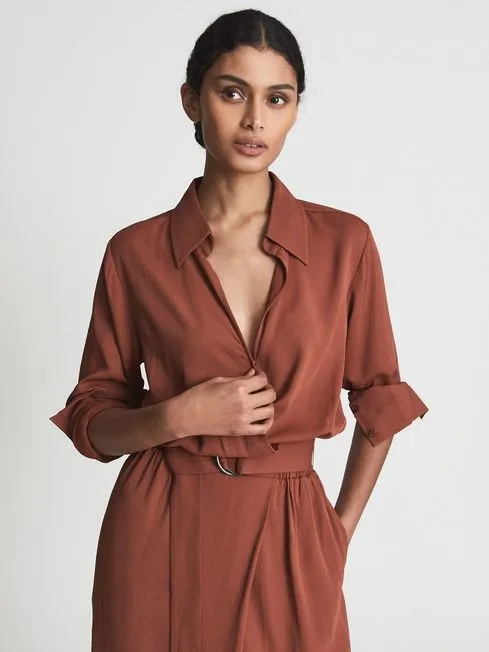
The average American city gets rain on 10 to 14 days every month from June through August. That is roughly one rainy day in every three. And yet most people build their entire summer wardrobe around cotton, canvas, and suede — materials that are essentially useless the moment a cloud opens up.
This breakdown covers five specific items that hold up in both 85°F heat and a sudden downpour. Not vague style suggestions. Actual product categories with real brand names, fabric specs, and prices.
This is not a sponsored review. No affiliate links. No brand partnerships.
Why All-Weather Summer Dressing Is a Fabric Problem, Not a Style Problem
Most summer styling advice focuses on silhouettes and color palettes. That is the wrong frame entirely.
The real question is: what happens to this fabric when it gets wet? Cotton absorbs 25 times its weight in water and takes two to four hours to dry. It clings to your legs. It chafes. Linen is marginally better but still absorbs heavily and wrinkles into a disaster after rain. Viscose and rayon collapse completely when wet — they stretch out of shape and take hours to recover.
The fabrics that actually work in mixed summer weather fall into three groups.
Quick-Dry Synthetics
Polyester and nylon dry in 20 to 40 minutes versus cotton’s two to four hours. Fabrics marketed as quick-dry typically use a tighter weave that repels surface moisture while staying thin enough for summer heat. Lululemon’s Luxtreme fabric (86% polyester, 14% Lycra) and Columbia’s Omni-Shade nylon are real-world examples — both dry fast and resist UV. They feel nothing like the scratchy synthetics of 15 years ago.
DWR-Treated Fabrics
DWR stands for Durable Water Repellent — a chemical coating applied to fabric that causes water to bead and roll off rather than soak in. It is not the same as waterproof. It handles light rain and splashes for roughly 20 to 30 minutes before you need shelter. The Arc’teryx Squamish Hoody ($195) and the Columbia Watertight II ($60) both use DWR-treated nylon. DWR wears off over time but can be refreshed with Nikwax TX.Direct ($12 to $18), which matters if you plan to use a piece for multiple seasons.
Technical Knits and ECONYL
A handful of brands — Girlfriend Collective, Patagonia, Athleta — now make items that look like normal fashion but are built from recycled nylon or ECONYL (regenerated fishing nets). These feel soft, look casual, and handle water dramatically better than cotton. The Patagonia Mainstay Skirt ($65) is a good example: looks like a regular skirt, dries in 30 minutes, does not cling when soaked.
Bottom Line: If the care label says 100% cotton, viscose, or rayon, it has no place in a rain-or-shine kit. Any item you are counting on in mixed weather should be polyester, nylon, recycled nylon, or at minimum a linen-nylon blend.
Quick-Dry Trousers: A Side-by-Side Comparison by Price
Quick-dry trousers are the highest-ROI item in an all-weather summer wardrobe. They look like regular pants, handle rain, dry fast, and work in heat because they are thin. Here is how the main options stack up:
| Product | Price | Fabric | Dry Time | Best For |
|---|---|---|---|---|
| Lululemon ABC Pant | $128 | Warpstreme (86% polyester) | ~25 min | City travel, office-casual |
| Patagonia Quandary Pant | $89 | DWR-treated 97% nylon | ~20 min | Travel, light hiking |
| Athleta Trekkie North Jogger | $89 | Recycled polyester blend | ~30 min | Active days |
| Columbia Silver Ridge Cargo | $60 | 100% nylon, UPF 50 | ~20 min | Outdoor activities |
| ASOS 4505 Quick-Dry Trouser | $28–$35 | Recycled polyester | ~35 min | Budget, casual wear |
The Best All-Round Buy
The Patagonia Quandary Pant at $89 hits the sweet spot. The DWR coating sheds light rain directly off the fabric, the nylon construction dries in roughly 20 minutes when soaked, and it looks presentable enough for a restaurant dinner after a full day outside. Available in regular and slim fits. The Columbia Silver Ridge is a close second at $60 if you want UPF 50 sun protection built in.
The Budget Pick
The ASOS 4505 line delivers real quick-dry performance at $28 to $35. Not as polished-looking as the Lululemon ABC Pant, and the durability does not compare, but they dry in under 40 minutes and will not cling after a rain shower. Solid starting point if you want to test the category before committing more money.
What to Avoid
Skip any trouser marketed as “linen-blend” for rain resistance — linen absorbs water, regardless of what is blended with it. Also skip “moisture-wicking” cotton blends. Moisture-wicking moves sweat away from your skin. It does not make a fabric waterproof or fast-drying. Brands conflate these three properties constantly. Do not let them.
Bottom Line: The Patagonia Quandary at $89 is the clearest pick. If $89 is too much, ASOS 4505 works for a single season.
Waterproof Sandals and Sneakers: What Actually Holds Up in Rain
Are EVA Birkenstocks Actually Waterproof?
Yes. The Birkenstock Arizona EVA ($55) is made entirely of EVA foam — sole, footbed, and straps. Fully waterproof. Machine-washable. They do not develop the smell that leather Birkenstocks do after repeated water exposure. They look identical to the classic Arizona silhouette, which makes them one of the better stealth decisions in rain-proof summer footwear. At $55, they are also absurdly good value: most users get three to five seasons out of a pair.
Are Teva Sandals Worth It?
The Teva Original Universal ($50) was built for water. The webbing straps dry in minutes, the rubber sole grips wet pavement reasonably well, and the adjustable system keeps them from flying off in puddles. They read more “outdoor gear” than the Arizona EVA — not ideal for a nice dinner — but for walking cities in summer rain, they are close to perfect.
Which Sneaker Works in Rain Without Overheating?
The Allbirds Tree Dasher ($125) uses a merino-eucalyptus blend upper that handles light drizzle and dries faster than canvas, but it is not waterproof. In a real downpour, your feet will be wet. For genuine waterproofing in a sneaker, the Salomon Predict SOC+ ($140) has a Gore-Tex lining that blocks sustained rain — but it runs hot above 85°F, so it works better for cool summer mornings than full midday heat.
Three things that fail immediately in rain: suede footbeds (they warp and smell), standard cork-sole Birkenstocks without waterproof coating (they absorb water and crack over time), and canvas espadrilles (destroyed by a single downpour). White leather sandals also show water stains and develop tide marks that do not wash out cleanly.
Bottom Line: The Birkenstock Arizona EVA at $55 is the best value in rain-proof summer sandals. For sneakers in wet conditions, skip the Allbirds and step up to the Salomon.
The One Rain Jacket Worth Buying: A Clear Verdict
Buy the Columbia Watertight II ($55 to $65). Do not overthink this.
It packs into its own pocket at roughly fist-size, weighs around 10 ounces, has sealed seams, and repels sustained moderate rain for 30 to 45 minutes. The hood adjusts. It comes in over 20 colors including ones that look normal rather than “about to summit a peak.” At $60, it is the most practical rain jacket for someone who does not want to spend Arc’teryx money but needs actual rain protection, not spray-on water resistance.
The Arc’teryx Squamish Hoody ($195) is meaningfully better — lighter at 5 ounces, packs smaller, and has a cleaner silhouette for city wear. If you travel frequently and want something that reads as fashion rather than gear, that is a legitimate upgrade. For most people, the Columbia works fine.
What to skip: the Uniqlo Packable Parka ($49). Popular, cheap, and marketed as “water-repellent” — but not waterproof. In a proper summer storm, you will be soaked within minutes. It is a drizzle layer, not a rain jacket. Knowing that distinction matters before you rely on it.
How to Buy an All-Weather Summer Dress That Does Not Fail
Finding a summer dress that survives rain is a single-step process: the fabric must be synthetic or a synthetic blend. Here is how to evaluate any dress before you buy:
- Check the care label first. 100% cotton, viscose, or rayon — pass. You want polyester, recycled nylon, or ECONYL.
- Test the weight. Hold it up to light. If light passes through clearly, it is too thin to look decent when wet. A slightly denser technical fabric keeps its shape.
- Look for a built-in liner. A lined dress dries faster and will not go sheer when soaked — which matters if you get caught in a real downpour.
- Consider the length. Midi length — hitting below the knee — means the hem is less likely to wick up street puddles the way a shorter hem would in heavy rain.
- Avoid white and pale yellow. These show water marks and go transparent when wet. Navy, olive, black, or deep prints hold up far better.
The Two Specific Products Worth Your Money
The Athleta Serenity Ruched Midi Dress ($118) checks every box: recycled polyester, lined, midi length, available in dark colors, machine washable, dries in under an hour. The Patagonia Amber Dawn Dress ($119) is a direct equivalent — ECONYL fabric, looks like a regular casual dress, handles repeated water exposure without warping or fading. Both are real purchases, not marketing concepts.
The Fast-Fashion Option
If $100+ feels steep, H&M’s Sportswear line and Zara’s technical-fabric collections both carry recycled polyester midi dresses in the $35 to $55 range. Durability is lower, but rain resistance is comparable for one season. Look specifically for the “quick-dry” or “recycled polyester” tag — not every H&M dress qualifies, and the store mixes technical pieces with standard cotton on the same rack.
The Bag Mistake That Undoes Everything Else
Buying a rain-proof jacket and quick-dry trousers while carrying a canvas tote is not a strategy. Canvas absorbs water like a sponge. Your phone, laptop, and anything paper-based will be soaked within three minutes of a real downpour.
The Fjällräven Kånken ($80) — classic polyester construction — sheds light rain and dries fast. The Dagne Dover Dakota Neoprene Tote ($195) is water-resistant and structured, good for carrying electronics. Neither is fully waterproof in heavy storms, but both beat cotton canvas and uncoated leather by a wide margin. If you genuinely need submersion protection, the Ortlieb Commuter Daypack ($140) uses welded seams and a roll-top closure — designed to survive being submerged, not just splashed.
Building Your Rain-or-Shine Summer Kit Without Overspending
Priority order matters here. Do not buy everything at once. Start at the top of this list and work down:
- Priority 1 — Footwear ($50 to $55). Birkenstock Arizona EVA or Teva Original Universal. Wet feet ruin a day faster than any other wardrobe failure. This is always the first buy.
- Priority 2 — Rain jacket ($55 to $65). Columbia Watertight II. Small enough for a day bag, cheap enough that losing it is not catastrophic, effective enough for actual rain.
- Priority 3 — Quick-dry trousers ($60 to $89). Patagonia Quandary Pant or Columbia Silver Ridge. These are the backbone of any rainy-day outfit that still looks intentional.
- Priority 4 — Technical dress ($45 to $119). H&M Sportswear recycled polyester midi or Athleta Serenity, depending on budget. For warm days when trousers feel too heavy.
- Priority 5 — Water-resistant bag ($80 to $195). Fjällräven Kånken is the budget entry point. Upgrade to Dagne Dover if you are regularly carrying electronics.
What Not to Buy
Do not buy a waterproofing spray to salvage cotton items. Products like Scotchgard extend splash resistance for a few weeks but will not make cotton behave like nylon in sustained rain. You are better off replacing the item than spraying it and hoping.
Full Kit at a Glance
| Essential | Budget Pick | Premium Pick |
|---|---|---|
| Rain jacket | Columbia Watertight II ($60) | Arc’teryx Squamish Hoody ($195) |
| Trousers | Columbia Silver Ridge ($60) | Patagonia Quandary Pant ($89) |
| Dress | H&M Sportswear polyester midi ($45) | Athleta Serenity Ruched Midi ($118) |
| Sandals | Birkenstock Arizona EVA ($55) | Teva Original Universal ($50) |
| Bag | Fjällräven Kånken ($80) | Dagne Dover Dakota Tote ($195) |
Check the care label before you buy anything this summer — if it says 100% cotton, it has no place in a wardrobe built for rain or shine.

Related Posts


