
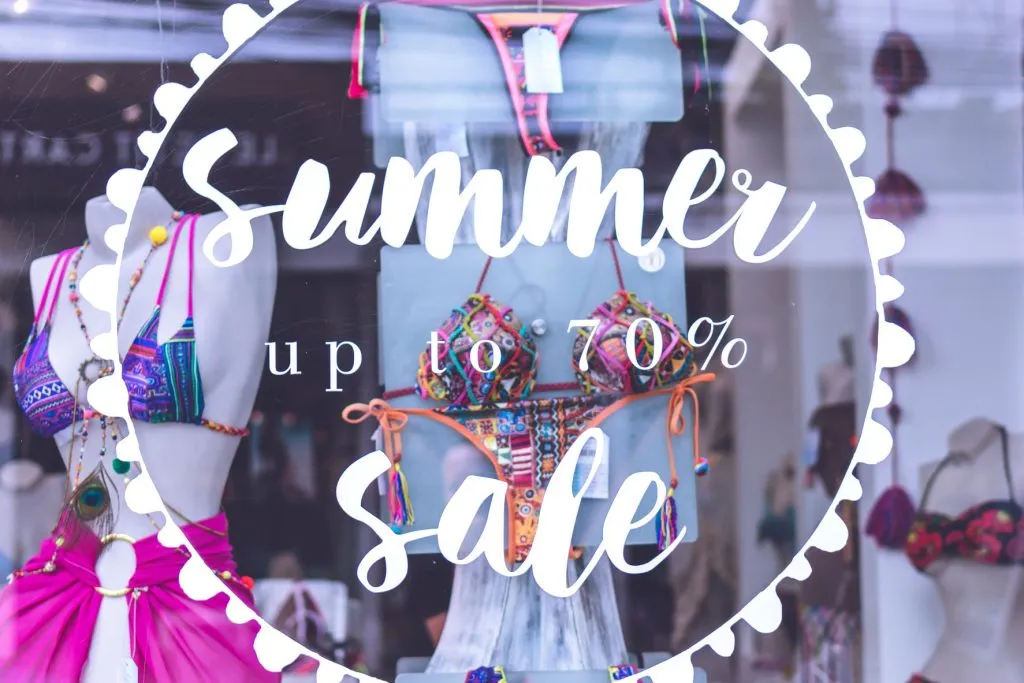
You’re scrolling through 60% off banners and thinking: what do I actually grab? I’ve been through maybe fifteen summer sales as a buyer and a shopper. I’ve made the mistakes — overpriced sandals that fell apart by August, linen shirts that looked like rags after two washes. So here’s what I’ve learned. The best item to buy in the summer sales isn’t a swimsuit or a sundress. It’s the stuff that’s out of season, deeply discounted, and built to last.
Why Summer Sales Are Actually a Trap for Seasonal Items
Walk into any mall in July and you’ll see racks of bikinis and shorts at 50% off. Looks like a deal. Feels like a deal. But here’s the thing: those items are designed for the season you’re already in. Brands know you’ll impulse-buy a $15 tank top. So they make them cheap, mark them up, then discount them to still make a profit.
I used to load up on summer dresses in the sales. Every single one pilled, stretched, or lost its shape by September. Why? Because the fabric quality on seasonal markdowns is often lower. The margins are thin, so corners get cut.
Instead, I now look for heavyweight items that are out of season. Think wool coats, cashmere sweaters, leather boots. These are the pieces that cost $300+ full price and get slashed to $120 in July because nobody wants to try on a parka when it’s 90°F outside.
The Real Strategy: Buy for Next Winter
This is the single best move. In June and July, retailers clear out their fall/winter inventory to make room for next season’s stock. That means you can grab a Mackage wool-blend coat that retailed for $895 for around $350. Or a pair of Blundstone 585 boots for $110 instead of $200.
I did this two years ago with a Patagonia Nano Puff jacket. Full price: $269. Summer sale price: $135. Still wearing it every winter. Still looks new.
Verdict: Skip the summer dresses. Buy the winter coat. You’ll thank yourself in November.
The Three Items I Always Buy in Summer Sales
After years of trial and error, I’ve narrowed it down to three categories that consistently deliver value. Not every sale is worth your time, but these are.
1. Premium Denim
Jeans are a weird category. The good ones (raw denim, Japanese selvedge, heavy-weight) cost $200–$300. The cheap ones cost $40 and fall apart in six months. Summer sales are when the good ones drop to $80–$120.
I picked up a pair of Naked & Famous Weird Guy selvedge jeans last July for $95. Original price: $245. They’re 14.5oz denim, made in Canada, and they’ll outlive me. The fit is consistent because the brand doesn’t change their patterns every season.
What to look for: 100% cotton denim (no stretch), made in Japan, USA, or Canada, and at least 12oz weight. Avoid anything with “comfort stretch” or “performance denim” — those are code for polyester blends that won’t hold their shape.
2. Cashmere and Merino Knits
Summer is the worst time to sell sweaters. So brands slash prices on cashmere to move stock. I’ve bought Naadam cashmere crewnecks for $65 (retail $175) and Uniqlo Merino crewnecks for $19.90 (retail $49.90).
The key is to check the fabric composition. Real cashmere should be 100% cashmere, not a blend with nylon or acrylic. Merino should be 100% merino wool. If it says “cashmere blend” and the blend is more than 10% synthetic, skip it.
One warning: cashmere pills. That’s normal. But cheap cashmere pills into fuzz balls after three wears. Good cashmere pills lightly and can be shaved clean. I’ve had my Naadam sweater for three years and it still looks sharp after a quick pass with a fabric shaver.
3. Leather Goods (Wallets, Belts, Bags)
Leather doesn’t go out of style. But summer sales often include deep discounts on leather accessories because they’re not “seasonal” — they just sit there until someone buys them.
I grabbed a Saddleback Leather bifold wallet for $49 (normally $89) two summers ago. Full-grain leather, thick stitching, no lining. It’s developed a beautiful patina and will probably outlast my grandkids.
For belts: Filson bridle leather belt. Full price: $85. Sale price: $45. It’s a single piece of 9-10oz leather with a solid brass buckle. No glue, no layers. I wear mine every day and it hasn’t stretched a millimeter.
Verdict: Denim, cashmere, and leather goods are the three safest bets. They hold value, last years, and get the deepest discounts.
What to Never Buy in the Summer Sales
I’ve made these mistakes so you don’t have to. Here’s the short list of items I now walk past every time.
- Trendy fast-fashion pieces. That neon green crop top at H&M for $8? It’s $8 for a reason. The fabric is thin, the stitching is loose, and it’ll be in a landfill by August. Save your money for something that won’t fall apart.
- White sneakers. Every brand discounts white sneakers in summer. But they’re usually the lower-quality models that didn’t sell. I bought a pair of Vans Old Skool in white for $30 once. The sole separated from the upper in three weeks. The canvas tore at the toe. Never again.
- Swimwear. I know it’s tempting. But swimwear is the most returned category in summer sales. The elastic degrades quickly, the colors fade in chlorine, and the fit is often inconsistent. If you need a swimsuit, buy it in April at full price from a brand you trust. The $10 discount isn’t worth the headache.
How to Spot a Fake Discount
Not all sale prices are real. Some brands inflate the original price to make the discount look bigger. I’ve seen a “$200” dress marked down to “$99” that was actually $120 a month earlier.
Here’s how I check:
- Use a price tracker. I run CamelCamelCamel for Amazon and Keepa for other sites. They show the price history for the last year. If the “original” price was only listed for two days before the sale, it’s fake.
- Check the brand’s own site. If a department store says a jacket is “70% off original $500,” go to the brand’s website. Often the jacket was never $500 — it was always $350, and the department store inflated it.
- Look at the material. A $200 cashmere sweater at 50% off is a good deal if it’s 100% cashmere. But if the tag says “50% cashmere, 50% acrylic,” that sweater was never worth $200. The real value is maybe $60.
Verdict: Trust the material, not the percentage off. A 30% discount on a high-quality item is better than 70% off garbage.
The One Item Worth Buying Full Price
I’ll say it plainly: don’t wait for the summer sales on running shoes or hiking boots.
Footwear that you use for sport or long walks needs to fit perfectly. Sales sizes are usually the odd ones — 6.5, 11.5, 13 — that nobody wanted. And the models on sale are often last year’s version with known issues.
I bought a pair of Hoka Clifton 8 on sale for $85 (retail $140). They were the previous generation. The foam felt dead compared to the Clifton 9. The upper didn’t breathe as well. I got maybe 200 miles out of them before my knees started hurting.
For shoes you’ll walk or run in, pay full price for the current model. Your feet and joints are worth the extra $50.
Quick Comparison: What’s Actually Worth It vs. What’s Not
| Item Type | Buy in Summer Sale? | Why |
|---|---|---|
| Wool coat | Yes | Deep discounts (40-60% off). No one wants them in July. |
| Cashmere sweater | Yes | Clearance from winter stock. Check for 100% cashmere. |
| Selvedge denim | Yes | Premium brands discount heavily. Buy raw or one-wash. |
| Leather belt/wallet | Yes | Full-grain leather lasts decades. Sales bring prices down. |
| Running shoes | No | Sale sizes are limited. Previous models often have flaws. |
| Fast-fashion tops | No | Low quality even at full price. The discount isn’t worth it. |
| Swimwear | No | Elastic degrades. Colors fade. Fit is inconsistent. |
| White sneakers | No | Often the lowest-quality models. Construction is poor. |
When the Summer Sale Isn’t a Sale At All
Here’s a hard truth I learned after getting burned three times: some brands never actually have sales.
Brands like Arc’teryx, Patagonia, and Ralph Lauren have strict MAP (Minimum Advertised Price) policies. That means retailers can’t discount their products below a certain price. So when you see “30% off Arc’teryx,” check the fine print. Often it’s on a single unpopular colorway or a discontinued size.
I once bought a Patagonia Better Sweater for “40% off” — $89 instead of $149. A week later, I saw the exact same sweater at a different retailer for $99. The “sale” was barely a discount. The original price had been inflated.
What I do now: I know the real retail price of the items I want. I bookmark them on the brand’s official site. When a sale pops up, I compare the sale price to the official price, not the “was” price on the sale page.
How to Find the Real Price
Open the brand’s website in an incognito window. Search for the exact product. The price you see there is the standard retail. If the sale price is within 20% of that, it’s a real deal. If it’s 50% off a price you’ve never seen before, it’s a markup trick.
Verdict: Know the baseline. Don’t trust the percentage. Trust the dollar amount compared to the brand’s own price.
So next time you’re staring at a rack of discounted tank tops, remember: the best item to buy in the summer sales is the one you’ll still be wearing when next summer rolls around. That’s a wool coat, a pair of raw denim jeans, or a cashmere sweater — not a $10 sundress that’ll be trash by August. I’ve learned that the hard way. Now you don’t have to.

Related Posts


